US-Iran conflict: What UAE residents need to know today (Oct. 2, 2026)
Key updates on US-Iran tensions impacting UAE residents today
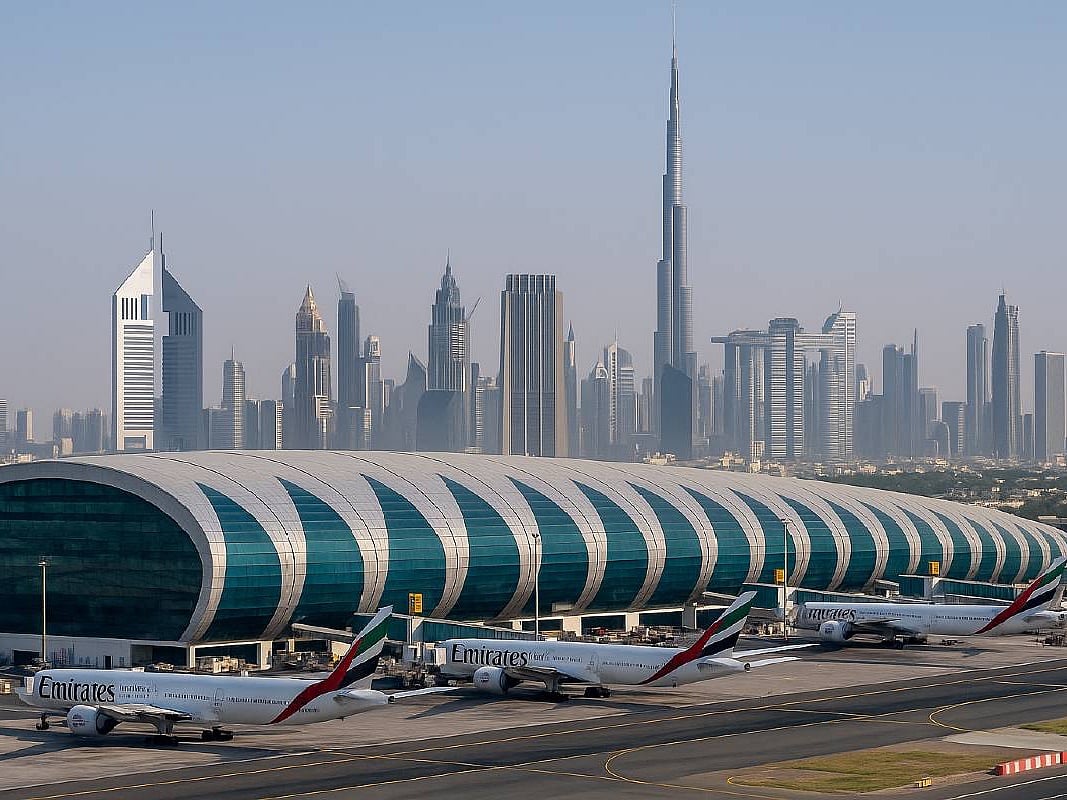
On Day 217 of the US-Iran war, UAE airports remain open and operating, but travellers should expect delays, cancellations and last-minute schedule changes.
Dubai, Abu Dhabi and Sharjah airports all reported disruptions on Friday.
Tensions across the Gulf remain as Washington reinforces its military footprint, rejects Tehran’s latest ceasefire overture and presses allies to share fuel reserves.
For UAE residents, the immediate implications range from air-traffic disruptions and heightened security alerts to volatile oil and diesel prices that could affect travel, logistics and household costs in the coming weeks.
Following are the latest updates:
US bolsters military presence in Mid-East
The US is sending an additional 9,000 sailors and Marines aboard a flotilla of warships to the Middle East, a buildup that could bring three American aircraft carriers to the region.
The deployment includes the USS Theodore Roosevelt carrier strike group and the USS Makin Island amphibious readiness group, joining the USS George H.W. Bush and USS George Washington already operating near Iran. Defense officials say the surge is meant to expand Washington’s military options if diplomacy fails, while also reassuring Gulf partners as Houthi attacks and Iranian-backed militia activity persist.
Get it: Fast, verified news for FREE ... download the Gulf News app — simply click here
Trump says Iran offer falls short, may resume strikes
President Donald Trump has rejected Iran’s latest ceasefire proposal, calling its terms “not good enough” and leaving open the possibility of resuming large-scale bombing after the November 3 midterm elections. In an interview with TIME, Trump said he would not accept deals now that he might have considered a year ago, signaling a harder line after months of fighting and failed talks. He described renewed strikes as “possible” once US weapons stockpiles are replenished, while administration officials announced fresh sanctions on Iran’s automotive and rail sectors.
Iran’s oil lifeline choking — Gulf neighbours’ flowing
Iran’s crude oil exports have effectively ground to a halt under a US naval blockade, with no new cargoes loaded since mid-August and none crossing the blockade line since mid-July, according to tanker-tracking data.
By contrast, crude flows through the Strait of Hormuz from Arab Gulf states have rebounded to prewar levels, aided by US military escorts and increased use of overland pipelines that bypass the strait. About 40% of Gulf crude now avoids Hormuz via pipelines to terminals in the UAE and Saudi Arabia, compared with 17% before the war, while Iran’s product and LPG exports to Asia and the UAE have also stopped.
Get it: Fast, verified news for FREE ... download the Gulf News app — simply click here
UAE investigates flydubai incident involving injured crew members
UAE prosecutors have launched a formal investigation into a mid-flight altercation aboard flydubai flight FZ1073 from Dubai to Tel Aviv that forced an emergency landing in Tabuk, Saudi Arabia, on Sept. 30.
The Attorney General’s office said investigators will determine whether the incident, which injured both pilots, was linked to any terrorist activity, prior planning or direction.
Saudi authorities initially reported that the first officer assaulted the captain, while some online speculation pointed to a security incident; all passengers were later flown to their destination on a replacement aircraft.
Saudi Arabia intercepts Houthi missile, no casualties reported
Saudi air defenses intercepted a Houthi-fired ballistic missile targeting the southern city of Khamis Mushait, with authorities reporting no casualties or major damage. The incident, confirmed by the Saudi-led coalition, is part of a renewed wave of cross-border attacks as Yemen’s war intensifies alongside the US-Iran conflict. Houthi media claimed the strike was in response to Saudi “aggression,” while coalition statements emphasised ongoing efforts to protect civilian areas and critical infrastructure.
US urges EU allies to release strategic diesel reserves
The Trump administration has told Germany and France to immediately draw down emergency diesel inventories to help ease soaring global fuel prices, warning that Washington could impose a targeted ban on US diesel exports if European allies refuse. US officials are asking the EU to release roughly 120 million barrels of diesel over six months, a volume that would represent more than 40% of the bloc’s current emergency gasoil and diesel stocks. European leaders are holding emergency talks in Brussels today (Oct. 2, 2026).
Strong explosions heard in Yemen capital: Report
Loud explosions were heard late Thursday in Sanaa, the Houthi-controlled capital of Yemen, with AFP journalists reporting large plumes of smoke rising over the city. Local residents described airstrikes targeting military sites in several neighborhoods, while Houthi-affiliated media blamed “Saudi aggression” for the blasts.
US unveils $24.4B deal to ramp up missile production
The Pentagon has awarded RTX’s Raytheon unit a $24.4 billion, five-year contract to accelerate production of Standard Missile-6 (SM-6) interceptors for the US Navy. The deal aims to replenish munitions stockpiles depleted by the Iran war and ensure a steady supply of missiles capable of both offensive strikes and missile defence.
Brent crude oil surges past $102 amid US-Iran tensions
Brent crude futures climbed above $102 a barrel this week as US-Iran tensions intensified, diplomatic talks stalled and markets priced in the risk of wider disruption to Gulf oil flows.
Traders cited the threat of renewed US strikes, Houthi attacks on shipping and the possibility of further closures or bottlenecks around the Strait of Hormuz as key drivers of the rally. While Hormuz shipments have rebounded under US escort, analysts warn that the situation remains fragile.
Dubai: delays and cancellations
At Dubai International Airport (DXB), several flights were cancelled or delayed on Oct. 2. Cancelled services included:
flydubai Dubai–Abha
Oman Air Dubai–Salalah
Jazeera Airways Dubai–Kuwait
Airblue Dubai–Karachi
SpiceJet Dubai–Amritsar
Multiple flydubai Dubai–Tel Aviv services
Dubai–Tel Aviv flights remain suspended
flydubai has suspended all flights to and from Israel until further notice following the Sept. 30 cockpit incident on FZ1073, which diverted from Dubai to Tabuk, Saudi Arabia.
Emirates has also suspended its flydubai codeshare flights to/from Tel Aviv. Passengers whose final destination is Tel Aviv will not be accepted for travel at their point of origin.
The UAE Attorney-General has ordered a specialist investigation into the incident, including whether there was any terrorist purpose or prior planning.
Abu Dhabi: flights operating, but delays
At Zayed International Airport, several departures were delayed, including Air Arabia services to Kozhikode, Thiruvananthapuram and Yerevan, and Etihad services to Kuwait.
Big news for Filipinos: PAL returns to Dubai today
Philippine Airlines is scheduled to resume nonstop Manila–Dubai flights today, Oct. 2.
PAL's initial schedule is four times a week — Monday, Wednesday, Friday and Saturday.
PAL says it plans to progressively restore daily service, subject to operating conditions. This is particularly significant for OFWs because it restores a direct Philippine flag-carrier link after months of suspension.
Iranian airlines remain barred
The UAE continues to suspend all flights by Iranian airlines to and from the country until further notice. The suspension was imposed in September following US sanctions affecting Iranian carriers.
Flights involving Iranian carriers to several regional destinations have also been affected by restrictions elsewhere in the region.
Foreign airlines are returning — but cautiously
The UAE's aviation recovery is uneven. Some carriers are restoring services while others continue suspensions.
For example, British Airways plans to resume Dubai flights on Nov. 3, initially with one daily service. Lufthansa plans to resume Munich–Dubai on Oct. 25 and Frankfurt–Dubai on Oct. 26.
Other carriers remain cautious:
Air Canada: Dubai suspended until March 2027
Cathay Pacific: Dubai suspended until Jan. 31, 2027
Singapore Airlines: Dubai suspension extended to Oct. 24
Air France: Dubai suspension extended to Oct. 24
KLM: Dubai suspension extended to Oct. 24
Finnair: Dubai suspension extended to March 27, 2027
Korean Air: Dubai suspended until further notice
What to watch out for:
The visible surge in US power projection in the Middle East is likely to remain a defining feature of regional security dynamics as long as the war with Iran continues.
The latest update from Yemen is a reminder that the country remains an active front in the wider conflict, with potential implications for Red Sea security and regional air and sea lanes.
The interception by Saudi Arabia of a Houthi missile underscores the persistent threat from Yemen-based militias.
The probe into the flydubai mid-air incident highlights heightened scrutiny of aviation security on routes linked to Israel and the broader conflict zone, even as officials stress the flight landed safely and the situation was brought under control.
Meanwhile, the new missile defence contract signals Washington’s intent to sustain a high tempo of operations and maintain robust air and missile defenses in the region for the foreseeable future.
At the same time, sustained high oil prices could support government revenues and investment but also feed into global inflation, shipping costs and eventually consumer prices for goods and services.
Network Links
GN StoreDownload our app
© Al Nisr Publishing LLC 2026. All rights reserved.