Salam is the second southern white rhino newborn welcomed to the park through its breeding programme, following the birth of Onyx in 2024
Dubai Safari Park celebrates the birth of second endangered white rhino calf
Second white rhino birth marks key milestone for the park's endangered species programme
Last updated:
2 MIN READ
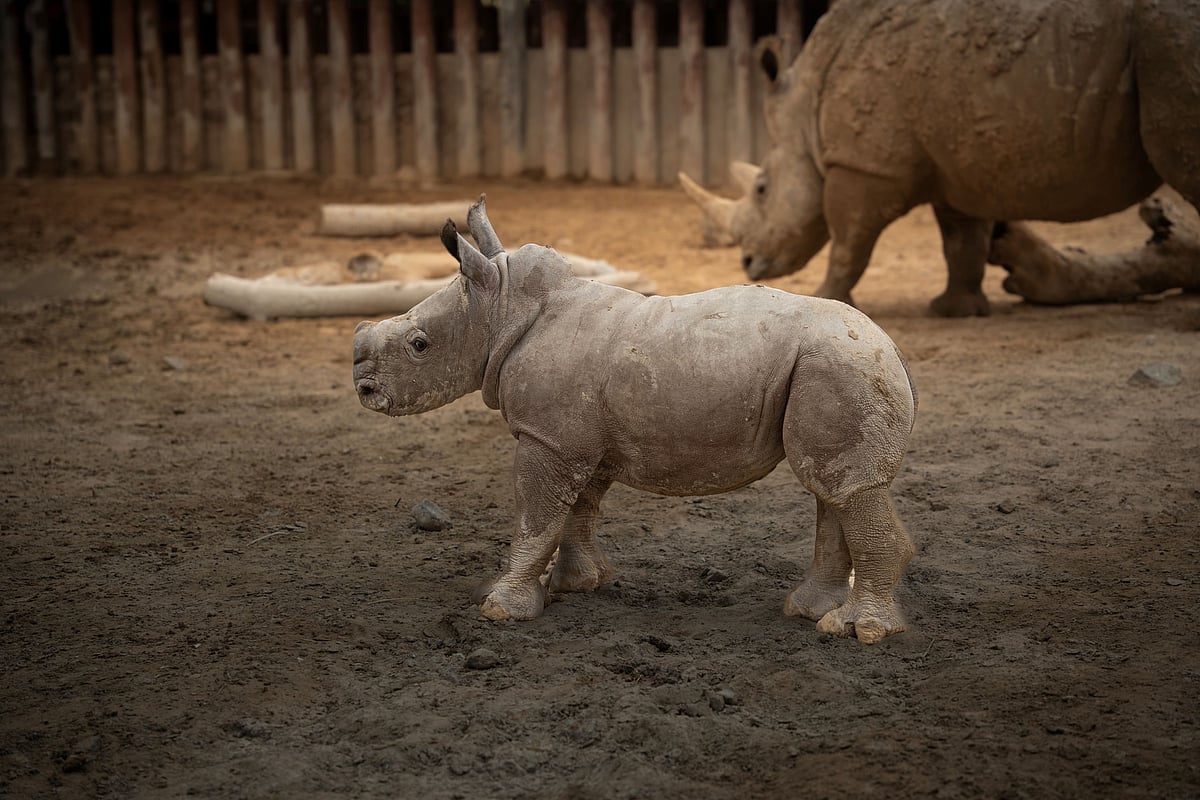
The southern white rhino is classified as 'near threatened' by the IUCN with approximately 15,700 remaining in the wild.
Supplied
Dubai: In a time of uncertainty across the region, a moment of hope emerged at Dubai’s largest wildlife park with the birth of a second white rhino calf. The endangered species saw a healthy male born to mother Olive, later named Salam, the Arabic word for peace.
The birth adds an important chapter to Dubai Safari Park's ongoing commitment to conservation, and to a global effort to protect a species the International Union for Conservation of Nature (IUCN) classifies as Near Threatened.
With an estimated 15,700 white rhinos remaining in the wild and numbers continuing to decline, each birth within a managed breeding programme carries considerable weight. Salam weighed 73.5 kg at birth and has since been progressing well, already standing, walking, and suckling under the attentive care of the park's zoological team.
Salam is the second white rhino born under the park's endangered species breeding programme, following Onyx in 2024. The programme focuses on bolstering vulnerable populations through partnerships with wildlife institutions locally and internationally, a model increasingly central to conservation strategy as wild habitats face mounting pressures.
Muna Alhajeri, Director of Dubai Safari Park, described the birth as a milestone shared not only with the park's staff, but with conservation advocates worldwide.
“Salam is a reminder of positivity to all of us to stay strong in our continuous efforts, for conservation and in our day-to-day lives. The birth of our second white rhino perfectly encapsulates the importance of our endangered species breeding program, helping to support animal populations at risk. We’re proud to achieve such a milestone through the efforts of our highly qualified experts, vets and zoologists from around the world, ensuring we strive for the highest level of animal care and research. We look forward to continuing to actively contribute to such a critical cause and further strengthening our commitment to conservation.”
Bonding with his mother in the nursery den, Salam is receiving additional bedding and supplementary feeding as standard welfare measures. The park's team reports that his development is on track across all key indicators.
Owned by Dubai Municipality, Dubai Safari Park encompasses 119 hectares in the heart of the city and houses more than 3,000 animals from over 300 species. The park operates two safari experiences alongside a range of educational and interactive visitor programmes. A portion of every ticket sold is directed towards wildlife rescue, research, and care initiatives, meaning each visit contributes directly to the conservation work that produced Salam's arrival.
According to the website, Dubai Safari Park is currently closed, as a precautionary safety measure.
Network Links
GN StoreAbout Gulf NewsTerms & ConditionsReach by GNSitemapContact usPrivacy PolicyGN FocusHave your sayWork with usAdvertise with usGulf News epaperPrinting Services
Download our app
© Al Nisr Publishing LLC 2026. All rights reserved.