Dubai home sales top Dh139 billion while rent growth starts to cool
Off-plan deals drove sales higher while rent growth slowed to its weakest pace since 2022
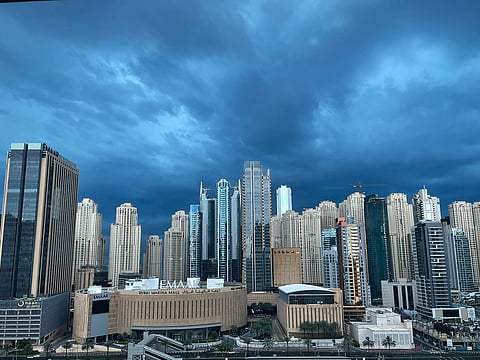
Dubai: Dubai’s residential property market recorded Dh139.1 billion in sales during the first quarter of 2026, with off-plan homes continuing to drive buyer activity even as rent and price growth began to show signs of cooling.
New research from Cavendish Maxwell showed that 44,200 residential transactions were completed between January and March, up 4.6% from the same period last year. Sales value rose 21.5%, showing that buyers continued to commit larger sums to Dubai homes despite a slower start to the year.
Get updated faster and for FREE: Download the Gulf News app now - simply click here.
Off-plan sales remained the biggest force in the market, accounting for 73% of all residential transactions. More than 32,300 off-plan units were sold for a combined Dh105.5 billion, nearly 35% higher than in the first quarter of 2025.
Developers dominate off-plan sales
Developers continued to capture most off-plan buyer activity, helped by payment plans, newer projects and lower entry prices in apartment-led communities.
Nearly 92% of off-plan purchases in the first quarter were made directly from developers. In March, that share rose to 94%, according to Cavendish Maxwell.
Apartments remained the clear buyer favourite. Flats accounted for more than 80% of transactions in both the off-plan and ready segments, reflecting strong demand from end-users and investors seeking comparatively accessible price points and rental returns.
Townhouses made up 13% of off-plan sales, while villas accounted for 6.5%. In the ready market, townhouses represented 12.7% of sales, while villas took a 7.1% share.
Ronan Arthur, Director and Head of Residential Valuations at Cavendish Maxwell, said the market started the year from a strong base, but conditions are beginning to change.
“While Dubai’s residential market started the year from a strong position, mixed conditions during Q1, including geopolitical tensions, a moderation in transactions, slowing price growth and a rising supply pipeline, have collectively signalled the beginning of a more balanced phase of the real estate cycle,” Arthur said.
He said second-quarter transaction data may reflect weaker activity because of regional uncertainty, the lag in registrations and fewer new project launches.
“Looking ahead, we are likely to see fewer transaction volumes in Q2, when the combined effects of regional uncertainty, the 60 to 90-day lag in registrations and a reduction in new project launches will be reflected in market activity and transaction data,” he said.
“The outlook for the rest of the year will depend on how quickly conditions stabilise, the absorption of the supply pipeline and the level of demand from end-users and investors. Opportunistic investors remain active, Dubai’s structural fundamentals remain intact and all the factors that have always supported Dubai’s long-term market appeal hold strong,” Arthur added.
Dubai South leads off-plan apartments
Dubai South became the top area for off-plan apartment sales in the first quarter, recording 2,340 transactions. Dubai Residence Complex followed with 1,992 sales, ahead of Jumeirah Village Circle with 1,857, Dubai Islands with 1,645 and Majan with 1,157.
Jumeirah Village Circle retained the top position for ready apartments with 1,036 sales. Business Bay followed with 632 transactions, while Majan, Dubai Marina and Downtown Dubai also ranked among the busiest areas.
In the off-plan villa and townhouse market, DAMAC Islands 2 led with 2,762 sales. The Heights Country Club and Wellness, The Oasis, Grand Polo Club and Resort, and The Valley followed.
DAMAC Hills 2 recorded the highest number of ready villa sales at 230, followed by Dubai South, Al Furjan, The Valley and The Springs.
Prices and rents still rising, but slower
Average residential prices reached Dh1,683 per square foot in the first quarter, up 9.6% from a year earlier and 0.6% from the previous quarter.
The annual increase was the slowest in three years, pointing to softer price momentum after a strong run in previous cycles. Prices, however, remain well above 2024 levels, when the average stood at Dh1,493 per square foot.
Rents rose 10.2% year on year and 0.8% from the previous quarter, marking the slowest annual rental growth since 2022. Increased supply in late 2025 and early 2026 gave tenants more choice and stronger negotiating power.
Around 149,000 rental contracts were registered in the first quarter, with renewals accounting for 66%. Total rental contracts were down 2.2% from a year earlier, largely because of a 13.6% decline in March.
Apartment rental yields averaged 7.2%, with International City Phase 2, International City Phase 1 and Downtown Jebel Ali delivering some of the highest returns. Villa and townhouse yields averaged 5%, led by Al Barari, Dubai Industrial City and DAMAC Hills 2.
Luxury demand stays firm
Demand for high-end homes continued to rise. Luxury homes priced between Dh20 million and Dh50 million recorded 740 transactions worth Dh28.2 billion, up more than 25% from a year earlier.
Ultra-luxury homes priced above Dh50 million generated Dh10.2 billion in sales across 100 transactions, a near 79% increase year on year.
The combined luxury and ultra-luxury market reached Dh38.4 billion in sales from 840 transactions, showing that Dubai’s top-end market remains active even while the broader market moves into a more balanced phase.
Supply pipeline grows
Developers delivered 12,900 residential units in the first quarter, the highest quarterly total in three years and 23% above the same period last year. Apartments accounted for 8,000 of those handovers.
New launches, however, slowed. About 22,900 units across 90 projects were launched in the first quarter, down 57% from a year earlier and the lowest quarterly total in more than two years.
Around 77,500 units are projected for delivery this year, with 29,600 scheduled for the second quarter. Cavendish Maxwell expects actual handovers between April and June to be lower, likely ranging between 9,000 and 15,000 units.
Another 146,000 homes are in the pipeline for 2027, followed by 120,100 in 2028. Delivery timelines may move, but the report suggests that delayed projects are more likely to push supply into later periods than remove it from the market.