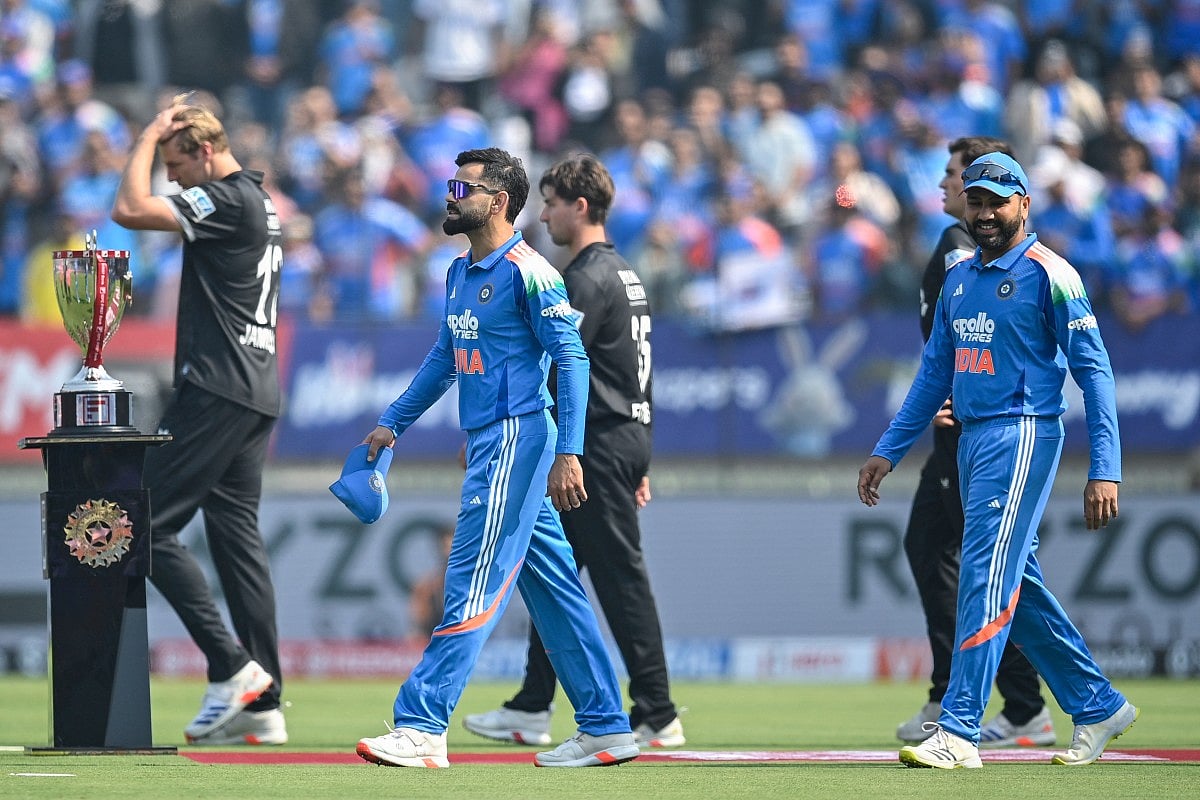
Dubai: The chatter around Virat Kohli and Rohit Sharma’s future refuses to die down, but the recent ODI series against New Zealand is a timely reminder that India might be better served by looking forward rather than speculating endlessly. With the 2027 ODI World Cup just over a year away, the focus should firmly be on what these two stalwarts can still offer — because the evidence suggests there is plenty left in the tank.
India may have lost the third ODI on Sunday, handing New Zealand a 2—1 series win, but the match still produced several talking points. The visitors were powered to a formidable total by a record-breaking fourth-wicket stand of 219 between Daryl Mitchell and Glenn Phillips, a partnership that ultimately set up a 41-run victory. Yet, even in defeat, the spotlight found its way back to Kohli.
The 37-year-old’s latest century was more than just another entry in the record books. It was his third hundred in the last six ODIs, taking his tally to a staggering 54 centuries in the format. That run of form also propelled him back to the No 1 spot in the ICC ODI batting rankings. For a batter who endured a forgettable start at the tour of Australia in October 2025, where he registered a pair of ducks, the resurgence has been emphatic. Since then, Kohli has been virtually unstoppable in white-ball cricket, scoring runs with an authority that evokes memories of his peak years.
Contrasting narrative
Rohit’s series, however, followed a contrasting narrative. Coming into the New Zealand ODIs, the Indian captain was in reassuring form. Four fifty-plus scores in his previous six innings — including a century — had underlined that his timing and confidence were intact. But across the three matches against the Kiwis, Rohit could muster only 61 runs, with a highest score of 26, reopening familiar debates about consistency and longevity.
The scrutiny peaked in the series decider at Indore. Chasing a daunting target of 338, Rohit set the tone instantly, dispatching the first ball of the innings to the boundary. The intent was unmistakable, but the innings fizzled out quickly as he fell for 11 to Zakary Foulkes. It summed up his series — flashes of promise without a defining contribution. Still, context matters. Just weeks earlier, Rohit had been prolific against Australia and South Africa, and he even smashed a commanding 155 in the Vijay Hazare Trophy. A brief lean patch should not eclipse that body of work.
New Zealand captain Michael Bracewell offered a perspective that cuts through the noise. When asked about Kohli and Rohit’s presence at the next World Cup, he was unequivocal. Both, he said, are still playing “very good cricket” and remain players any opposition would be foolish to underestimate. Their records, leadership, and experience continue to make them invaluable.
At 37, Kohli is thriving in the only format he now plays for India. Six fifty-plus scores, including three centuries, in his last seven ODI innings underline his enduring hunger and class. Rohit, despite recent inconsistency, remains a match-winner capable of changing games in a matter of overs.
Next assignment
The duo’s next appearance in Indian colours will come during the white-ball tour of England in July 2026. With both having retired from T20Is after India’s triumphant 2024 World Cup campaign, and from Test cricket in 2025, their focus is singular: ODIs. They will miss the T20I leg of the England tour and the 2026 T20 World Cup, but are set to return on July 14 when the three-match ODI series begins in Birmingham.
Rather than framing every series as a referendum on their careers, Indian cricket may benefit more from planning around Kohli and Rohit’s strengths. If their recent performances — especially Kohli’s prolific run — are any indication, pushing them aside prematurely could be a mistake. With 2027 in sight, it may indeed be high time to put the retirement talk behind and allow two modern greats to finish on their own terms.
Network Links
GN StoreDownload our app
© Al Nisr Publishing LLC 2026. All rights reserved.