Park Eun Bin in 'Extraordinary Attorney Woo'
5 legal K-Dramas that turned the court into a battleground: Beyond the Bar to Devil Judge
Every verdict comes with a cost, in these K-Dramas.
Last updated:
5 MIN READ
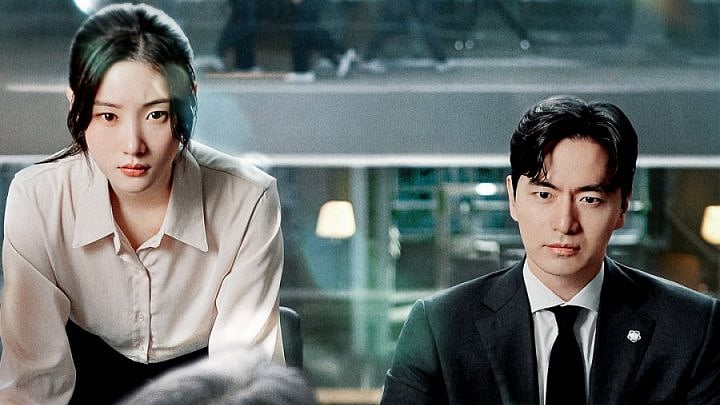
What fans really wanted to see, was the growing love story between them: Yet, everything was left on a rather ambiguous note and fans are quietly fuming in Twitter, Reddit threads that they deserve much more.
Courtrooms aren’t always a place for clean victories or clear-cut justice — at least not in the world of K-dramas. Some legal dramas trade procedural precision for morally tangled cases, where right and wrong blur and every decision carries weighty consequences. From the quietly introspective brilliance of Extraordinary Attorney Woo to the high-octane chaos of The Devil Judge, these series explore the human, emotional, and ethical cost of the law. In Beyond the Bar, rookie lawyers navigate family disputes and abuse of power, forcing viewers to question the true meaning of justice. Divorce Attorney Shin examines betrayal, custody battles, and dignity over victory, while Lawless Lawyer throws vengeance and loopholes into the mix, challenging traditional legal boundaries.
Each show captures the tension between personal morality and the letter of the law, turning the courtroom into a minefield of conscience, ambition, and emotion — a space where every verdict carries far more than legal consequences.
1) Extraordinary Attorney Woo
One of Extraordinary Attorney Woo’s most debated episodes drops its audience into deeply uncomfortable territory, not by offering shocking twists, but by asking an impossible question: Who gets to decide whether someone truly understands the consequences of a relationship?
The case centres on a woman with an intellectual disability who insists she entered a relationship willingly. On the surface, her testimony seems clear. But under questioning, cracks appear. Faced with pressure, she becomes visibly distressed, struggling to process basic emotional stress. The court is forced to confront whether her consent — as she understands it — can carry the same legal weight as that of someone without cognitive impairment. The jury leans toward compassion. The judge does not.
In a striking move, the ruling prioritises formal legal responsibility over emotional intent, highlighting a central tension in the episode: the legal system’s obligation to protect vulnerable individuals, even when doing so overrides their expressed wishes. It’s a decision that feels both unsettling and, to some, necessary.
What complicates matters further is the ecosystem around the woman. Her mother’s overbearing presence clouds the proceedings, raising questions about control versus care. Meanwhile, expert testimony feels frustratingly limited, skimming the surface of a nuanced psychological reality without fully exploring it. The result is a case that never settles comfortably on one moral answer.
Another layer of discomfort is the behaviour of the accused, whose pattern of forming relationships exclusively with cognitively vulnerable women casts a long shadow over the idea of innocence. The episode quietly suggests that affection alone is not enough — meaningful choice requires the ability to understand risk, consequence, and power imbalance.
Rather than offering closure, the episode leaves viewers uneasy. It exposes how justice can feel both protective and paternalistic, how law can safeguard and silence at the same time. Even Woo Young-woo’s personal storyline mirrors this tension, as she navigates her own relationships with caution, reflection, and agency — underscoring that not all neurodivergent experiences carry the same ethical stakes.
In the end, Extraordinary Attorney Woo doesn’t tell us who is right. It shows us how the courtroom becomes a moral minefield the moment the law collides with vulnerability, autonomy, and power — and how every step forward risks setting off something unseen.
2) Behind the Bar
One of the standout legal hits of 2025, Beyond the Bar is an entertaining, emotionally charged watch. Starring Lee Jin-wook as stern senior lawyer Yoon Seok-hoon and Jung Chae-yeon as idealistic rookie Kang Hyo-min, the series is set inside a high-pressure law firm handling cases of family conflict, abuse of power, and vulnerability. Viewers have called it 'drama- and chemistry-wise, fully delivering' and 'heartbreaking and intense,' even as others admitted they were 'less convinced by the realism.' Frequently described as 'morally provocative but impossible to look away from,' the show trades clean legal victories for messy emotions, rivalries, and ethical discomfort — making judgment itself the real battleground.
3) Divorce Attorney Shin
Shin Sung-han is a former classical pianist who becomes a divorce lawyer after a personal tragedy. The series opens on a weighty note, centring on a woman caught in a deeply distressing divorce involving a controlling spouse, with a child caught in the crossfire. Specialising in emotionally charged family cases, Shin practises law with empathy, strategic insight, and an unconventional moral compass. Each case examines the aftermath of marriage, custody disputes, and betrayal, often placing dignity above outright victory. Balancing its heavy themes with warmth and dry humour, the drama also highlights Shin’s enduring friendships, focusing less on courtroom spectacle and more on healing, accountability, and the human cost of separation.
4) Lawless Lawyer
Lee Joon-gi and Seo Yea-ji in Lawless Lawyer
Lee Joon-gi and Seo Yea-ji to the rescue. Lee plays Bong Sang-pil, a brash gangster-turned-lawyer with a talent for exploiting legal loopholes and bending procedure to win. He’s the kind of rogue protagonist you’re tempted to root for — even when his methods raise eyebrows. Lawless Lawyer quickly makes its stance clear: justice here is rarely clean.
Sang-pil opens his own practice and takes on the wealthy and powerful figures responsible for his mother’s murder, a crime he witnessed as a child. Partnering with Ha Jae-yi (Seo Yea-ji), a fiery attorney dismissed after a confrontation, he enters a world where revenge, law, and violence collide. As buried truths surface — including the devastating revelation about Jae-yi’s mentor — the courtroom becomes a moral minefield, asking whether justice achieved through corruption and force is justice at all.
5) The Devil Judge
The Devil Judge turns the courtroom into a public arena where justice is streamed, voted on, and consumed as entertainment. Starring Ji Sung as the enigmatic Kang Yo-han, the series imagines a near-future society where trials are broadcast live and public opinion directly influences verdicts. What begins as radical transparency quickly curdles into moral spectacle, blurring accountability with revenge. Yo-han’s methods are legally inventive but ethically unsettling, forcing viewers to question whether punishment shaped by collective outrage can ever be just. Stylish, provocative, and deliberately excessive, the drama traps its audience in a moral minefield where every verdict feels earned — and deeply wrong.
Network Links
GN StoreAbout Gulf NewsTerms & ConditionsReach by GNSitemapContact usPrivacy PolicyGN FocusHave your sayWork with usAdvertise with usGulf News epaperPrinting Services
Download our app
© Al Nisr Publishing LLC 2026. All rights reserved.