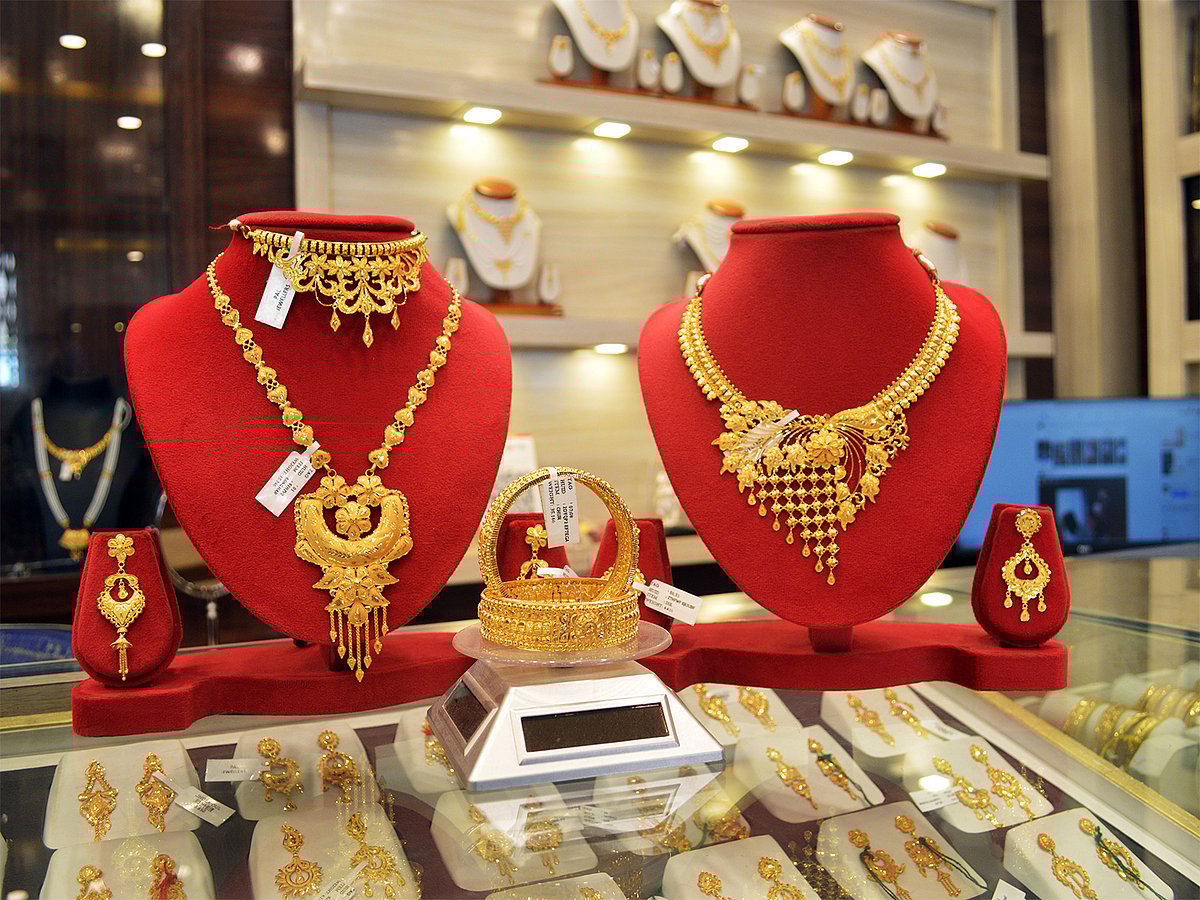
Dubai: Dubai gold prices opened slightly higher on Monday morning, showing signs of stability after a volatile month that saw sharp swings and a steep correction from early March peaks.
At 8:35 am, 24-karat gold stood at Dh541.50 per gram, up marginally from Dh541.25 a day earlier, while 22-karat held unchanged at Dh501.25. The muted move reflects a market that has slowed after weeks of heavy selling, with buyers stepping in selectively rather than chasing prices higher. (Check latest UAE gold prices here, alongside prices in Saudi Arabia, Oman, Qatar, Bahrain, Kuwait, and India.)
Get updated faster and for FREE: Download the Gulf News app now - simply click here.
From peak to reset
The broader trend through March has been far from steady. Prices began the month at elevated levels, with 24-karat gold above Dh640 per gram and 22-karat close to Dh590, supported by strong global demand and geopolitical uncertainty.
By mid-March, 24c prices had fallen into the Dh520 to Dh550 range, while 22-karat dropped closer to Dh500, marking a shift in sentiment after an extended rally.
The monthly trajectory shows how quickly momentum reversed. Early March levels above Dh620 gradually eased, before a steep slide around mid-month pushed prices below Dh530 at one point. A brief rebound followed, but gains failed to hold, leaving prices fluctuating within a narrower band toward the end of the month.
Stabilising, but no clear direction
In the second half of March, the pace of declines slowed and price movements became more contained. Recent sessions show 24-karat largely trading between Dh528 and Dh545, while 22-karat has hovered between Dh488 and Dh505.
The pattern has been uneven, with short-lived recoveries followed by pullbacks, suggesting that the market is attempting to find a base rather than building a sustained upward trend. Buyers have started to re-enter, though demand remains measured and highly price-sensitive.
Global cues keep pressure on
International markets are also shaping local sentiment. Gold steadied after posting its first weekly gain since the Middle East conflict began, with dip-buying helping prices recover from earlier losses. Bullion held near $4,500 an ounce, indicating that investors are willing to step in at lower levels even as broader market conditions remain uncertain.
The geopolitical backdrop continues to weigh on outlook. Escalation risks have increased following fresh regional developments, including attacks on infrastructure and rising military presence. These factors are feeding into inflation concerns and shifting expectations around interest rates.
Gold has fallen about 14% since the conflict began at the end of February, reflecting pressure from rising oil prices, equity market weakness, and tighter liquidity conditions. Expectations of higher interest rates have also reduced the appeal of non-yielding assets like gold.
Buyers return, but cautiously
In the UAE, the correction has started to attract interest from shoppers who had stepped away during the rally. Lower price levels are encouraging selective buying, particularly for jewellery purchases, though sentiment remains cautious given the uncertain global outlook.
Prices are expected to remain range-bound in the near term, with direction tied closely to geopolitical developments, inflation signals, and interest rate expectations.
- With inputs from Bloomberg.

Sign up for the Daily Briefing
Get the latest news and updates straight to your inbox
Network Links
GN StoreDownload our app
© Al Nisr Publishing LLC 2026. All rights reserved.