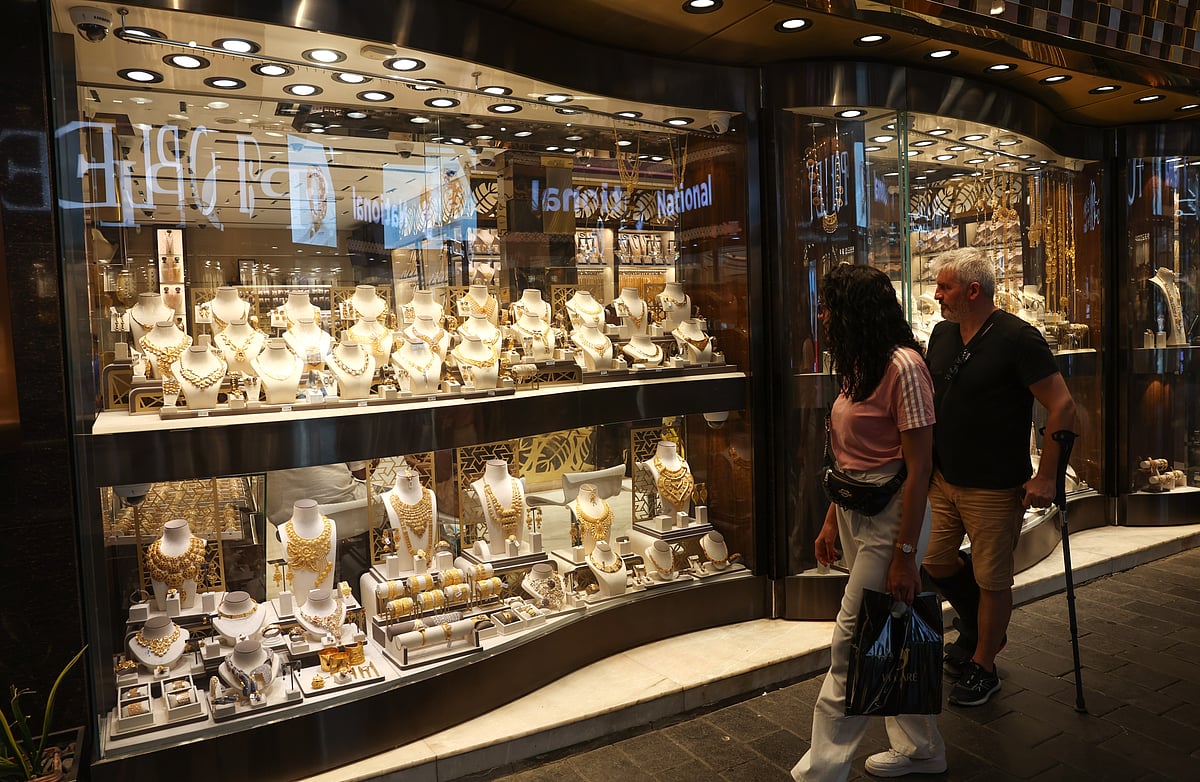
Dubai: Gold prices in Dubai have retreated sharply from last week’s record highs, as profit-taking set in after a powerful year-end rally that pushed prices into uncharted territory. By 8.45 am on Tuesday, 24-karat gold was priced at Dh525 per gram, down Dh21.25 from its all-time high of Dh546.25 reached on December 27. The 22-karat variety stood at Dh486, compared with a peak of Dh505.75 on the same day. (Check latest UAE gold prices here, alongside prices in Saudi Arabia, Oman, Qatar, Bahrain, Kuwait, and India.)
The pullback reflects a broader cooling across global precious metals markets, where stretched technical indicators and thin year-end liquidity have amplified price swings. While the retreat has been swift, market participants largely view it as a correction rather than a reversal, given the strength of the underlying drivers that powered gold to record levels this month.
A volatile December run
December was marked by sharp and often rapid moves in Dubai gold prices. The month opened with 24-karat gold at Dh511.75 on December 1, before slipping toward the Dh503–507 range in the first week as markets digested mixed global cues. From mid-month, prices began to climb steadily, moving above Dh518 by December 13 and crossing Dh522 by December 18.
Momentum accelerated in the final stretch before the holidays. By December 23, 24-karat gold had risen to Dh539.75, before pushing past Dh545 on December 26. The rally culminated on December 27 and 28, when prices briefly touched Dh546.25, the highest level ever recorded in Dubai. Since then, prices have eased back, settling near Dh525 by December 30. A similar pattern played out in 22-karat gold, which rose from Dh473.75 at the start of the month to a peak above Dh505, before slipping back toward Dh486.
Also Read
Not gold this time, silver and platinum are the metals shocking buyers into 2026Dubai gold slips from record highs after strong December run. Is it time to buy?Gold prices hit record highs in Dubai. Is there any relief ahead for buyers?Profit-taking sets in
The correction comes after gold’s steepest two-day drop in months, driven largely by traders locking in gains after an exceptional run. Precious metals had surged into year-end on the back of strong safe-haven demand, heavy central-bank buying and expectations of looser monetary conditions in 2026.
Three successive interest-rate cuts by the US Federal Reserve this year lowered the opportunity cost of holding non-yielding assets such as gold, while geopolitical tensions and concerns over global growth added to its appeal.
Silver steadies after sharp fall
Silver, which had outpaced gold during the rally, showed signs of stabilising after suffering its biggest one-day drop in more than five years. The white metal traded near $73 an ounce on Tuesday after plunging 9% in the previous session. The sell-off followed a rapid run-up that left the market vulnerable to margin calls and forced liquidations.
Some exchanges moved to curb risk, with margin requirements raised on certain COMEX silver futures contracts. Higher margins require traders to post more cash to maintain positions, often triggering position cuts among highly leveraged players.
Despite the pullback, silver remains one of the standout performers of 2025. Prices have been supported by tight physical supply, strong investment demand and speculative interest, particularly in China. Elevated buying on the Shanghai Gold Exchange pushed domestic premiums to record highs this month, dragging international benchmarks higher. The surge was so intense that China’s only pure-play silver exchange-traded fund temporarily halted new subscriptions after repeated risk warnings.
Strong fundamentals still in place
Both gold and silver are on track for their strongest annual performances since 1979, supported by record central-bank purchases, steady inflows into exchange-traded funds and a softer interest-rate environment. Lower borrowing costs continue to favour commodities that do not offer yields, while ongoing geopolitical frictions have reinforced the role of precious metals as portfolio hedges.
- With inputs from Bloomberg.

Sign up for the Daily Briefing
Get the latest news and updates straight to your inbox
Network Links
GN StoreDownload our app
© Al Nisr Publishing LLC 2026. All rights reserved.