Etihad Rail may change how far UAE residents are willing to live
Reliable rail commutes could turn the Northern Emirates into daily suburbs
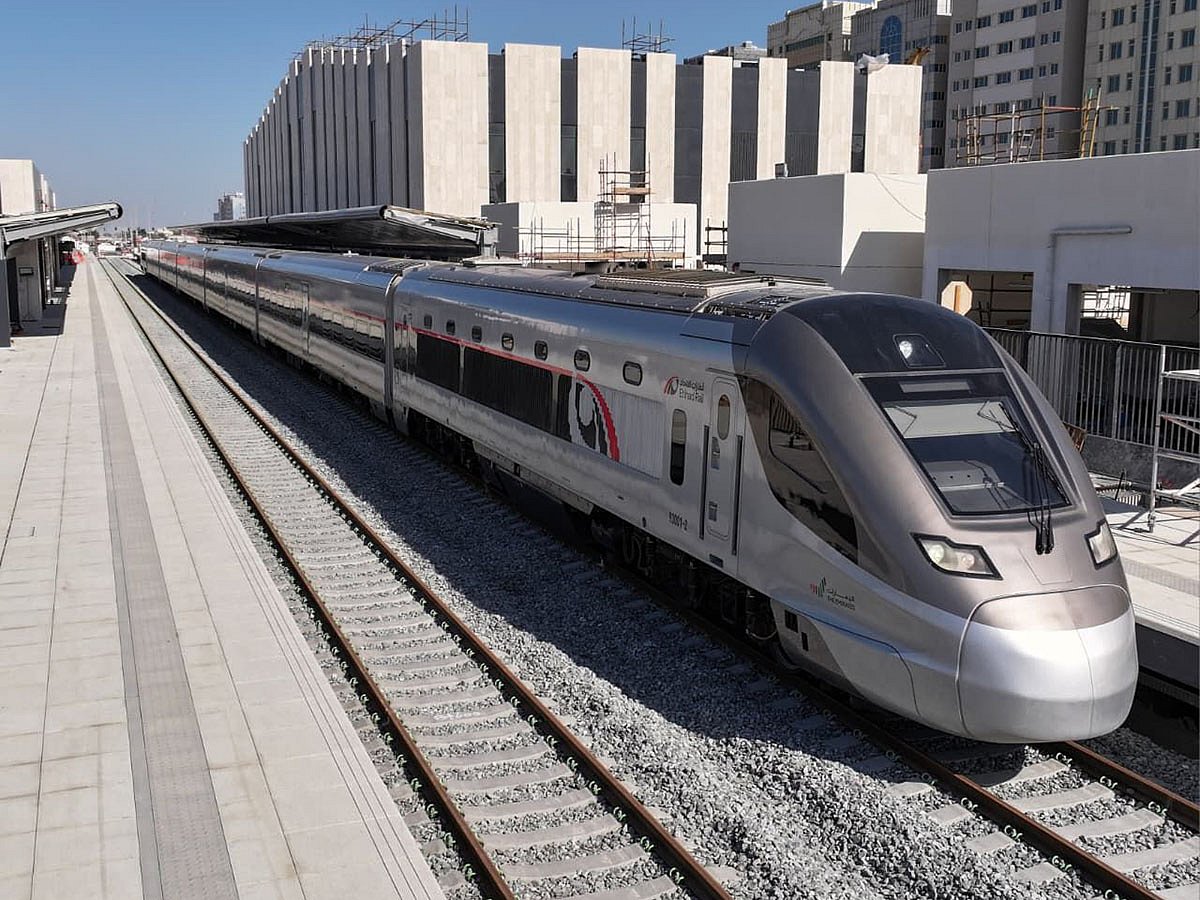
Dubai: A daily commute has always shaped where people live in the UAE. Until now, that choice has been defined by traffic patterns and accessibility. Passenger services on Etihad Rail are expected to redraw that map in ways that reach far beyond transport.
By linking 11 cities and regions across the country through a single national rail network, the project introduces reliability to road travel. That single factor could unlock housing demand in emirates that have long sat just outside the daily commuter belt.
From long drives to predictable journeys
Zacky Sajjad, Director of Business Development and Client Relations at Cavendish Maxwell, describes a sub-90-minute rail commute as a tipping point for Ajman, Umm Al Quwain, Ras Al Khaimah and Fujairah.
“A reliable rail commute turns these emirates from occasional commuter markets into daily commuter markets for a meaningful share of Dubai, Abu Dhabi and Sharjah employment,” he said. Congestion, parking friction and accident risk have limited how consistently residents can rely on cars, especially at peak hours. Rail shifts the emphasis from speed to certainty.
Peak-hour driving from the Northern Emirates into Dubai can range from just over an hour on a good day to well beyond two hours when incidents occur. That variability forces commuters to plan for the worst. A train that runs to the timetable removes that stress. Once door-to-door rail times sit within 10 to 15 minutes of peak driving, Sajjad said commuting stops being a lifestyle choice and becomes the rational option.
The result, seen in mature markets such as London’s commuter counties, is a reset in housing demand.
Who is likely to move first
The early movers are unlikely to be luxury buyers chasing prestige addresses. Sajjad expects mid-income families to lead the shift, trading commute time for larger homes, better schools and affordability. Workforce housing for private-sector employees could also respond quickly if employers and landlords coordinate transport links.
Hybrid professionals form another key group. Those working from the office two or three days a week may find a rail commute acceptable a few times weekly, opening up areas that previously felt impractical. Investors tend to follow once tenant depth improves and vacancy risk reduces, positioning early to benefit from rising values once commuting patterns settle.
Early positioning, not yet full repricing
Speculation around future stations is already visible, but widespread rail-led repricing has not yet arrived. Sajjad cautions that most current activity remains corridor-level land banking rather than true station-catchment premiums.
“Until station sites and last-mile access are fully locked in, it is premature to talk about widespread price discovery,” he said. History suggests sharper repricing comes only after station locations, zoning responses and service frequency are confirmed. London’s Elizabeth Line followed that pattern, with the strongest uplift appearing once uncertainty lifted.
Also Read
How Etihad Rail will change everyday travel in the UAE from 2026Etihad Rail unveils UAE passenger network connecting 11 cities and regions by 2026Etihad Rail Map: Every town and city connected by UAE’s new trainEtihad Rail passenger service guide: Stations, routes, travel times and what to expectA national shift, not a single corridor
Faisal Durrani, Partner and Head of Research for MENA at Knight Frank, believes passenger services will mark a new chapter for the UAE property market.
“The strategic linking of all the major cities will open up a world of possibilities for developers, home buyers and businesses alike,” he said, noting the earlier impact of Etihad Rail’s freight services on demand for warehousing around KEZAD and Dubai South. Passenger rail, he expects, will have a far more pronounced effect.
Unlike the Dubai Metro, which repriced specific neighbourhoods along Sheikh Zayed Road, Etihad Rail operates at an intercity scale. Its influence is less about creating a continuous high-value strip and more about connecting markets, expanding labour catchments and strengthening hubs across the country.
Will rent gaps narrow
Improved connectivity raises a key question for residents weighing a move north. Could rail narrow the rent gap between Dubai and neighbouring emirates?
Ahmed Hashish, Chief Sales Officer at HRE Development, expects some compression. Dubai’s rental premium reflects more than transport, driven by business ecosystems, lifestyle offerings and government initiatives that continue to support higher rents.
What rail changes is the equation for price-sensitive residents whose jobs or education remain Dubai-centric. Population growth, particularly among professionals and families seeking value, is expanding this group. Reduced commuting stress may also encourage more UAE nationals to take up roles in Dubai that were previously avoided due to daily traffic.
Zhou Yuan, Operations Director at Tomorrow World, said the biggest winners will be areas where stations feel like an upgrade to daily life rather than an extra step. In the UAE, catchment areas may be wider than in dense global cities because many residents will drive to stations. Communities with easy road access and parking can benefit even if they are not walkable.
“Last mile is everything,” Zhou said. Reliable feeder buses, park-and-ride facilities, smooth drop-off zones and simple taxi access turn rail into routine. Without them, habits do not change.
Rental markets usually react first. Tenants move in sooner than buyers, boosting occupancy and rents around well-connected stations. That supports yields and draws investors. Capital values typically reprice later, once usage patterns are proven, and confidence builds.
The risk for early buyers is paying a premium before ticket pricing, service frequency, and daily adoption are clear. Zhou advises comparing prices with communities that already enjoy proven connectivity rather than assuming instant appreciation.
Developers rethink the commuter belt
Over time, Etihad Rail may influence how communities are planned in the Northern Emirates. Fawaz Sous, CEO of OCTA Properties, expects a gradual shift toward commuter-oriented layouts, with higher density and smaller units near stations.
“Once you introduce a fast, reliable rail link connecting 11 cities, you redefine what counts as a commuter belt,” he said. Coordination with transport and municipal authorities becomes critical. Stations woven into daily movement patterns capture more value than isolated infrastructure.
Sous views rail as a structural driver rather than a short-term sentiment boost. Initial enthusiasm may overshoot, but once residents experience consistent journey times, behaviour adjusts. That is when steady absorption replaces speculation.
Demand momentum is already building
Even before passenger services launch, value-led demand in the Northern Emirates is gaining pace. Data from Bayut shows Sharjah and Ajman recorded strong price growth and healthy rental yields in 2025, driven by affordability and larger living spaces.
In Sharjah, villa prices rose by more than 20% in Sharjah Garden City and over 14% in Hoshi, while apartment prices in Al Nahda jumped 21%. Rental yields exceeded 7% in several districts, with family-oriented communities drawing consistent demand.
Ajman posted even sharper moves. Apartment prices in Ajman Downtown climbed 32%, while villa prices in Al Rawda surged over 24%. Rental yields stood out, with some apartment districts delivering returns above 9%, reinforcing the emirate’s appeal for income-focused investors.
These trends reflect a broader shift toward space and value. Passenger rail could accelerate that momentum by removing the final barrier of commute uncertainty.
Etihad Rail’s passenger network will connect stations across Abu Dhabi, Dubai, Sharjah and Fujairah in its first phase, with additional locations coming online in stages. Trains will offer Wi-Fi, power outlets and regular schedules designed to provide a congestion-free alternative to roads.

Sign up for the Daily Briefing
Get the latest news and updates straight to your inbox
Network Links
GN StoreDownload our app
© Al Nisr Publishing LLC 2026. All rights reserved.