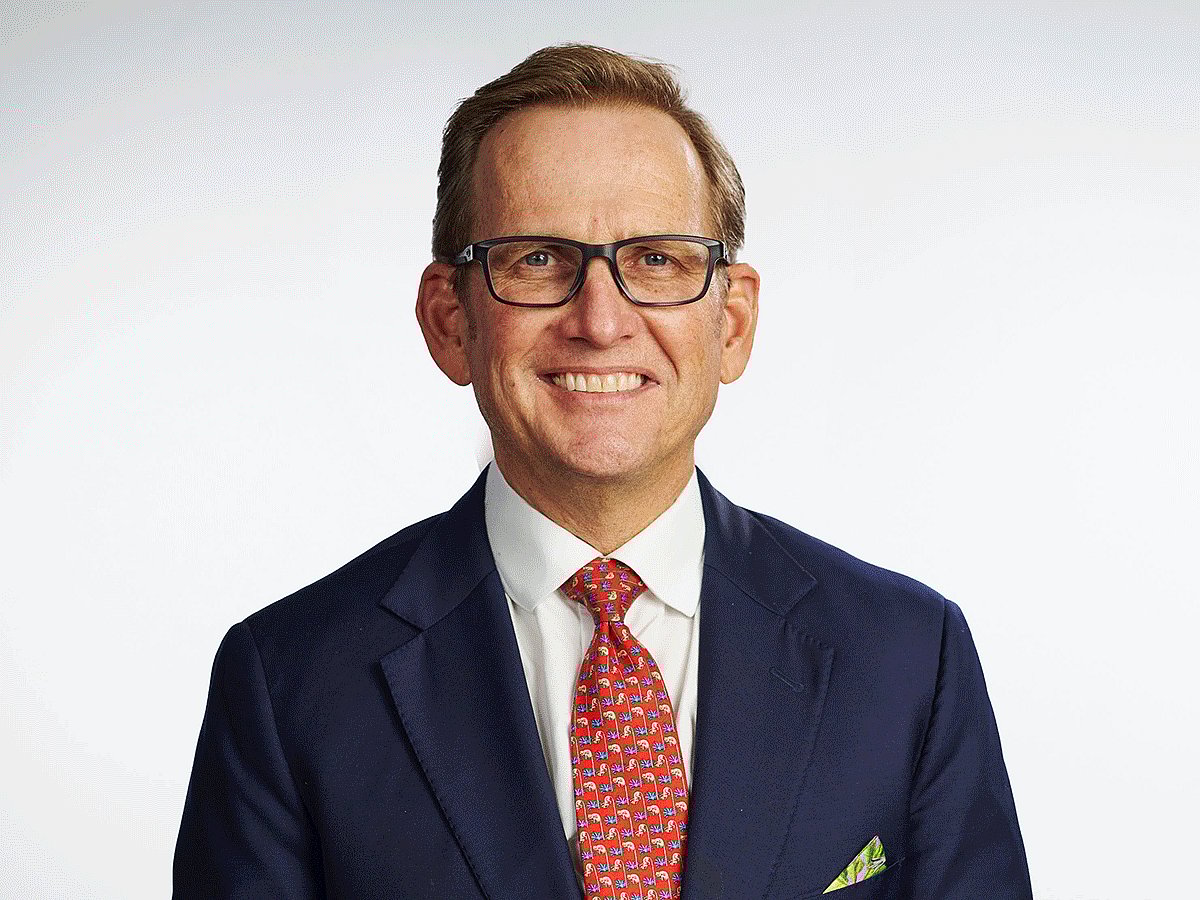
Dubai: Companies that move quickly on skills, data and supply chain resilience will shape the Middle East’s next phase of economic growth, according to HSBC’s Group Sustainability Officer Julian Wentzel.
He said the transition is no longer a long-term aspiration but a real-time business challenge. Firms that invest in people, adopt data-led strategies and strengthen operational resilience will be better placed to handle shifting regulations and market conditions.
“It’s clear that the ability to manage transition effectively will be a defining factor for companies in this region. The most successful businesses will prioritise upskilling their workforce, leveraging data-driven decision-making, and building resilient supply chains. Collaboration, both internally and with external partners, will also play a crucial role, enabling companies to respond swiftly to market shifts and regulatory changes,” Wentzel said.
The comments come at a time when the Middle East is accelerating its investments in clean energy, digital infrastructure and sustainable finance.
Solar energy becomes the region’s biggest advantage
Wentzel sees solar as the region's strongest opportunity, citing the Middle East’s natural access to sunlight and the improving economics of renewable energy.
Also Read
IMF raises 2026 global growth forecast to 3.3% on AI surgeADSW 2026: There is no AI without energy, and the UAE is planning for that futureFrom energy to AI, the Middle East lines up $100 billion a year in investment, report findsPwC expert outlines how AI can speed up the energy transition“The most tangible opportunity stands in the region’s abundant free resource; sunlight. The economics behind the capture of solar energy are now at a tipping point. This presents the Middle East with a unique opportunity to become self-sufficient in terms of free energy into the future. It will create a unique cost of capital advantage and set the region at the forefront of having sustainable, unfettered, abundant energy,” he said.
HSBC has financed large-scale solar projects in the UAE, Saudi Arabia and Turkey. One of its Saudi solar investments is expected to cut emissions by around 21.65 million tonnes of CO₂ equivalent each year.
The bank considers the Middle East a key pillar of its global sustainability framework. Its client base includes traditional energy companies shifting their portfolios as well as emerging climate-technology players building new models for the future.
“The Middle East’s ability to turn vision into reality sets it apart; with ambitious goals, defined outcomes and a can-do attitude, the region is not just a participant but a key driver in HSBC’s global sustainability and transition strategy,” Wentzel said.
Sustainable finance structures
Sustainable finance in the region has evolved rapidly, according to the bank's sustainable officer. What began as green loans and bonds has moved toward multi-layered funding structures that combine environmental, social, and Sharia-compliant elements within a single facility.
HSBC recently worked with the region’s largest institutions on dual use-of-proceeds structures, including the QInvest $275 million sustainability-linked dual-tranche commodity Murabaha, aimed at aligning financing with measurable sustainability performance.
Despite the progress, Wentzel noted that heavy industrial sectors still lack tailored financial products that can support decarbonisation without affecting commercial viability. The bank has reviewed around 4,000 corporate transition plans globally since 2023 to understand financing needs better and bridge this gap.
That work has shaped HSBC’s updated Net Zero Transition Plan, which now reflects the different pace of decarbonisation across sectors and regions.
Energy demand from AI and data centres
AI-focused facilities require significantly more electricity, with PwC estimating their power demand can be up to 10 times that of traditional data centres. This places new pressure on regional energy infrastructure, making renewable integration increasingly important.
Wentzel believes companies that align workforce development, technology adoption and financing strategy with the pace of change will outperform.
The Middle East’s energy transition is now shaping how businesses compete. Those who respond with clarity, agility, and long-term planning will lead the region’s sustainable growth story.
Sign up for the Daily Briefing
Get the latest news and updates straight to your inbox
Network Links
GN StoreDownload our app
© Al Nisr Publishing LLC 2026. All rights reserved.