ADSW 2026: There is no AI without energy, and the UAE is planning for that future
AI growth depends on energy, and the UAE says it is building the engine to deliver it
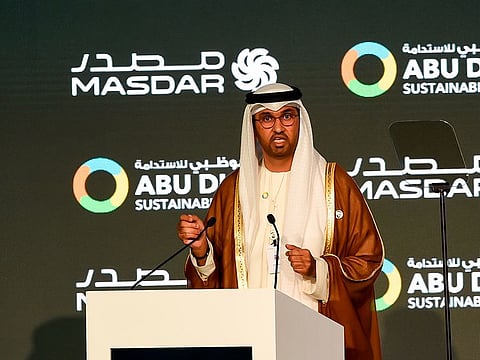
Dubai: The global race to scale artificial intelligence is colliding with a physical constraint that no amount of code can bypass. Computing power needs electricity, and lots of it. Speaking in Abu Dhabi this week, Dr Sultan Ahmed Al Jaber, UAE Minister of Industry & Advanced Technology, MD & Group CEO of ADNOC, Executive Chairman of XRG & Chairman of Masdar, made the case that the future of growth will be decided not just by algorithms and data, but by who can deliver energy at scale, reliably and responsibly.
“There is no artificial intelligence without actual energy,” Al Jaber said during his keynote at Abu Dhabi Sustainable Week. “Every algorithm, every data centre, every breakthrough and advanced technology needs power to drive it.”
From industrial age to computing age
Economic growth, Al Jaber argued, is undergoing a structural shift. Industrial capacity defined progress for more than two centuries. That metric is now being replaced by computational power and digital capability, with AI reshaping industries from manufacturing and aviation to healthcare and finance.
Yet the scale of that transition is often underestimated. Data centre power demand alone is expected to grow by more than 500% by 2040. At the same time, global energy consumption continues to rise across traditional sectors. Air travel is set to double. Cities are expected to absorb another 1.5 billion people.
Meeting that demand, Al Jaber said, requires realism rather than ideology. “Over 70% of this energy will still come from hydrocarbons,” he said. “And when some view this as a constraint, I view it as a catalyst.”
Designing a better engine for growth
The UAE’s strategy rests on integration. Al Jaber described a system that fuses hydrocarbons, renewables and advanced technology into a single energy and industrial platform.
Over 70% of this energy will still come from hydrocarbons. And when some view this as a constraint, I view it as a catalyst.

“The world still needs molecules to make electrons,” he said. That philosophy has shaped investments across the energy mix, from lower carbon hydrocarbons to some of the world’s largest solar projects, nuclear power and wind systems designed for low-speed conditions.
Technology plays a central role in making that system work. AI, Al Jaber said, is no longer an add-on. “It has become the operating system of our industrial society.” The UAE is embedding AI across energy and industrial assets to optimise production, efficiency and output at scale.
Pragmatism over rhetoric
The message was as much about governance as it was about technology. Al Jaber framed the UAE’s approach as one built on long-term planning, disciplined investment and data-led decision-making.
“We believe that progress must be rooted in reality, not rhetoric,” he said. “It must be resilient, not theoretical, practical, not ideological. Simply put, we follow the data, not the drama.”
That pragmatism supports the country’s pitch to global investors and technology firms looking to scale energy-intensive businesses. Stability, policy clarity and access to infrastructure were presented as competitive advantages at a time when energy security and compute capacity are becoming binding constraints.
An open platform for partners
Partnership was a recurring theme. Al Jaber described the UAE as an open platform for collaboration across energy, technology and capital, with consistency and long-term alignment at its core.
“We are never distracted by the noise of the moment,” he said. “We are always focused on the world of a generation.”
That positioning is aimed squarely at companies building data centres, advanced manufacturing facilities and AI-driven platforms that require dependable power and regulatory certainty. Access to energy and high-tech infrastructure, Al Jaber said, is available “in abundance” for those willing to commit for the long term.
The next phase of global growth will be shaped by the ability to align energy supply with digital ambition, and the UAE intends to sit at that intersection.
“If you want to engineer the future, this is where that work is really happening,” Al Jaber said. “The corridor to the future runs through the UAE.”
ADSW 2026 sets out a roadmap to advance global progress and connect international goals with leaders of positive change, by focusing on accelerating the clean energy sector in the coming phase, expanding finance, developing innovative AI-based solutions and ensuring inclusive transformation. It also emphasises strengthening dialogue, broadening global impact, enhancing cross-sector alignment and deepening cooperation to accelerate progress and extend its reach.