Abu Dhabi’s cluster strategy targets Dh300 billion in GDP and 110,000 jobs, says ADIO executive
ADIO’s cluster-led model shifts focus from capital inflows to long-term jobs and value
Dubai: Nearly Dh300 billion in economic output and more than 110,000 skilled jobs by 2045. That is the scale of ambition behind Abu Dhabi’s cluster-led investment strategy, which is reshaping how the emirate thinks about growth, jobs and long-term competitiveness.
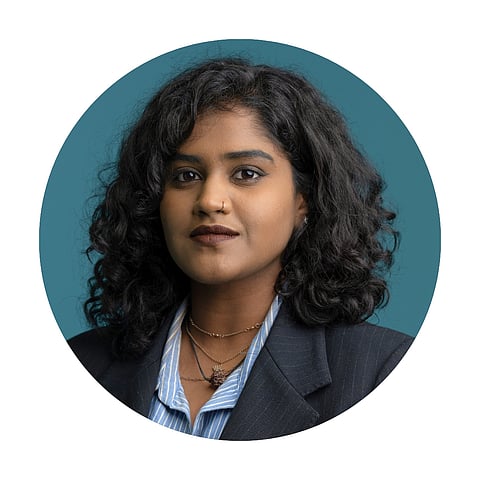
Rather than tracking headline capital inflows, Abu Dhabi is focused on what investment delivers after it lands. According to Ahmad Soubra, Head of Value Creation at Abu Dhabi Investment Office, success today is measured by factories operating at scale, engineers and researchers based locally, and companies using Abu Dhabi as a base to serve global markets.
From volume to outcomes
For years, the global competition for investment has often centred on how much capital a city or country could attract. Abu Dhabi’s approach has shifted decisively away from that metric. Soubra said the emirate is now shaping its investment pipeline around outcomes rather than volume.
“Capital is still essential, but it is the enabler, not the end goal,” he said. Under the Abu Dhabi Industrial Strategy, manufacturing alone is targeted to contribute Dh172 billion to the economy by 2031. The emphasis is on production depth, exports and industrial capability, rather than one-off transactions or short-term inflows.
That approach has led ADIO to adopt a cluster-led model, in which policy, regulation, infrastructure, and incentives are aligned around specific sectors. The aim is to reduce execution risk for investors while anchoring high-value activity inside the emirate.
The sectors driving the next phase
The next phase of Abu Dhabi’s growth is being built around sectors where the emirate believes it can compete globally and scale with confidence. Advanced manufacturing, smart and autonomous mobility, life sciences, agrifood and water technologies, and financial and digital platforms sit at the core of that strategy.
Abu Dhabi’s advantage lies in its ability to pair progressive regulation with sovereign scale. The emirate is home to around $1.7 trillion in sovereign capital, and ADIO’s role is to translate that scale into real economic outcomes through structured ecosystems rather than isolated projects.
Platforms such as the Smart and Autonomous Vehicles Industry programme, Health, Endurance, Longevity and Medicine, AgriFood Growth and Water Abundance, and the Fintech, Insurance, Digital and Alternative Investments cluster bring together regulation, talent, testing environments and investor support. Collectively, these clusters are projected to contribute close to Dh300 billion to GDP and create more than 110,000 skilled jobs by 2045.
One example is the FIDA programme, which targets Dh56 billion in GDP contribution and about 8,000 jobs, backed by Dh17 billion in investment across areas including digital assets infrastructure, portable savings and transition finance. These are not low-value back-office functions, but activities designed to anchor intellectual property, decision-making and growth in Abu Dhabi.
Jobs and capability at the centre
Attracting global investors remains a priority, but ADIO’s mandate goes further. The focus is on companies willing to build meaningful operations in the emirate, creating skilled roles across engineering, manufacturing, research, and advanced services.
This approach is reinforced through initiatives such as the Abu Dhabi Local Content programme, which ensures that investment filters through the wider economy, including small and medium-sized enterprises. Capability-building is also being embedded through partnerships with national institutions.
Recent collaborations with Rabdan Academy are designed to align talent development with the needs of emerging sectors. The objective is not only to create jobs, but to develop a resilient skills base that allows companies and people to grow together over the long term.
“The goal is depth,” Soubra said. “It is about building institutional capacity and talent that stays, evolves and compounds over time.”
A changing investor profile
The type of investor Abu Dhabi is attracting today looks markedly different from five years ago. Earlier interest was often driven by market access or regional expansion. Today, companies are arriving to build engineering centres, advanced manufacturing facilities, AI and data infrastructure, and life sciences platforms.
There has also been a rise in long-horizon institutional capital and global asset managers establishing a permanent presence in the emirate. That shift signals growing confidence in Abu Dhabi as a stable, rules-based environment where capital can be deployed through economic cycles.
It also reflects a maturing economy. Rather than positioning itself as a short-term opportunity, Abu Dhabi is increasingly seen as a place to build, test and scale complex businesses over decades.
Navigating global uncertainty
Global uncertainty has sharpened investor priorities. Shifting capital flows, geopolitical risk and tighter financial conditions have placed a premium on stability, predictability and execution. ADIO’s response has been to reduce friction and strengthen the emirate’s competitiveness.
Cluster platforms provide clarity on regulation and testing frameworks, while industrial and trade initiatives help investors manage costs and scale efficiently. At the same time, Abu Dhabi has diversified its global engagement, deepening investment corridors across Asia, Europe and North America to ensure resilience in capital flows.
Rather than reacting to volatility, the strategy is to build an economy that remains attractive because of its depth, flexibility and long-term vision.
Looking beyond 2026, the emirate is not trying to compete everywhere. Instead, it is focusing on sectors where it believes it can lead globally and backing that focus with decisive action, whether through industrial strategy, cluster development or talent investment.