Iranian domestically-built Zolfaghar, top, and Zolfaghar Bassir missiles are displayed by the armed forces in a temporary exhibition in front of the Azadi (Freedom) monument in Tehran, Iran, Wednesday, July 29, 2026.
Trump declares Gaza disarmament deal, Saudi leads Red Sea alliance, Kuwait downs Iranian drones near military bases
Iran, US trade strikes and claims from Hormuz to Kuwait amid Gaza deal push
Last updated:
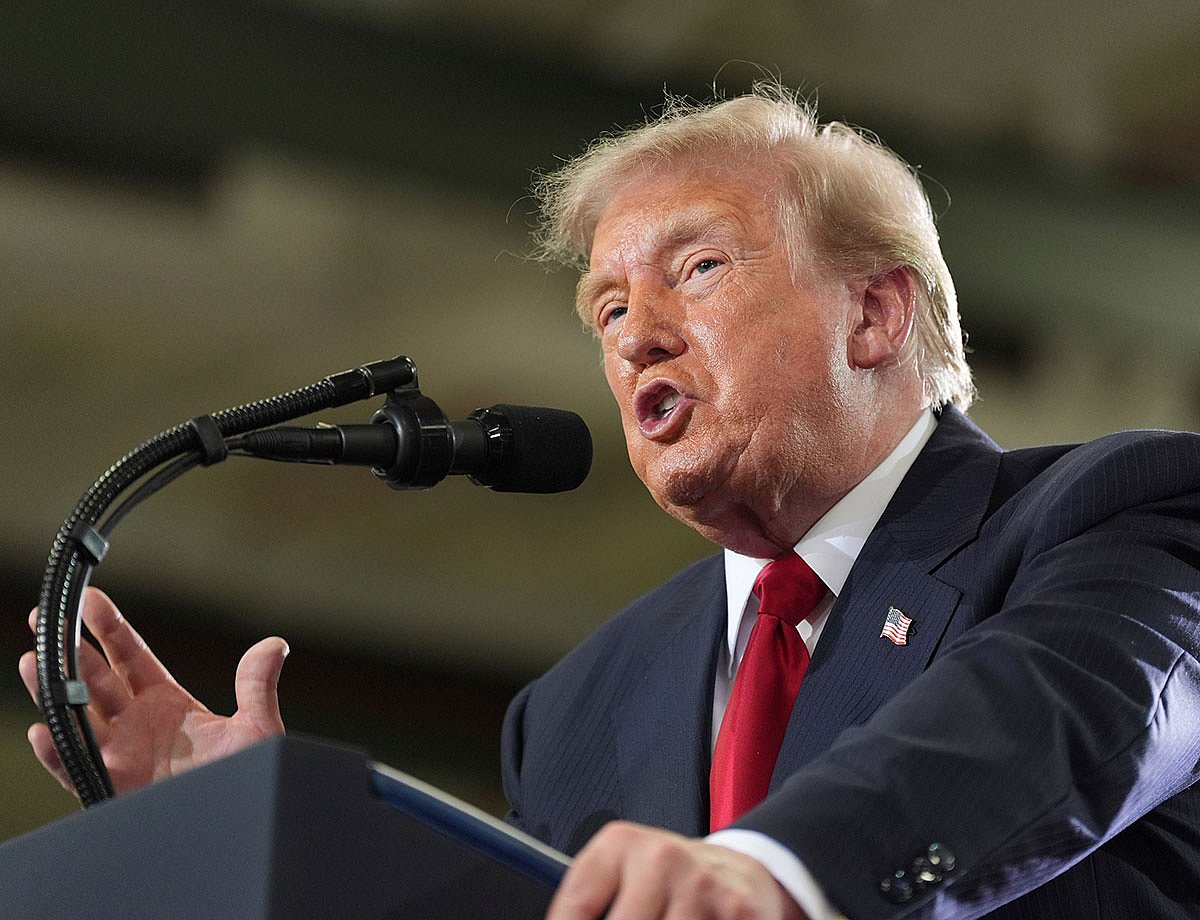
US President Donald Trump says Washington is having “very friendly talks” with Tehran.
AP
The Middle East remains on edge as multiple flashpoints escalate at once. President Trump announced late Thursday that a phased deal has been reached for Hamas to disarm and Israeli forces to withdraw from Gaza, though neither side has confirmed it yet. In the Gulf, the US-Iran standoff continues, with CentCom disputing Iranian claims that a tanker broke through the naval blockade, and fresh Treasury sanctions hitting a network accused of supporting the IRGC and Mahan Air. Meanwhile, Saudi Arabia has launched a 14-nation maritime alliance to protect Red Sea shipping after Houthi threats, and concerns are growing in Washington over depleted US missile defense stocks amid near-daily Iranian strikes. Follow this live coverage for all the latest developments as the situation unfolds.
US‑Israel war on Iran: Recent developments
Day 150: US, Saudi forces strike Iran-backed militias in Iraq
US expands sanctions targeting Iran's Mahan Air
The US Treasury on Thursday imposed sanctions on six individuals and companies it said were aiding Mahan Air, an Iranian airline that is accused of facilitating Tehran's Islamic Revolutionary Guard Corps (IRGC).
The new sanctions include a China-based individual, as well as companies in China, Russia, Iran and Indian-administered Kashmir.
"Those who provide financial services, logistics, or commercial support to the IRGC or Mahan Air are helping sustain a terrorist enterprise," said Treasury Secretary Scott Bessent in a statement.
"Treasury will continue to identify them, expose them, and cut them off from the US financial system."
Mahan Air operates as a civilian airline offering domestic and international flights, but Washington says it also provides travel services to IRGC personnel and helps move weapons for the force.
Tehran has consistently said accusations against Mahan Air and state airline Iran Air are baseless, but that has not stopped the United States and its European allies from sanctioning them.
Thursday's sanctions also targeted DadeNegar, a Tehran-based company that is accused of having "solicited locations of American and Israeli equipment to support Iranian military targeting."
Iran conflict raises concerns over US missile defence stocks
Tehran's forces have carried out frequent missile and drone attacks in the Middle East since the breakdown of the US-Iran ceasefire, raising renewed concerns about Washington's supply of the weapons needed to intercept them.
Highlighting the issue, the US military said it shot down multiple ballistic missiles fired by Tehran in an "attempted surprise attack" this week, following a deadly Iranian strike on American troops in Jordan earlier this month.
Some lawmakers have raised questions about whether the United States has sufficient munitions since early in the war, which began with US-Israeli strikes in late February before the fighting largely halted under an April ceasefire, only to resume in recent weeks.
"We have depleted our interceptors... which are, obviously, necessary to protect American troops," US Senator Chris Van Hollen said Sunday on ABC's "This Week."
"We are depleting these every day, despite the fact that we could face other potential conflicts around the world," the Democrat added.
Click here to read more...
Saudi launches maritime alliance to secure Red Sea routes
Saudi Arabia said on Thursday it had set up a maritime defence alliance to secure navigation around the strategic Bab al-Mandab Strait.
The move comes after Yemen's Iran-backed Houthis said last week they were imposing a maritime embargo on Saudi Arabia, the world's top oil exporter, and claimed attacks targeting Saudi oil tankers in the Red Sea and oil infrastructure in the kingdom.
The narrow maritime artery has been a critical waterway for delivering vast quantities of Saudi crude to the international market, after energy exports from the Gulf were largely choked off the US-Iranian standoff in the Strait of Hormuz.
The Saudi defence ministry issued a joint statement on behalf of the 14 countries in the alliance: Bahrain, Bangladesh, Djibouti, Egypt, Jordan, Kuwait, Nigeria, Pakistan, Qatar, Saudi Arabia, Somalia, Sudan, Turkey and Yemen.
The ministry said the alliance was "aimed at enhancing maritime security, safeguarding freedom of navigation, securing international trade routes and energy supply lines and protecting shared maritime interests in the Bab al-Mandab Strait, the Red Sea and the Gulf of Aden".
The ministry said it had invited 51 countries and organisations to a meeting about the alliance in Riyadh on Thursday.
It said representatives of 43 countries and an EU delegation attended, of which 14 countries confirmed their support while others were in the process of doing so.
US Treasury sanctions networks in China, India, Russia and Iran supporting IRGC, Mahan Air
The US Treasury Department announced early on Friday the imposition of sanctions on six entities and individuals across China, India, Russia and Iran for providing sales, logistics and commercial support to Mahan Air, the Iranian airline long accused of ferrying personnel, weapons and equipment for the Islamic Revolutionary Guard Corps (IRGC).
Treasury’s Office of Foreign Assets Control (OFAC) targeted general sales agents for Mahan Air and other facilitators, aiming to disrupt what officials describe as the airline’s role in sustaining IRGC operations. Mahan Air has presented itself as a civilian carrier but has been under US sanctions for years over its ties to the IRGC, designated by Washington as a terrorist organisation.
Treasury Secretary Scott Bessent said in a statement that those providing financial services, logistics or commercial support to the IRGC or Mahan Air “are helping sustain a terrorist enterprise.” “Treasury will continue to identify them, expose them, and cut them off from the US financial system,” Bessent said.
Iran says tanker 'broke' the US blockade, Washington says 'not true'
Iranian state media reported that the commercial oil tanker M/T Nora had successfully broken through the US naval blockade.
On Friday, however, US Central Command (CentCom) rejected the claim, saying the tanker had not breached the blockade. CentCom said US warships, hundreds of aircraft and thousands of American personnel remain deployed to enforce what it calls America's “steel wall” blockade around Iranian ports and coastal waters.
A successful tanker breakout would be more than a shipping story. It would be a powerful propaganda victory for Tehran — and a direct challenge to Washington's attempt to demonstrate that it controls maritime access to and from Iran. CentCom's position is blunt: the blockade remains intact. The command has previously reported intercepting or redirecting commercial vessels suspected of attempting to reach Iranian ports. Since the renewed US naval blockade against Iran came into effect on July 14, 2026, CentCom has said its troops redirected 20 commercial vessels, disabled two ships, and boarded two others.
Get updated faster and for FREE: Download the Gulf News app now - simply click here.
Trump announces a deal for Hamas to disarm in Gaza
President Donald Trump said late on Thursday that a deal has been reached for Hamas to disarm and Israel to withdraw its forces from Gaza, though many hurdles, conditions and long timelines remained to wind down the war in the Palestinian territory.
Neither Hamas nor Israel gave immediate indication that they had agreed.
The White House announcement comes nine months after a US-brokered ceasefire was signed.
Negotiations between Israel and Hamas had largely deadlocked over the implementation of its second phase, including the disarmament of Hamas and the reconstruction of Gaza.
“The agreement will be carried out in carefully structured phases,” Trump said on social media.
“As disarmament is completed, Israeli forces will withdraw, and the International Stabilisation Force will work with a new Palestinian police force to take responsibility for Gaza being safe for its residents and its neighbours.”
Hamas agrees to deal for disarmament, Israel's withdrawal from Gaza
Hamas said Friday it agreed to a deal to end the war with Israel that included provisions addressing its weapons and the gradual withdrawal of Israeli forces from the Gaza Strip.
The group's disarmament has been one of the key sticking points in the advancement of a ceasefire deal that has been in place in Gaza since October.
Etihad, Air Arabia cancel Bahrain and Kuwait flights
Travellers flying to and from the UAE on Friday, July 31, are advised to check their flight status before heading to the airport, with Etihad Airways and Air Arabia cancelling several services to Bahrain, Kuwait and Saudi Arabia due to operational reasons.
Emirates and flydubai have not announced any major changes to their flight schedules and continue to operate services as normal.
The latest disruptions come as tensions across the Middle East remain elevated. While commercial aviation across the UAE is largely operating normally, airlines continue to closely monitor the regional security situation and adjust operations where necessary.
Despite the renewed tensions, UAE airlines continue to operate at near-normal levels, although several routes remain affected by operational changes.
Iran military says targeted US base in Kuwait with drones
Iran's military said on Friday it launched drone strikes targeting US military facilities in Kuwait, as fighting resumed between Washington and Tehran in the Middle East war after a nearly week-long lull.
The army said in a statement it targeted "fighter aircraft shelters, satellite communications systems and equipment storage facilities at Ahmad al-Jaber Air Base in Kuwait".
There was no immediate comment from the US Central Command (CENTCOM).
The Iranian army said the strikes came "in response to the recent aggression by the terrorist US military against our country and its brutal attack on a residential home on Qeshm Island".
US forces have redirected 24 vessels enforcing Iran blockade
US Central Command said its forces have redirected 24 commercial vessels, disabled two and boarded two others as of July 30, as part of ongoing efforts to enforce the naval blockade against Iran. In a post on X, CENTCOM shared an image of a US Navy P-8 Poseidon reconnaissance aircraft approaching a US Air Force KC-135 Stratotanker for mid-air refuelling while patrolling the Middle East, describing it as one of the many assets monitoring regional waters to ensure compliance with the blockade.
British Airways parent reports sliding profits on Mideast war impact
IAG, parent group of British Airways and Spanish carrier Iberia, said Friday that its profits slumped in the second quarter as the Middle East war sent jet fuel costs soaring.
Net profit for the April-June period slid 35 percent to 732 million euros ($843 million) compared with the second quarter in 2025, IAG said in a statement.
Iran receives bodies of Guards killed in US-Saudi strikes in Iraq
Iranian state media said on Friday that the bodies of five members of the Islamic Revolutionary Guard Corps (IRGC) killed in joint US-Saudi strikes in Iraq this week had been returned.
"The bodies of five IRGC members killed in the recent US-Saudi attacks on Iraq were brought into the country through the Mehran border crossing," in western Ilam province, the IRNA state news agency reported.
The United States and Saudi Arabia said on Wednesday they had struck Iran-backed militants in Iraq in response to recent attacks on the Gulf kingdom.
US disputes Iranian claims on Hormuz, F-35s and tanker blockade breach
US Central Command pushed back on three separate claims made by Iranian state media tied to the Islamic Revolutionary Guard Corps (IRGC). CENTCOM rejected assertions that open Strait of Hormuz routes are unsafe for commercial vessels, saying the real threat comes from IRGC's own attacks and threats.
It also denied Iranian reports that three US F-35 fighters and three other aircraft were destroyed in a recent strike on an American air base, stating no U.S. aircraft were damaged and all Iranian missiles and drones were intercepted or missed their targets.
Finally, CENTCOM disputed claims that the oil tanker M/T Nora broke through the US naval blockade, saying more than 20 warships, hundreds of aircraft and thousands of personnel remain actively enforcing the blockade.
Israel carries out detonations near Lebanon's Beaufort castle
Israeli forces carried out a series of detonations overnight near the UNESCO-listed Beaufort castle in southern Lebanon, Lebanese state media reported Friday, with Israel saying it had destroyed tunnels used by the Iran-backed Hezbollah militant group.
"Israeli forces triggered very powerful explosions around midnight," specifically "in the area of the Beaufort fortress," the official National News Agency (NNA) said.
The Crusader-era castle, located in the southern area occupied by Israel, was added last week to UNESCO's List of World Heritage in Danger.
UAE, Syrian Presidents discuss regional developments
UAE President His Highness Sheikh Mohamed bin Zayed Al Nahyan and Syrian President Ahmad Al-Sharaa discussed during a phone call the fraternal ties between the two countries and ways to strengthen cooperation across various fields in support of mutual interests and the wellbeing of their peoples.
They also reviewed a number of regional and international issues of joint interest, particularly the latest developments in the Middle East and ongoing efforts to strengthen the foundations of security, stability, and peace across the region for the benefit of all its peoples.
Iran says struck two tankers under US 'air escort' trying to pass Hormuz
Iran's Revolutionary Guards said Friday that they had struck two tankers attempting to pass though the strategic Strait of Hormuz under the "air escort" of the US military.
The IRGC said the "non-compliant oil tankers... were struck and brought to a halt, while four other oil tankers quickly changed course and returned to their previous positions".
The Guards said the tankers had attempted to pass the strait via "an undeclared route", the US-backed alternative to Tehran's designated waterway closer to its own shores.
Kuwait says it downed hostile drones targeting military sites
Kuwait's Ministry of Defence said its armed forces detected and destroyed hostile drones that entered Kuwaiti airspace since dawn on Friday. Spokesman Brigadier General Saud Abdulaziz Al-Otaibi said the attack, which he attributed to Iran, targeted several vital and military facilities, causing material damage from falling shrapnel but no casualties. The military affirmed it remains on high alert and continues to take all necessary measures to protect the country's sovereignty and security in coordination with relevant authorities.
UAE strongly condemns renewed Iranian hostile attack on Kuwait
The United Arab Emirates has condemned in the strongest terms the renewed Iranian hostile attack targeting the brotherly State of Kuwait with drones.
In a statement, the Ministry of Foreign Affairs (MoFA) affirmed that this hostile attack constitutes a flagrant violation of the sovereignty of Kuwait and a threat to its security and stability.
The Ministry expressed the UAE’s full solidarity with the State of Kuwait and its support for all measures aimed at safeguarding its security and stability.
Trump says US and Israel are 'winning' war against Iran
US President Donald Trump has told Fox News that Washington and Israel’s war on Iran is “going well”.
Speaking to the US channel’s senior White House correspondent Jacqui Heinrich, Trump said US troops are hitting Iran “hard”. “It’s going well. All you can do is keep winning, then eventually something will happen,” he said. “But we’re hitting them hard, knocking them out for a loop, and we just keep winning. Eventually they’ll have no choice but to go home.”
Arab Parliament Speaker condemns attack targeting two ships at Damietta Port
Mohammed bin Ahmed Al Yamahi, Speaker of the Arab Parliament, strongly condemned the drone attack targeting two ships at Damietta Port in Egypt, which resulted in fires breaking out on board both ships.
In a statement today, Al Yamahi emphasised the Arab Parliament's full solidarity with the Arab Republic of Egypt and its support for all measures it takes to safeguard its security and stability and protect its national assets.
US, Israel weigh land blockade of Iran: Report
The United States and Israel are weighing a possible land blockade of Iran as part of efforts to intensify economic pressure on Tehran, The Telegraph reported. Citing senior Israeli and US sources, the newspaper said President Donald Trump and Prime Minister Benjamin Netanyahu discussed increasing pressure on Iran "through kinetic and non-kinetic means" during their White House meeting this week.
One proposal would involve persuading countries bordering Iran to tighten or close key land crossings, restricting the flow of imports and exports. A senior Israeli official said that preventing goods from entering or leaving Iran could place significant pressure on the Iranian economy, while retired US Lieutenant General Sean MacFarland said such a strategy, though difficult to implement, could help isolate Tehran economically.
The report said the leaders also discussed other options, including pursuing a diplomatic agreement, maintaining the naval blockade and resuming military strikes. It added that it remains unclear whether the land blockade proposal will move beyond the discussion stage.
Lebanon president says Israeli detonations 'direct threat' to Israel deal
Lebanese President Joseph Aoun said Friday that Israeli army detonations near the UNESCO-listed Beaufort castle in southern Lebanon overnight were a "direct threat" to a recent framework deal agreed with Israel.
Aoun said the explosions "are an extremely dangerous escalation", according to a statement from his office, adding that they "represent a direct threat to the process which was launched as part of the framework agreement". He noted that their timing ahead of another round of talks with Israel in Rome next week "sends negative messages".
US military rejects Iran's Strait of Hormuz closure claim
The US military says the Iranian government’s claim that the Strait of Hormuz is closed is “false”. “The Strait of Hormuz remains open for commercial vessel transit. Iran does not control it. Thousands of ships have sailed through the international waterway over the past four months,” the US military’s Central Command said in a post on X.
We are closing this coverage now. For the latest updates, click here.
Sign up for the Daily Briefing
Get the latest news and updates straight to your inbox
Network Links
GN StoreAbout Gulf NewsTerms & ConditionsReach by GNSitemapContact usPrivacy PolicyGN FocusHave your sayWork with usAdvertise with usGulf News epaperPrinting Services
Download our app
© Al Nisr Publishing LLC 2026. All rights reserved.