US Treasury sanctions networks in China, India, Russia and Iran supporting IRGC, Mahan Air
New penalties underscore US bid to curb Tehran’s reach through economic pressure
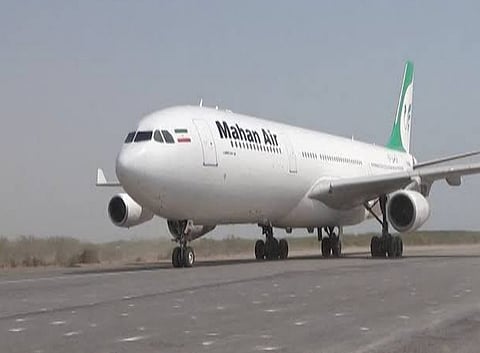
The US Treasury Department has announced the imposition of sanctions on six entities and individuals across China, India, Russia and Iran for providing sales, logistics and commercial support to Mahan Air, the Iranian airline long accused of ferrying personnel, weapons and equipment for the Islamic Revolutionary Guard Corps (IRGC).
Treasury’s Office of Foreign Assets Control (OFAC) targeted general sales agents for Mahan Air and other facilitators, aiming to disrupt what officials describe as the airline’s role in sustaining IRGC operations.
Mahan Air has presented itself as a civilian carrier but has been under US sanctions for years over its ties to the IRGC, designated by Washington as a terrorist organisation.


Treasury Secretary Scott Bessent said in a statement that those providing financial services, logistics or commercial support to the IRGC or Mahan Air “are helping sustain a terrorist enterprise.”
“Treasury will continue to identify them, expose them, and cut them off from the US financial system,” Bessent said.
Military pressure
The action comes as the US maintains military pressure on Iran, including a naval blockade of Iranian ports and recent strikes, amid ongoing tensions in the Middle East.
It highlights efforts to use economic tools alongside military measures to constrain Tehran’s ability to project power.
Specific targets include companies and individuals acting as sales agents or providing logistical support, according to Treasury.
Among them were entities in Shanghai, a Russian air cargo firm, and others linked to travel and logistics services that enabled Mahan Air’s operations, as per the Office of Foreign Assets Control (OFAC), a division of the Department of the Treasury that enforces economic and trade sanctions.
OFAC provides access to the Specially Designated Nationals (SDN) list, sanction programs, and compliance guidance.
The sanctions block the designated parties from accessing the US financial system and generally prohibit Americans from dealing with them.
Treasury warned that foreign companies and banks risk secondary sanctions for continued business with the targets,
Mahan Air has faced repeated US designations for its alleged role in transporting IRGC-Quds Force members and military cargo, including to conflict zones.
The airline has denied the accusations, calling them politically motivated.
The latest measures reflect the Trump administration’s strategy of maximum economic pressure on Iran, coordinated with broader efforts to counter its proxy networks and military activities.
No immediate reaction was available from the Iranian government or the sanctioned parties.
IRGC finances: Iran's military economic empire
Iran's Islamic Revolutionary Guard Corps (IRGC) has built a sprawling financial network that extends far beyond its military role.
Analysts and sanctions authorities say the organisation generates revenue through a combination of state-backed business interests, investment foundations, and sanctions-evasion networks.
Commercial interests of IRGC
State-Backed Business Empire: The IRGC controls major commercial interests through large engineering firms and investment foundations with significant stakes in Iran's economy.
Khatam al-Anbiya: The IRGC's flagship engineering conglomerate, which has secured major government contracts in infrastructure, telecommunications, oil, gas, and petrochemicals, making it one of Iran's largest contractors.
Bonyad-e Ta'avon-e Sepah (IRGC Cooperative Foundation): An investment arm that manages holdings in manufacturing, banking, real estate, and other commercial ventures, with profits supporting personnel welfare and other IRGC activities.
Shadow oil trade: US and allied authorities have accused the IRGC of using covert oil sales, ship-to-ship transfers, and "ghost tanker" operations to export Iranian crude while circumventing international sanctions.
Global front companies: Investigators say the organisation relies on shell companies and intermediary firms in a number of countries, as well as other jurisdictions, to facilitate trade, move funds, and acquire restricted technologies.
Smuggling and regional networks: Western governments have alleged that the IRGC oversees smuggling operations and channels financial support to allied armed groups across the Middle East through informal financial systems and, in some cases, digital assets such as cryptocurrencies.


