Iran’s chain-of-command in chaos? Diplomacy collides with missiles as questions swirl over who really controls Tehran
Competing diplomatic, military actions raise questions over who is directing the response
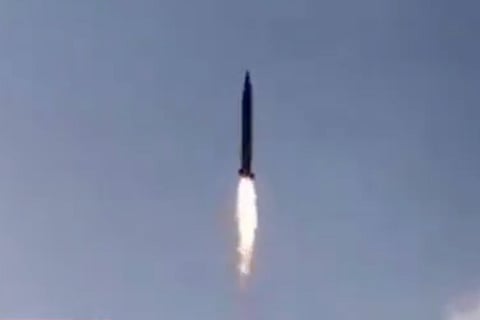
A flurry of conflicting diplomatic and military actions has intensified scrutiny over who is directing Iran's response to its escalating confrontation with the United States and regional rivals, as officials pursue diplomacy even while military commanders signal continued escalation.
On Saturday (July 11, 2026), Iranian Foreign Minister Abbas Araghchi met Omani officials in Muscat in an effort to preserve regional stability and discuss the security of the Strait of Hormuz, according to Iranian and Omani officials.
Oman navigates the US-Iran war by acting as a primary diplomatic mediator while balancing its own military and economic neutrality.
Within a day, however, reports emerged of Iranian military hitting targets in Oman, fueling questions about whether Tehran's diplomatic outreach and military operations are being coordinated through a single chain of command.
The apparent contradiction comes as tensions across the Gulf have reached their highest level in years following a series of US and Iranian strikes, threats to maritime shipping and growing concerns over the security of one of the world's most important energy corridors.
Conflicting signals
The juxtaposition of diplomacy and military action has highlighted a longstanding feature of Iran's political system: authority is shared among elected officials, the Supreme Leader, the Islamic Revolutionary Guard Corps (IRGC), and multiple security institutions.
While Iran's foreign ministry conducts negotiations, the IRGC has historically exercised significant autonomy over regional military operations and has often pursued policies that appear more confrontational than those articulated by civilian officials.
Analysts say those parallel power centers can create conflicting public messages, particularly during periods of crisis.
The Iranian system has never functioned as a conventional centralized military command.
IRGC's 31 provincial commands
In 2008, the Revolutionary Guard split itself into 31 provincial commands, each able to fight without orders from Tehran / Supreme leader — this is to ensure that the guns would keep firing after the leadership was decapitated.
The leadership was killed on February 28, on the very first day of Operation Epic Fury.
And the new Supreme Leader Mojtaba spoke, with no face, no voice, no camera on state television calling for “revenge" for his father.
Strait of Hormuz remains focal point
The Strait of Hormuz remains central to the crisis.
Roughly one-fifth of the world's traded oil passes through the narrow waterway connecting the Gulf to global markets.
Iranian officials have repeatedly threatened to disrupt shipping through the strait during confrontations with the US, although previous threats have often stopped short of a sustained closure because of the potential economic and military consequences.
Claims circulating on social media that Iran has completely closed the Strait of Hormuz have not been independently verified. The US has said Hormuz remains "open".
Maritime traffic has faced disruptions, but international shipping monitors and naval authorities continue to assess conditions.
Shipping incident
The latest tensions also followed reports involving the Cyprus-flagged cargo vessel GFS Galaxy.
Social media posts claimed the ship came under Iranian attack after allegedly traveling along what Iranian sources described as an unauthorised route.
However, those claims have not been independently confirmed by international maritime authorities.
On Sunday, New Delhi condemned the attack on the merchant vessel off the coast of Oman with 11 Indian nationals on board, saying that the targeting of civilian shipping and infrastructure in the region must end.
The US attacked Iran early Sunday morning over the Iranian strike on a vessel in Hormuz that set the container ship ablaze and forced its crew to abandon it.
Regional escalation
The broader conflict has expanded beyond Iran and the United States.
Regional governments have reported missile and drone attacks or interceptions over several Gulf states, including Qatar and Bahrain, prompting air-defense responses and temporary airspace disruptions.
Authorities in Qatar have previously confirmed interceptions during recent attacks, while Bahrain has repeatedly activated air raid warnings as regional tensions intensified.
The United States has also continued military operations targeting Iranian military infrastructure and affiliated groups, saying the strikes are intended to deter further attacks on US forces and allies.
Who is in charge?
The central question remains whether Iran's leadership retains unified control over its military apparatus.
Iran's political system places ultimate authority in the hands of the Supreme Leader, but operational control is divided among the regular armed forces, the IRGC, intelligence organisations and political leadership.
The IRGC underwent major organisational restructuring beginning in 2008, creating provincial commands designed to maintain military continuity during wartime.
Analysts have long argued that the structure was intended to ensure military operations could continue even if senior leadership were disrupted.
Contradictory signals
The contradictory signals emerging from Tehran underscore the complexity of Iran's decision-making structure rather than conclusively proving that no one is in command.
Whether the latest events reflect deliberate strategic ambiguity, competing power centers or breakdowns in coordination remains unclear.
What is evident is that diplomacy and military escalation are unfolding simultaneously, increasing the risk of miscalculation in a region where a single incident in the Strait of Hormuz could have global economic and security consequences.
Error: Attacks on commercial vesses
On Sunday, Iranian officials privately informed advisers to Trump that recent attacks on commercial vessels in the Strait of Hormuz were an “error", CBS News reported, citing American officials.
According to CBS News, the attacks stemmed from a specific faction within Iran looking to undermine the negotiations between the US and Iran.
Furthermore, CBS News reported that the White House wants Iran to "publicly" acknowledge the mistake, which the Trump administration views as a "violation" of the ceasefire.
Trump has directed the US negotiating team led by Vice President JD Vance, Senior Adviser Jared Kushner, and Special Envoy Steve Witkoff to proceed with the ongoing talks in Muscat, Oman, which began on Saturday.
"They came back to the table and said, 'We screwed up. We made a mistake. Let's keep talking," a US official said as per CBS News.