Scams to watch out for: How Filipino workers can protect themselves and access official assistance
Authorities urge OFWs to rely only on official channels for assistance and protection
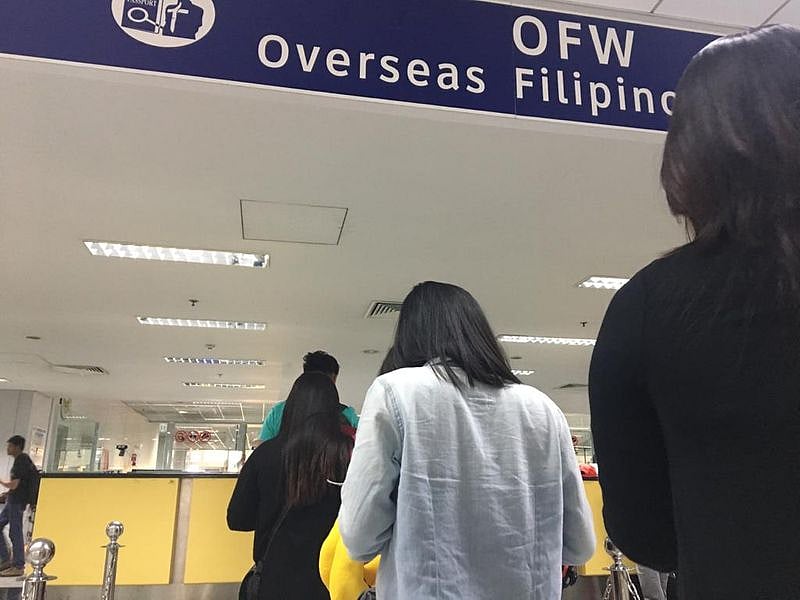
Dubai: Overseas Filipino workers (OFWs) in the UAE and across the Middle East can request help through official government channels during crises such as conflict, disasters, or personal emergencies.
The Philippine Overseas Workers Welfare Administration (OWWA), Department of Migrant Workers (DMW), and Philippine missions in host countries handle all assistance requests through verified systems.
Workers can reach support through embassy or labour office walk-ins, OWWA’s hotline 1348, DMW overseas hotlines, and official messaging channels such as WhatsApp, Viber, and email.
Once a request has been received, authorities assess the urgency and determine the required response, which may include evacuation, shelter, food, medical assistance, or other forms of support.
If going back to the home country is necessary, agencies coordinate with host governments while verifying passports, visas, and exit requirements before arranging safe travel to the Philippines.
Get updated faster and for FREE: Download the Gulf News app now - simply click here.
Fake travel assistance and illegal fees
Philippine officials in the UAE have repeatedly warned OFWs about scammers posing as government representatives offering paid travel assistance services.
The Migrant Workers Office in Dubai and the Northern Emirates has noted that fraudsters are exploiting workers by promising travel arrangements in exchange for money or personal information.
Officials have advised workers not to share documents, send payments, or deal with unauthorised agents, social media accounts, or third-party facilitators.
Moreover, the Philippine Embassy in Abu Dhabi and the Philippine Consulate General in Dubai have alerted that any persons, groups, or travel agencies charging fees for flights arranged by the government are acting illegally and may face legal action.
OFWs have been reminded to report suspicious activity immediately.
Fake jobs and trafficking risks
Philippine authorities have also raised concerns over evolving trafficking schemes linked to false overseas job offers.
The Inter-Agency Council Against Trafficking (IACAT) has reported cases where Filipinos were recruited under fake employment promises abroad, only to allegedly find their contracts altered upon arrival and, in some cases, be forced into military roles in conflict zones.
Officials have described the scheme as a “troubling evolution” in trafficking tactics, exploiting geopolitical instability.
The council has stressed that legitimate overseas employment must always be backed by verified DMW contracts. Job offers without proper documentation or unusually high salaries should be treated as “high-risk” and reported through the national trafficking actionline 1343.
Travel clearance scams targeting families of minors
In another advisory, the Philippine Department of Social Welfare and Development (DSWD) has cautioned parents against fake social media pages offering assistance for travel clearance applications for minors travelling abroad.
Officials have specifically identified Blackbox Travel and Tourism, Flightdeck Junielen Taniola, and Blackboxph Travel Corporation, falsely claiming to process or fast-track flights, visas, tours, and travel clearances. These have been tagged as misleading and not recognised by the government.
Travel clearance is mandatory for minors travelling without parents and must be applied for only through official DSWD channels. Parents have been encouraged to file at least 30 days before departure to ensure smooth processing.
Seafarer safety and right to refuse sailing
Meanwhile, the DMW has been in close coordination with international maritime unions and provided dedicated hotlines for Filipino seafarers operating in Middle East waters and their families.
Earlier, the Arabian Gulf, Strait of Hormuz, and Gulf of Oman have been classified as “warlike operations areas” following rising maritime risks.
Under this designation, Filipino seafarers assigned to vessels passing through these routes have the right to refuse deployment without penalty. Shipowners have been required to implement “increase security measures,” while compensation benefits have been strengthened for affected families.
As tensions and risks continue across parts of the Middle East, OFWs have been told to rely only on official channels, follow the laws of host countries, and report suspicious activity immediately to avoid falling victim and secure access to proper assistance.
Network Links
GN StoreDownload our app
© Al Nisr Publishing LLC 2026. All rights reserved.