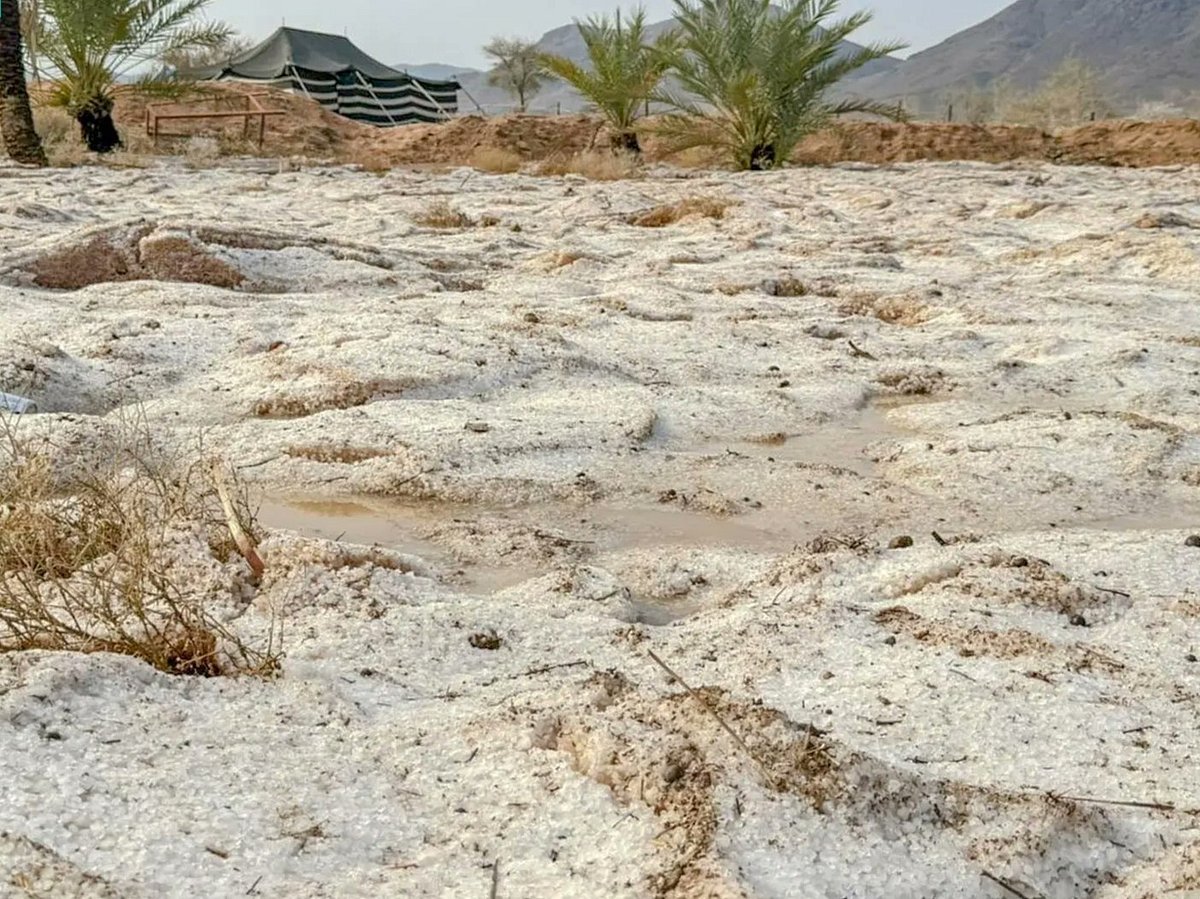
Snow blankets Saudi mountains in rare winter spectacle
Hail saw Saudi Arabia’s coldest winter temperature of minus 10°C on January 16, 2008, the National Center for Meteorology reported, as cited by the Saudi Gazette.
Winter temperature review 1985–2025
The NCM, in a statistical report posted on social media, examined winter minimum temperatures and frost patterns across Saudi Arabia from 1985 to 2025, covering December, January, and February.
Qurayyat in the Al Jouf region recorded the second-lowest temperature at minus 9°C in January 2008, while Turaif in the Northern Borders experienced minus 8°C on multiple occasions. Al Jouf city also saw temperatures drop to minus 7°C in February 1989.
Other cities experienced sub-zero temperatures as follows: Arar –6.3°C, Rafha –5.8°C, Riyadh –5.4°C, Buraidah –5°C, Qassim –4.2°C, Tabuk –4°C, Al-Ahsa –2.3°C, Wadi Al-Dawasir –2°C, Taif –1.5°C, Bisha –1°C, recorded across different years in the study period. The NCM noted that 2008 was among the coldest years on record, with multiple cities recording historic lows.
Cities with most frost days
The report also ranked the top 10 cities by frost days between 1985 and 2025:
Turaif: 720 days
Qurayyat: 588 days
Hail: 339 days
Arar: 277 days
Rafha: 197 days
Sakaka: 185 days
Tabuk: 139 days
Buraidah: 83 days
Al-Qaisumah: 71 days
Riyadh: 46 days
The NCM said the findings support long-term climate research, document historical trends, and raise public awareness about the Kingdom’s diverse climatic conditions.
Weather update: storms and winds continue
The NCM has forecast thunderstorms with hail showers and active winds affecting parts of Jazan, Aseer, Al-Baha, Makkah, Riyadh, Qassim, Eastern Region, Northern Borders, and Al-Jouf.
Fog is also expected in parts of Madinah and Hail regions.
Red Sea: Northern and central winds at 15–45 km/h; southern winds 12–32 km/h; waves 0.5–2 meters; moderate sea conditions.
Arabian Gulf: Southeasterly to northeasterly winds 10–20 km/h, increasing to 15–40 km/h in the afternoon, reaching 50 km/h with rain-bearing clouds; waves 0.5–1.5 meters, exceeding 2 meters with thunderstorms; sea slight to rough with clouds.
Winter boosts ecotourism in Northern Borders
Winter in the Northern Borders region attracts growing numbers of nature enthusiasts. Rainfall and cold temperatures rejuvenate valleys, plains, and vegetation, creating breathtaking natural landscapes.
Tourists engage in hiking, camping, and observing natural phenomena, making winter a key season for ecotourism. Authorities stress safety and preservation of natural sites to maintain sustainable tourism.
Heavy rain in Hail region
Moderate to heavy rain, accompanied by hail, fell across several governorates and villages in Hail. Valleys and streams overflowed, with forecasts indicating more rain in the coming days.
Network Links
GN StoreAbout Gulf NewsTerms & ConditionsReach by GNSitemapContact usPrivacy PolicyGN FocusHave your sayWork with usAdvertise with usGulf News epaperPrinting Services
Download our app
© Al Nisr Publishing LLC 2026. All rights reserved.