Saudi Arabia uncovers more than 1,700 artefacts at historic Al Juhfah Hajj site
13 tombstones dating back to the Umayyad and Abbasid period unearthed
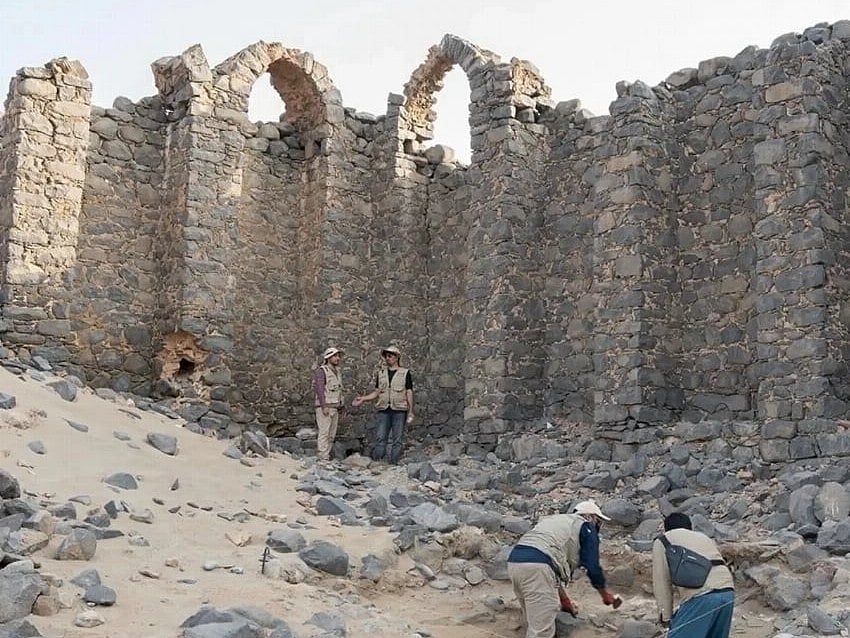
More than 1,700 artefacts have been uncovered at the archaeological site of Miqat Al Juhfah, highlighting the historical importance of one of the key stations on the ancient Hajj route to Mecca, Saudi Arabia's Heritage Commission said.
The discoveries were made during the completion of the first season of survey and documentation work at the site by the Heritage Commission, in collaboration with the UK's University of Exeter.
Get updated faster and for FREE: Download the Gulf News app now - simply click here.
The findings included pottery, glass and stone fragments, as well as shells, crafted objects and other archaeological remains, underscoring Al Juhfah's significance along the historic Egyptian Hajj route. Archaeologists said the artefacts reflected various aspects of daily life and included shells, beads and metal objects.
Researchers also uncovered six pottery kilns and a water channel believed to have served pilgrims and travellers passing through the site, in addition to 13 tombstones, some dating back to the Umayyad and Abbasid periods.
The discoveries provide fresh insight into the role of Al Juhfah as a major stop for pilgrims and travellers and add to growing evidence of the site's historical and cultural importance in the early Islamic era.
The excavation also yielded artefacts originating from regions including the Levant, Egypt and Abyssinia (modern-day Ethiopia), indicating that pilgrims from across the Islamic world passed through the Miqat.
Located 187 km northwest of Mecca, Al Juhfah has served as a designated pilgrimage station since the early Islamic period. Historical sources link the site to the Prophet Muhammed’s (Peace Be Upon Him) migration and indicate that it flourished in the second century AH, with water facilities and shops catering to pilgrims.
The survey and excavation work forms part of the Heritage Commission’s broader efforts to identify and document archaeological and historical landmarks along the Hijrah Route between Mecca and Medina.
The initiative also aims to accelerate scientific research and exploration while providing new insights into the Kingdom’s rich cultural heritage and historical development.
Network Links
GN StoreDownload our app
© Al Nisr Publishing LLC 2026. All rights reserved.