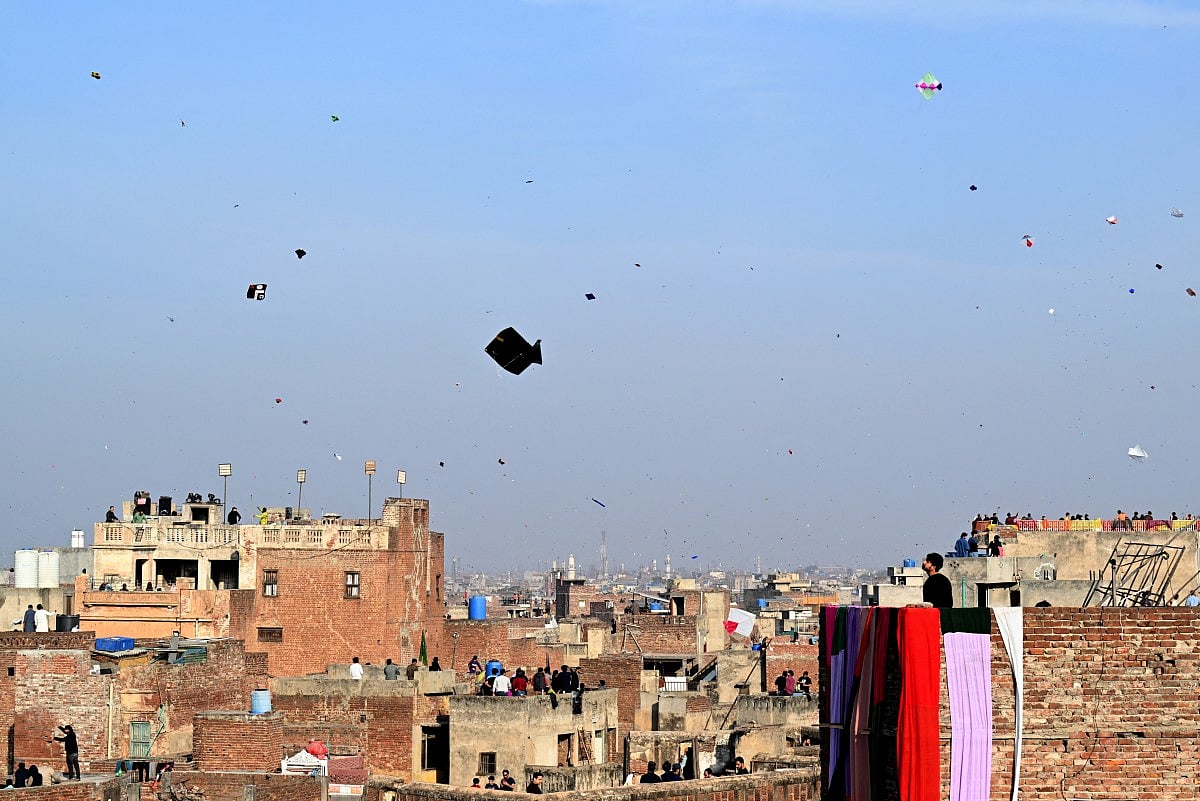
Dubai: At least 17 people lost their lives during Lahore’s recently revived Basant festival, the Punjab home department informed the Lahore High Court (LHC) on Wednesday, highlighting the human toll of the historic kite-flying event’s return after nearly two decades.
The three-day festival, held from February 6 to 8, marked Basant’s revival after an 18-year ban, with the Punjab government permitting celebrations under the newly enacted Punjab Regulation of Kite Flying Ordinance 2025 and promising stringent safety measures.
Despite those precautions, authorities reported more than 100 accidents linked to the festivities, Dawn reported.
The casualty figures emerged during proceedings before Justice Owais Khalid, who was hearing a petition seeking details of deaths and injuries associated with Basant.
According to the official report submitted to the court, three individuals died from electrocution, while two others were killed after falling from trees. The majority of fatalities — 12 deaths — resulted from people falling from rooftops during the celebrations.
The court also sought data on injuries caused by kite strings, a long-standing safety concern tied to Basant. However, the petitioner’s counsel, Advocate Azhar Siddique, told the bench that the requested information had not been provided.
The festival, once a signature cultural event in Punjab, was banned in 2007 following a surge in deaths and serious injuries. Authorities at the time cited the dangers posed by sharp, metallic and chemical-coated kite strings, which frequently caused fatal throat injuries to motorcyclists and pedestrians. Celebratory gunfire also contributed to casualties.
In reviving the festival this year, the Punjab government imposed a series of regulations aimed at preventing a repeat of past tragedies.
Under the new ordinance, only thread-based kite strings were permitted, with the manufacture and use of metallic, chemical-coated, or sharp strings strictly prohibited.
Officials also divided Lahore into designated kite-flying zones under round-the-clock surveillance. Additional safety measures included mandating protective wires or antennas on motorcycles to reduce the risk of neck injuries, alongside a ban on aerial firing and alcohol consumption on rooftops during celebrations.
The matter remains under judicial scrutiny as the LHC continues to examine the implementation and effectiveness of the new kite-flying regulations.

Sign up for the Daily Briefing
Get the latest news and updates straight to your inbox
Network Links
GN StoreDownload our app
© Al Nisr Publishing LLC 2026. All rights reserved.