Basant: The colourful sky belongs to Lahore again
Kite flying festival returns not just as a festival, but as a feeling, stitching memories
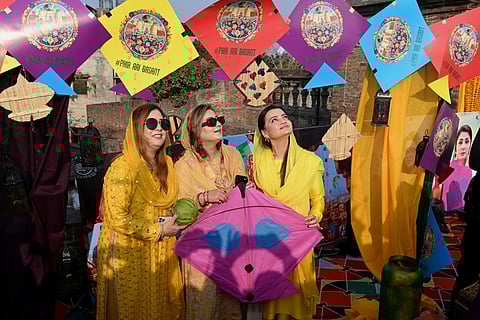
Dubai: For years, the skies of Lahore felt quieter.
Too quiet. Where once colour ruled the air and rooftops pulsed with laughter, there was only memory, folded carefully away like an old kite saved in a cupboard, its string still carrying the scent of winter sun.
Then Basant returned in Lahore with special celebrations from Feb. 6 to 8. And with it, something Lahore had been holding its breath for.
This was never just about kite flying. Basant is a feeling you carry long after the season ends, a bond formed on rooftops, between neighbours who were strangers yesterday, between parents and children learning how to fly a kite and read the wind. Pakistanis travelled home from across the world not merely to attend an event, but to return to a version of themselves that only Basant could unlock.
Only those like me who grew up flying kites truly understand it. The thrill of shouting “Bo-kata!”, the sting of cold fingers in January air, the sound of rooftops erupting in celebration when a rival kite fell. It was a year-long sport, but winter was its grand stage. In old Lahore, every child knew how to fly a kite, it wasn’t taught, it was inherited. Just like cricket played in every street, Basant was instinct. A natural-born talent passed down through laughter and scraped knuckles.
When the festival was banned, the city complied, but it never healed. The ban took more than kites from the sky; it took a shared joy, a cultural rhythm, a reason for families to gather on rooftops and for Lahore to celebrate itself.
Basant mattered because it blurred lines, rich and poor, young and old, locals and overseas Pakistanis, everyone looked up at the same sky.
Its revival is why this moment feels emotional rather than political. Hats off to Chief Minister Punjab, Maryam Nawaz, for bringing back not just an event, but a piece of Lahore’s identity. Reviving Basant was an acknowledgement that culture, when nurtured responsibly, heals more than it harms.
Basant and Eid
In Lahore, Basant has always rivalled Eid. Not in prayers or rituals, but in joy. Eid comes twice a year; Basant came with anticipation, preparation, strategy, and rivalry. It turned rooftops into stadiums and the sky into a canvas.
Basant is also a festival of colour and flavour. Streets, rooftops, and markets glow with vibrant clothes, bright dupattas, scarves, and turbans fluttering in the wind, as children and adults alike dress for the celebration. Special foods add to the joy: families prepare pakoras, jalebis, gajjak, and steaming cups of chai, sharing stories and laughter while enjoying kite flying.
As kites rise again, so do memories of fathers teaching sons, of mothers shouting warnings from below, of a city alive in colour. Basant’s return reminds us that traditions don’t die; they wait. And sometimes, when the wind is right, they fly again.


