Why Basant’s return matters for Punjab’s cultural spirit
Revival of spring festival restores tradition of joy, coexistence and creative expression
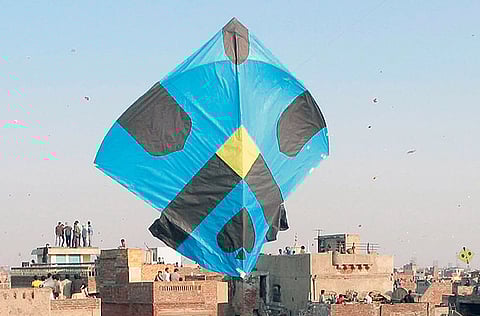
The announcement by the Government of Punjab allowing the celebration of Basant in February 2026 marks the return of a festival that has long been woven into the cultural fabric of the region. For centuries, Basant was not merely an event — it was a symbol of joy, artistic expression, and communal harmony. Its absence left a noticeable void, not only in the seasonal calendar but in the collective emotional landscape of Punjab’s people. Now, as the province stands ready to welcome back this vibrant festival, it is worth reflecting on the genesis of Basant, its social meaning, and why its revival matters in today’s Pakistan.
The roots of Basant in Punjab stretch far deeper than the kite strings that colour its sky. Historically associated with the advent of spring — Basant Panchami in the broader South Asian tradition — it began as a celebration of renewal, warmth, and the end of winter’s gloom. In pre-modern Punjab, rural and urban communities awaited this transitional moment when the mustard fields turned yellow, the air softened, and nature itself seemed to exhale. The festival emerged organically as people stepped outdoors to enjoy the milder weather, dressing in yellow to echo the blooming landscape and engaging in kite-flying as a playful symbol of freedom and aspiration.
Kite-flying a cultural expression
Over time, kite-flying became the defining cultural expression of Basant, particularly in the 19th and early 20th centuries when cities like Lahore, Amritsar, Gujranwala and across undivided Punjab transformed the tradition into a spirited urban celebration. Rooftops became arenas of friendly competition; families gathered for feasts; musicians and poets invoked the season’s romance. Crucially, Basant transcended religious and communal boundaries. Before the partition of Punjab in 1947, Muslims, Hindus, Sikhs, and Christians all participated with equal fervor. It was a festival not of identity but of shared belonging. In a region often stereotyped for conflict, Basant stood out as a testament to coexistence.
Partition fractured the social fabric of Punjab, but the festival endured. In Pakistani Punjab for decades, it was one of Lahore’s iconic cultural signatures. In the early 2000s, it reached unprecedented levels of popularity, drawing tourists from across the world and generating significant economic activity. Yet it also came to be associated with tragedy due to the rise of metallic kite strings and unsafe kite-flying practices, resulting in injuries, property damage, and, in some cases, loss of life. These incidents precipitated the ban that has lasted for years.
Cathartic escape
The ban, though understandable from a public-safety standpoint, gradually deprived Punjab of an event that had long served as a cultural pressure-valve. Festivals, by their very nature, offer a cathartic escape from the burdens of daily life. They create moments where communities forget divisions and simply celebrate humanity’s timeless need for beauty, connection, and laughter. For ordinary Pakistanis — especially the youth who have come of age in an environment marked by crises — the revival of Basant offers an opportunity to feel the lightness that has lately been missing from public life.
This is why the government’s decision taps into something much deeper than nostalgia. It acknowledges a psychological and cultural need. People need something to look forward to, a chance to celebrate without political overtones, to stand together on rooftops and watch a sky filled with yellow kites rising like small suns. Basant, in this sense, is not merely a festival; it is an antidote to collective fatigue.
Responsible approach
However, the return of Basant must be approached with responsibility. The festival previously became dangerous not because of the tradition itself, but because of violations that distorted its spirit. For Basant to reclaim its rightful place in Punjab’s annual calendar, the government must implement strict conditions and ensure transparent enforcement. The key guidelines reportedly under consideration — and essential for public confidence — include: complete ban on metallic or chemically treated kite strings, with only traditional cotton twine allowed; limited day time kite flying hours; certified kite manufacturers; designated kite flying zones; heavy penalties for violations; emergency response preparedness and public safety awareness campaigns.
If these conditions are executed faithfully, Basant can return as the joyous, colorful, and safe celebration it once was. Punjab’s cultural history deserves preservation, but not at the cost of public safety. A balanced approach is not only possible — it is necessary.
As the province prepares for the spring of 2026, there is a quiet but palpable hope that Basant’s revival will mark more than just the return of a festival. Perhaps it will signal the return of optimism, communal warmth, and creative expression in a society desperately in need of positive energy. If the celebrations proceed responsibly and without incident, Basant may once again become a permanent fixture in Punjab’s cultural calendar — reminding us that even in difficult times, the human spirit continues to seek colour, joy, and connection.
Sajjad Ashraf served as an adjunct professor at the Lee Kuan Yew School of Public Policy, National University of Singapore from 2009 to 2017. He was a member of Pakistan Foreign Service from 1973 to 2008 and served as an ambassador to several countries.

