Renowned chefs including Raymond Blanc, Michel Roux Jr and Richard Corrigan have publicly backed the campaign.
Can the king save London’s 99-year-old iconic Indian restaurant?
Over 18,000 people rally to protect a century-old culinary landmark from closure
Last updated:
5 MIN READ
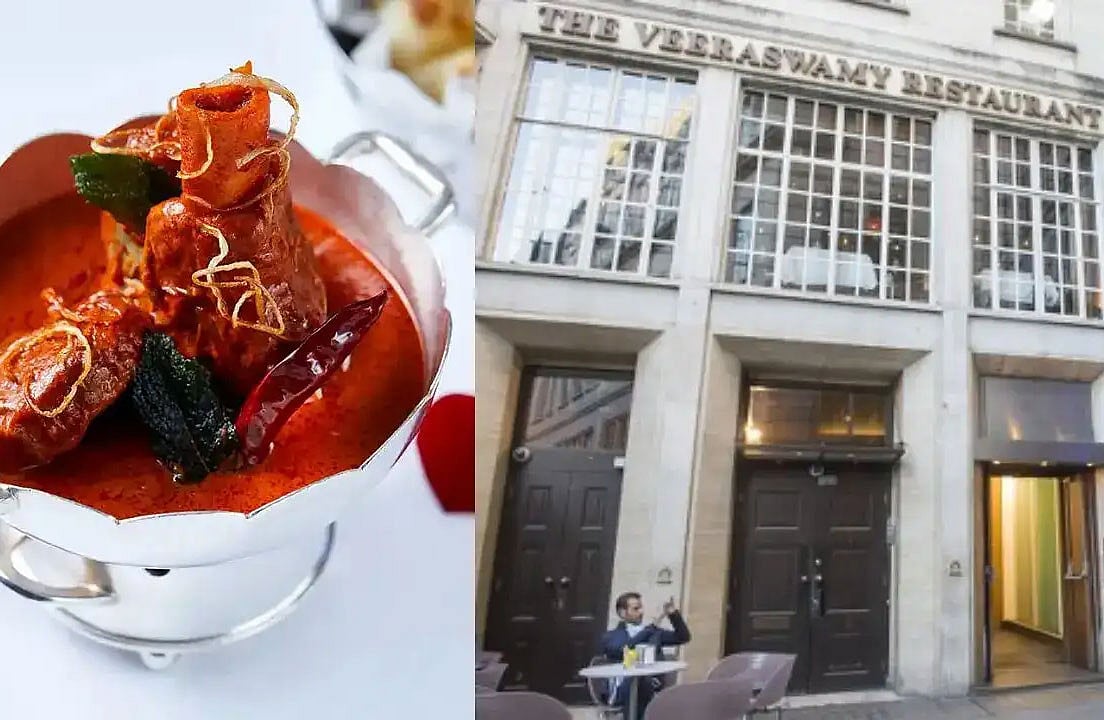
Founded in 1926, the restaurant is still operating from its original home at Victory House on London’s Regent Street.
Dubai: Campaigners are rallying to save Veeraswamy, Britain’s oldest surviving Indian restaurant, by taking a petition to the gates of Buckingham Palace in the coming weeks, urging King Charles III to step in.
Founded in 1926 and still operating from its original home at Victory House on London’s Regent Street, Veeraswamy faces possible closure after its landlord — the Crown Estate — declined to renew its lease, citing major refurbishment plans for the building.
The Crown Estate, which manages vast property holdings on behalf of the nation with profits flowing to the UK Treasury, says the upgrade is incompatible with the restaurant remaining in its current space.
“This is not a decision we’ve taken lightly,” a spokesperson said, adding that the building requires modernisation and office upgrades.
But supporters argue the loss would erase a living piece of British-Indian cultural history.
A petition, celebrity chefs and growing public pressure
According to BBC, more than 18,000 people have already signed a petition calling for the restaurant’s protection as it approaches its 100th anniversary in March.
Timeline: Veeraswamy’s 99-Year Journey
1926: Veeraswamy opens on Regent Street, founded by Edward Palmer and Faiz-un-Nisa Begum, aiming to introduce Britain to Indian cuisine.
1934: Bought by MP Sir William Steward, who travels extensively across India collecting recipes, artefacts and chefs, elevating it into a global dining destination.
1940s (WWII Blitz): The restaurant continues serving food even as London faces heavy bombing during the war.
1950s–1970s: Becomes a fashionable West End hotspot, frequented by politicians, diplomats and film stars.
1996: Taken over by Namita Panjabi and Ranjit Mathrani of MW Eat, who restore and modernise the restaurant while preserving its heritage.
2008 & 2017: Veeraswamy’s chefs cater events at Buckingham Palace for visiting Indian dignitaries.
2017; Awarded its first Michelin star, which it has retained since.
2025–26: The Crown Estate declines to renew its lease, citing major refurbishment plans for Victory House.
2026 (March): Restaurant approaches its 100th anniversary as campaigners plan petition to Buckingham Palace.
Spring/Summer 2026: Court hearing expected to decide whether Veeraswamy can extend its lease under protected tenancy laws.
Why it matters
Britain’s oldest surviving Indian restaurant, operating continuously since 1926
A pioneer that helped make Indian cuisine mainstream in the UK
A living symbol of Indo-British cultural ties spanning a century
Hosted historic figures like Mahatma Gandhi and Jawaharlal Nehru
A landmark of London’s culinary heritage, surviving war, social change and generations of diners
A Michelin-starred institution that blends history with modern fine dining
Its closure would mark the loss of a rare historic restaurant still in its original location
Seen by chefs and historians as irreplaceable — not just a business, but a cultural institution
Renowned chefs including Raymond Blanc, Michel Roux Jr and Richard Corrigan have publicly backed the campaign.
Corrigan summed up the mood bluntly: “Most European cities cherish their legendary restaurants. Why in the name of God would we want to lose Veeraswamy?”
The Soho Society’s chair Lucy Haine has also thrown her support behind the effort, calling its closure a “major loss to London’s history and culinary heritage” and pushing for the restaurant to be recognised as an asset of community value.
A landmark that shaped Britain’s love affair with Indian food
According to India Today and the The Times of India, Veeraswamy was founded by Edward Palmer — the great-grandson of a senior British colonial official — along with Faiz-un-Nisa Begum, a Mughal princess.
Their vision was to introduce British diners to authentic Indian cuisine at a time when such food was largely unknown in the UK.
In 1934, MP Sir William Steward took over the restaurant, travelling extensively across India to collect recipes, artefacts and recruit skilled chefs — transforming Veeraswamy into a magnet for the global elite.
Over the decades, its guest list has read like a who’s who of history and celebrity, including:
Mahatma Gandhi
Jawaharlal Nehru
Winston Churchill
Charlie Chaplin
Marlon Brando
Princess Anne
David Cameron
More recently, the restaurant earned and retained a Michelin star from 2017 onward, cementing its reputation as a fine-dining institution with signature dishes such as Lobster Malabar Curry, Raj Kachori and Roast Duck Vindaloo.
The legal battle ahead
The The Times reports that Veeraswamy’s lease is due to expire in June next year, with a court hearing in spring or early summer set to determine whether it can extend its tenancy for another 14 years under protected tenancy laws.
Owner Ranjit Mathrani, now 81, says the decision came as a shock — particularly as the Crown Estate had invited him just a year earlier to consider expanding into more space within the building.
He argues that under UK law, the restaurant has the right to seek renewal unless refurbishment would make business impossible.
Mathrani is seeking at least two years to relocate if necessary, warning that an abrupt eviction could force permanent closure, redundancies and the loss of its iconic decor inspired by 1920s art nouveau and royal Indian palaces.
Crown Estate says it will help — but the site must change
While standing firm on the refurbishment, the Crown Estate says it has offered assistance, including helping the owners find alternative premises within its property portfolio and providing financial compensation.
“We need to ensure the building meets modern standards and is brought back into full use,” the organisation said, stressing its duty to generate value for the nation while stewarding historic properties responsibly.
A century of memories — and a fight to preserve them
Veeraswamy famously continued serving food even during the wartime Blitz and is often credited with popularising the classic British pairing of curry and beer — a tradition said to have begun when Prince Axel of Denmark drank Carlsberg there in the 1920s.
Mathrani says customers regularly share emotional stories tied to the restaurant.
“We hear people say: ‘I first came here with my godfather when I was 12,’ or ‘I was engaged here during the Blitz,’ or ‘my uncle brought me here in the 1950s.’”
Supporters hope that, even if officially the matter rests with the Crown Estate, the King might quietly encourage a compromise.
But Buckingham Palace has so far said the issue lies with the property managers.
As the centenary approaches and legal proceedings loom, food lovers, historians and campaigners are watching closely — hoping London does not lose one of its most enduring culinary landmarks.

A Senior Associate Editor with more than 30 years in the media, Stephen N.R. curates, edits and publishes impactful stories for Gulf News — both in print and online — focusing on Middle East politics, student issues and explainers on global topics. Stephen has spent most of his career in journalism, working behind the scenes — shaping headlines, editing copy and putting together newspaper pages with precision. For the past many years, he has brought that same dedication to the Gulf News digital team, where he curates stories, crafts explainers and helps keep both the web and print editions sharp and engaging.
Sign up for the Daily Briefing
Get the latest news and updates straight to your inbox
Network Links
GN StoreAbout Gulf NewsTerms & ConditionsReach by GNSitemapContact usPrivacy PolicyGN FocusHave your sayWork with usAdvertise with usGulf News epaperPrinting Services
Download our app
© Al Nisr Publishing LLC 2026. All rights reserved.