A view of Al Safadi restaurant in earlier days
EXCLUSIVE
From Beirut butchery to Dubai comfort food institution: How Safadi family built a three-generation Lebanese hot spot without 'Succession-style' drama
How a humble Lebanese butchery became Dubai’s go-to comfort food destination
Last updated:
4 MIN READ
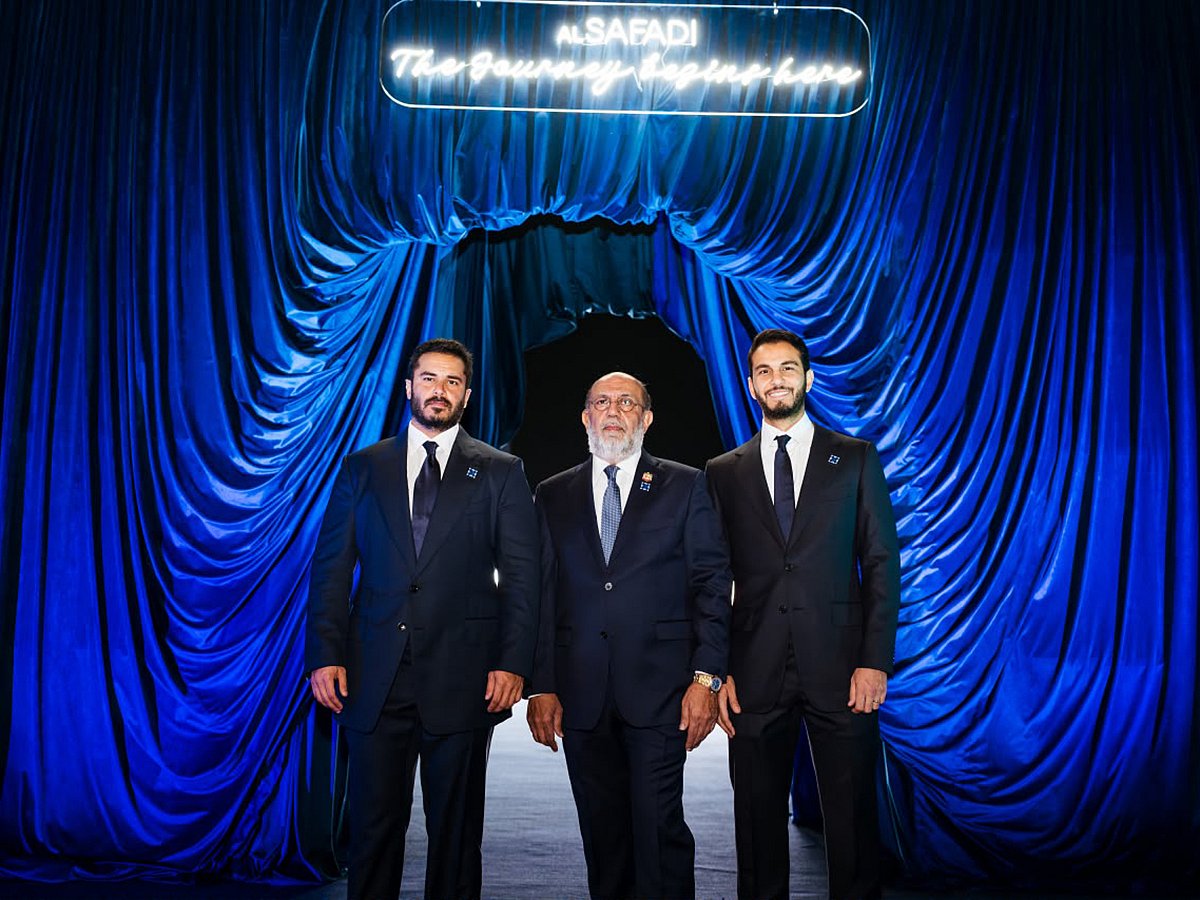
The forces behind the iconic food empire: Abed Safadi (left), Fadi Safadi (centre) and Fadl Safadi.
Dubai: If you've watched HBO's hit show Succession, you'll know one thing: building a business is hard. Passing it on is even harder.
So when I jokingly ask brothers Fadl and Abed Safadi whether their family has ever resembled the Roys—the billionaire clan whose empire is fuelled by sibling rivalry, bruised egos and inheritance battles—they laugh.
"We don't have Succession-style conflict or crazy drama like the show," Fadl says with a laugh, glancing at his brother Abed, who nodded furiously.
And this answer was no accident. The Safadis' story began not with a restaurant empire but with a humble butchery in Lebanon. Their grandfather first built a livelihood around quality meat before their father transformed the business into a restaurant in Beirut. In 2000, he took an even bigger gamble, bringing the family concept to Dubai, a city that was only beginning to emerge as a global dining destination.
Twenty-five years later, that leap of faith has grown into one of the UAE's best-known homegrown hospitality brands. On some days, you can even spot UAE royalty making a quick stop.
And, if you've lived in Dubai long enough, chances are you've broken warm Arabic bread at Al Safadi, scooped up creamy hummus, tucked into smoky grilled meats or ordered one of its generous family platters after a long day.
For many residents, it isn't simply a Lebanese restaurant; it has quietly become comfort food, celebration food and, on the busiest days, an extension of home.
Fadl knows exactly when I mention that.
"Some people literally tell us, 'You are an extension to my kitchen,'" he says. "Whenever I don't want to think, I just order your food."
He pauses before explaining why that means more to him than any business milestone.
"When someone tells you you're an extension to my kitchen... they are sure your hygiene is as clean as my kitchen."
For the brothers, that trust, not expansion, is the real currency.
Now the responsibility of protecting that trust rests with the second generation.
As Chief Operating Officer, Fadl oversees operations. His brother Abed, the Chief Marketing Officer, shapes the brand. But neither believes their job is to reinvent what their father built.
"I wouldn't call it a hustle as much as it's hard work," says Abed.
"What made us be there for the last 25 years is having a great team... believing in the vision, believing in the long-term vision."
A peek into the Al Safadi central production unit
Unlike many second-generation entrepreneurs eager to make their mark, the brothers deliberately resisted the temptation to tear everything down.
"Usually, whenever you see a younger generation going to the business, the first thing they do is revamp," Fadl says.
"They say everything that's been done is wrong. Actually, we didn't do any of this."
Instead, they became custodians.
"We believe in the consistency of the tradition," he says.
Abed laughs as he describes the balancing act.
"We don't want to be dinosaurs, and at the same time, we don't want to be TikTokers."
That philosophy extends beyond marketing campaigns.
When ingredient prices rise, the brothers say their first instinct isn't to protect profit margins.
"Our margins can probably be 30 or 40 per cent more than what they are now," Abed says. "But you're thinking short term."
Instead, Fadl says they often absorb higher costs for as long as possible.
"We always say, let's do it. Let's show the customer the value."
Nearly every answer during our conversation circles back to one person—their father.
"My father established something in 2000," says Abed.
"When me and Fadl started working with him, there was really something that was very well established. We didn't have to fix anything. We just had to continue with his vision."
Perhaps his greatest lesson wasn't about food at all.
It was about succession.
"He said, 'I did not sell for the money,'" Fadl recalls.
"I sold because I didn't want my kids to inherit a family business. I want them to inherit a proper company.'"
That meant introducing private equity, governance and accountability.
"Whoever has a partner has a boss," Fadl says.
It also meant giving his sons room to fail.
"He really let us experiment," says Abed. "He let us make mistakes."
The toughest lesson came during Covid-19 and later with the closure of their Palm Jumeirah outlet at The Pointe.
"I was stressing a lot day and night," Fadl admits.
"You always feel, whenever you are in the crisis, that this is the end."
Instead, Festival City outpost soon opened and exceeded expectations.
"When you step back," he says, "you look at the overall picture."
Today, both brothers are raising children of their own, and the conversation turns from succession to parenting.
Fadl tells me he recently made his children fly economy.
"Life can be this," he says. "Life can be this. We are very blessed to be able to do this, but life can be this... We want to teach our kids that this is not life."
It feels like the perfect metaphor for the family's own journey.
From a neighbourhood butcher's shop in Lebanon to a restaurant in Beirut. From one bold move to Dubai to a homegrown UAE success story spanning three generations.
And perhaps, if the brothers have their way, many more to come.
Near the end of our conversation, I describe what the family has built as an empire. Fadl smiles before gently correcting me.
"I like when we call it an institution."
Because institutions, unlike empires, are built to outlive the people who started them.
Network Links
GN StoreAbout Gulf NewsTerms & ConditionsReach by GNSitemapContact usPrivacy PolicyGN FocusHave your sayWork with usAdvertise with usGulf News epaperPrinting Services
Download our app
© Al Nisr Publishing LLC 2026. All rights reserved.