UAE elevates worker safety and wellbeing standards to advanced levels
Multiple programs show the UAE’s commitment to improving workforce quality of life
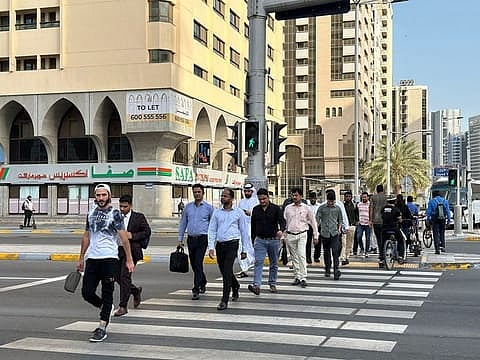
The United Arab Emirates continues its efforts to strengthen workers’ rights and provide a safe and sustainable working environment through an integrated framework of legislation and policies that place workers’ health, safety, and quality of life among its top priorities, supporting economic development and social stability.
The UAE remains focused on enhancing occupational health and safety standards and implementing best practices that protect workers and improve their wellbeing, recognizing human capital as a key partner in the nation’s development journey. This approach further reinforces the country’s position as a preferred global destination for living, working, and investment.
Get updated faster and for FREE: Download the Gulf News app now - simply click here.
In this context, the UAE today (Monday) begins implementing the “Midday Break Policy” for the 22nd consecutive year, effective from 15 June to 15 September 2026. The policy prohibits outdoor work under direct sunlight daily from 12:30 p.m. to 3:00 p.m.
The continued enforcement of this policy reflects the UAE’s humanitarian approach to regulating the labour market, contributing to improved worker productivity and safeguarding their wellbeing. This is further supported by the provision of more than 12,000 air-conditioned rest stations equipped with essential amenities for delivery service workers across the country.
These measures complement the UAE’s broader efforts to enhance job stability and protect workers’ financial rights. The Ministry of Human Resources and Emiratization (MoHRE) has issued a decision designating the first day of every calendar month as the unified salary due date for private-sector employees, effective from June 2026.
Companies are required to process salary payments through the Wage Protection System (WPS) in accordance with specified regulations, promoting transparency and discipline in wage disbursement, strengthening labour relations, enhancing governance efficiency, and increasing labour market competitiveness.
As part of its commitment to worker wellbeing and social integration, MoHRE launched a wide range of social and humanitarian initiatives throughout 2026, covering national, religious, and international occasions. Under its Ramadan campaign, titled “Ramadan Brings Us Together with Our Workers,” the Ministry distributed Ramadan food packages and Iftar meals across the UAE, while also organizing three Ramadan tents for fasting workers in cooperation with the Emirates Red Crescent Authority, Beit Al Khair Society, and the UAE Food Bank. These initiatives created a collective atmosphere that reflected the values and spirit of the holy month.
The Ministry also continued to celebrate workers during festive occasions. Gifts were distributed during Eid Al-Fitr in appreciation of their contributions, while Eid Al-Adha events were organized at 30 locations across the country, engaging approximately 300,000 workers under the theme “The Happiness of Our Workers is the Joy of Our Festivals.” The events featured recreational and competitive activities, as well as prize draws.
Similarly, the Ministry’s celebrations of International Workers’ Day on 1 May included more than 18 initiatives and activities across over 40 locations. These included sports tournaments such as cricket and workers’ running events, recognition ceremonies, workplace visits, and gift distributions at shopping centres, all aimed at honouring workers’ daily contributions and reinforcing their valued role in society.
These diverse events, together with field initiatives implemented by local authorities—including awareness programmes, sporting events, and wellbeing campaigns benefiting hundreds of thousands of workers—demonstrate the UAE’s sustained commitment to enhancing the quality of life of its workforce. This approach further consolidates the country’s standing as a global model for worker welfare and social and human stability.
Official indicators and statistics for 2025 highlight the significant progress achieved by the UAE in strengthening workers’ rights and ensuring their wellbeing, as well as the effectiveness of the systems and policies designed to protect their financial, health, and social interests.
The percentage of private-sector workers registered under the Wage Protection System reached 99%, while an equal percentage benefited from the Workers’ Insurance Programme. More than 38,000 workers received benefits under the programme, with total payouts exceeding AED 300 million by the end of 2025.
Registration under the Unemployment Insurance Scheme reached approximately 90% of the targeted workforce, with compensation payments exceeding Dh350 million between the beginning of 2024 and the end of 2025.
In terms of awareness and education, all targeted workers completed mandatory orientation programmes offered in 17 languages, while more than three million workers benefited from specialized awareness initiatives.
Regarding accommodation, over 2,700 companies were registered in the workers’ housing system, benefiting around 1.9 million workers. These accommodations comply with the highest standards of occupational safety and health, reflecting the UAE’s commitment to ensuring workers’ quality of life and comprehensive wellbeing.
As one of the world’s largest destinations for foreign labour and a member of the International Labour Organization (ILO), the Arab Labour Organization (ALO), and several multilateral organizations concerned with labour affairs, the UAE reaffirms its commitment to transparency and objectivity in fulfilling its obligations toward expatriate workers. This commitment strengthens the protection of workers’ rights and promotes the adoption of international best practices.
The UAE continues to conduct comprehensive evaluations of all stages of the employment cycle, from recruitment and hiring procedures to workplace conditions and the provision of suitable accommodation. These efforts ensure the protection of workers’ rights, guarantee treatment based on respect and equality, and enable workers to report labour disputes or cases of mistreatment easily and reliably through approved channels.
Network Links
GN StoreDownload our app
© Al Nisr Publishing LLC 2026. All rights reserved.