New UAE driving test rules for 2027: Why scoring 75% won't guarantee a pass
Updated regulations highlight six mistakes that could cause learners to fail
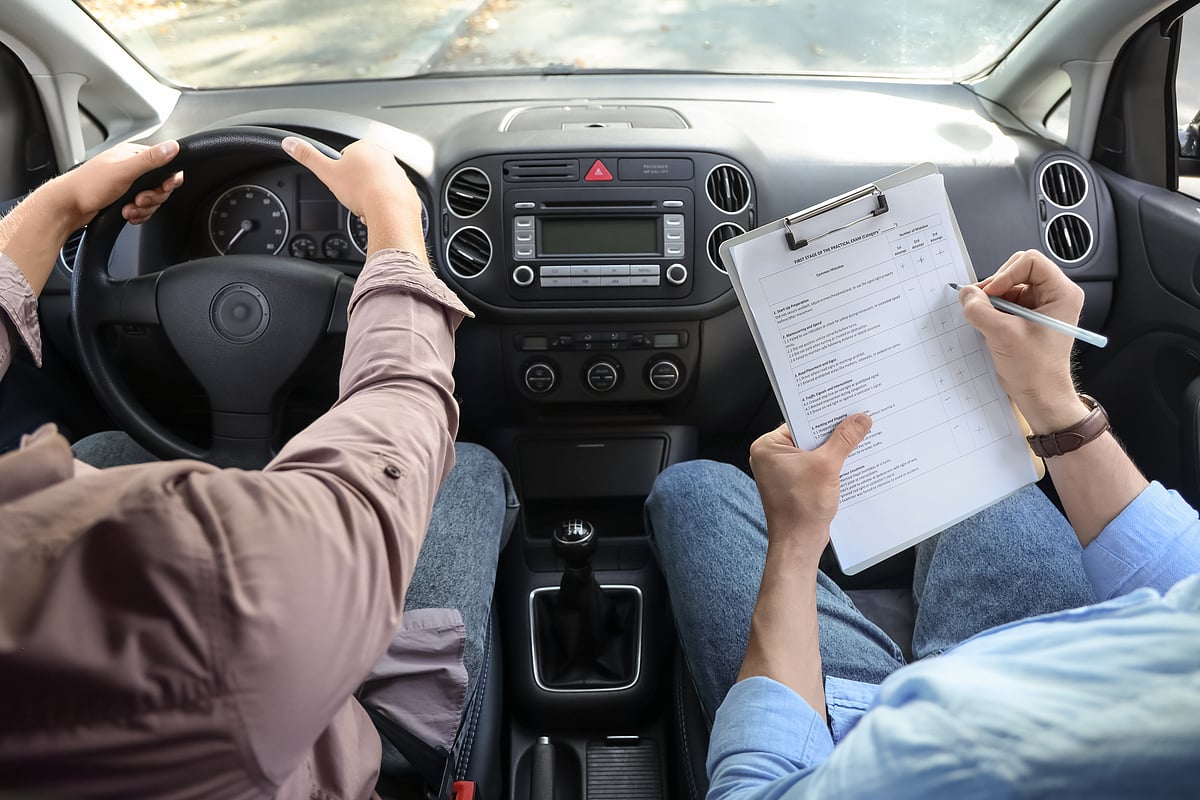
Dubai: Scoring 75 per cent in your UAE driving test may not be enough to secure a licence. Under new federal traffic regulations taking effect on January 1, 2027, learner drivers can still fail their practical test if they make certain dangerous mistakes, even after achieving the minimum passing score.
The regulations also set out how theory and practical tests must be conducted, the driving skills applicants will be assessed on and what happens if they fail.
The requirements are outlined in Cabinet Decision No. 174 of 2026, approving the Executive Regulation of Federal Decree-Law No. 14 of 2024 on the Regulation of Traffic. The decision was published in the UAE Federal Official Gazette on October 6, 2026.
Get updated faster and for FREE: Download the Gulf News app now - simply click here.
Why scoring 75% may not guarantee a pass
Under Article 68, applicants must obtain at least 75 per cent of the total evaluation marks to pass the practical driving test.
However, the regulation explicitly states that candidates can still fail, even after achieving the required score, if they cause actual or potential danger to themselves or others.
The same applies if an examiner has to intervene verbally or physically to prevent a dangerous situation.
UAE driving test rules: What has changed from the previous law?
Under the previous UAE traffic regulations, Article 97 of Ministerial Resolution No. 130 of 1997, applicants needed to score at least 75 per cent to pass. The old law also listed dangerous driving mistakes that could result in automatic failure.
The new regulations make this clearer by explicitly stating that applicants can fail even if they score 75 per cent or above, if they make dangerous mistakes or require examiner intervention.
The updated regulations provide greater clarity on the passing requirements and specify the driving errors that can result in automatic failure, regardless of the applicant’s overall score.
Six driving test mistakes that can result in failure
Article 68 identifies several mistakes that can be classified as potential danger, including:
Hitting barriers: The vehicle's body or wheels touching designated barriers or boundaries.
Losing control when starting: The vehicle moving unintentionally because the driver fails to control it.
Gear-changing mistakes: Making errors while shifting gears.
Incorrect parking: Failing to stop or position the vehicle in the designated space.
Ignoring traffic rules: Violating traffic signs or signals.
Motorcycle errors: A motorcycle applicant's foot touching the ground while riding.
These errors can result in failure regardless of the applicant's overall score.
What will examiners assess during the practical test?
Under Article 66, applicants who pass the theory test must complete a practical assessment according to the licensing authority's approved testing plan.
The assessment covers several essential driving skills, including:
Starting the engine and controlling the vehicle.
Driving forwards and backwards, including on slopes.
Changing gears and stopping safely in normal and emergency situations.
Parallel parking and parking between vehicles or designated markings.
Changing lanes, turning and using indicators correctly.
Navigating intersections and roundabouts.
Overtaking and maintaining a safe distance from other vehicles.
Using mirrors and parking brakes correctly.
Following traffic signals, road markings and examiner instructions.
Licensing authorities may introduce additional assessment criteria where necessary.
Does the 75% passing mark also apply to the theory test?
According to Article 65, the theory test is graded out of 100 marks, and applicants must obtain at least 75 per cent to pass.
What happens if you fail the practical test?
Under Article 69, applicants who fail their practical driving assessment will be scheduled for another test.
The provision does not specify a uniform waiting period for retaking the test. The relevant licensing authority determines the applicable testing arrangements.
The new regulations have been issued but will only take effect on January 1, 2027. Further details on how the assessment criteria and testing procedures will be implemented are expected to be provided by the relevant licensing authorities.
Network Links
GN StoreDownload our app
© Al Nisr Publishing LLC 2026. All rights reserved.