Robotic firefighting units deployed by Sharjah Civil Defence during industrial fire response operations.
EXCLUSIVE
Sharjah deploys firefighting robots in hazardous zones
Six advanced robots help firefighters tackle extreme heat and warehouse blazes
Last updated:
3 MIN READ
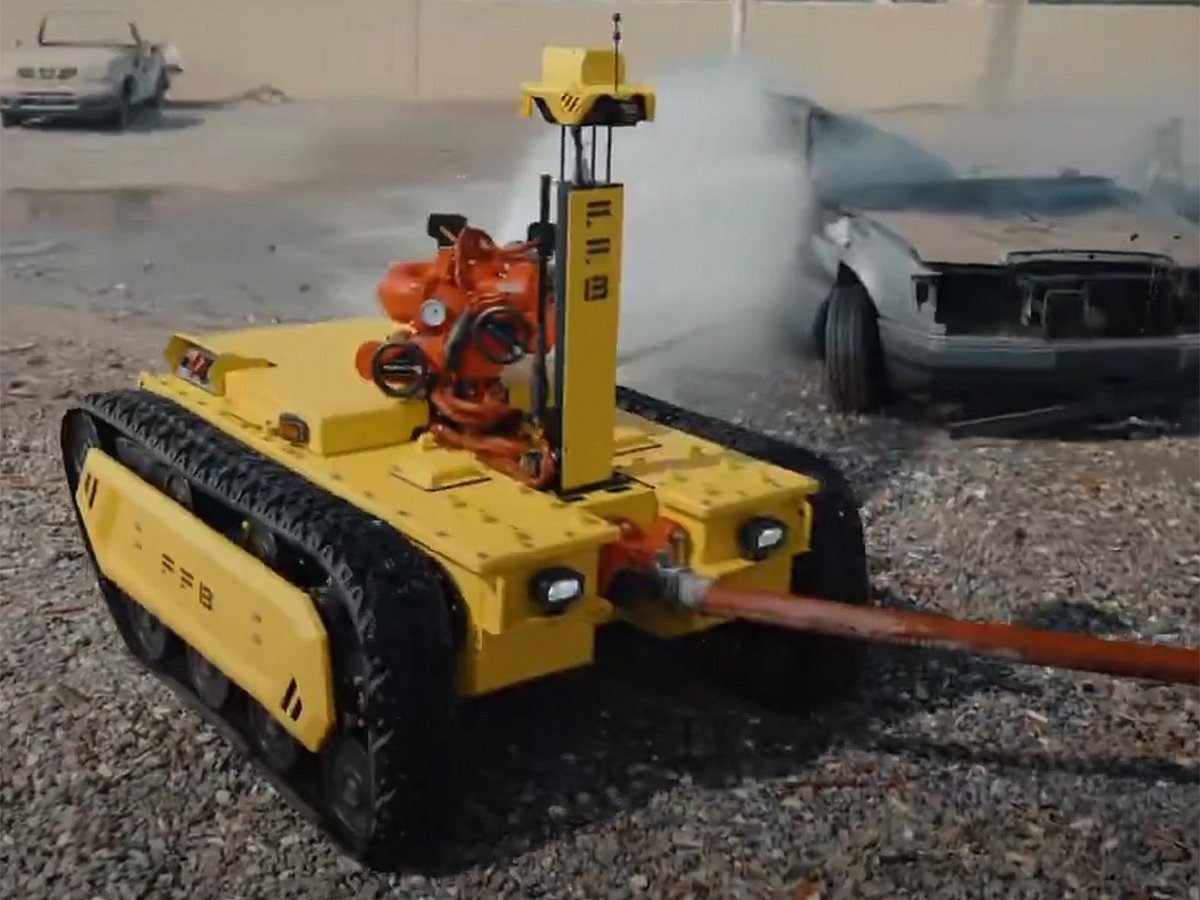
Robotic firefighting units deployed by Sharjah Civil Defence during industrial fire response operations.
Sharjah Civil Defence
Sharjah: Sharjah Civil Defence Authority has deployed advanced firefighting robots to combat high-risk industrial fires, strengthening emergency response operations while improving firefighter safety in hazardous environments.
Brigadier Yousef Obaid Harmoul Al Shamsi, Director General of the authority, told Gulf News the introduction of the technology reflects the leadership’s vision of placing human safety at the centre of civil protection while equipping firefighters with advanced tools that reduce field risks and improve response efficiency during complex incidents.
Get updated faster and for FREE: Download the Gulf News app now - simply click here.
“We currently have six robots mainly used in warehouse and industrial fires,” Brigadier Al Shamsi said.
He explained that the robots are deployed in locations considered too dangerous or difficult for firefighters to enter, particularly in incidents involving extreme heat, unstable structures or hazardous materials.
“The robots can withstand much higher temperatures and access areas firefighters cannot safely reach,” he said. “They enter the site and deal directly with the fire while our teams remotely guide and control them from outside using a control device. This helps protect firefighters from dangers such as collapsing roofs, structural hazards and extreme heat.”
The robotic units, known as “FFBOT”, are equipped with advanced firefighting and reconnaissance systems designed for rapid intervention in industrial zones and warehouse fires.
The robots can discharge water and foam at a powerful flow rate of 8,000 litres per minute, with a reach of up to 100 metres and a vertical height of 50 metres. Controlled wirelessly from up to 1,000 metres away, the machines are fitted with GPS-supported navigation systems and four hose inlets.
Each unit is equipped with six smart cameras covering four directions, allowing commanders to monitor conditions remotely from the heart of the incident without approaching the fire scene. Additional systems include thermal sensors, heavy-duty headlights for smoke-filled environments, audible warning sirens and cooling sprinklers designed to protect the robot from intense heat.
The machines can also climb stairways at angles of up to 30 degrees and are fitted with reinforced front bumpers to push through obstacles and reach fire locations quickly.
Officials said the robots are used during the most dangerous stages of industrial fires, particularly in areas involving chemical risks, unstable buildings and extreme temperatures exceeding 500°C.
Under Sharjah’s emergency response plan, robotic units are deployed alongside firefighters immediately after alarms are triggered, carrying out initial suppression and reconnaissance operations before human teams move in under safer conditions.
Authorities said the integration of robotic systems has significantly enhanced operational readiness, reduced suppression time during industrial fires and strengthened technology-driven emergency response capabilities across the emirate.
Robotic firefighting units deployed by Sharjah Civil Defence during industrial fire response operations.
Network Links
GN StoreAbout Gulf NewsTerms & ConditionsReach by GNSitemapContact usPrivacy PolicyGN FocusHave your sayWork with usAdvertise with usGulf News epaperPrinting Services
Download our app
© Al Nisr Publishing LLC 2026. All rights reserved.