Dubai Customs seizes 406kg of drugs and 2.3 million pills in five-month crackdown
Customs teams carried out 502 seizures, disrupting cross-border drug smuggling networks
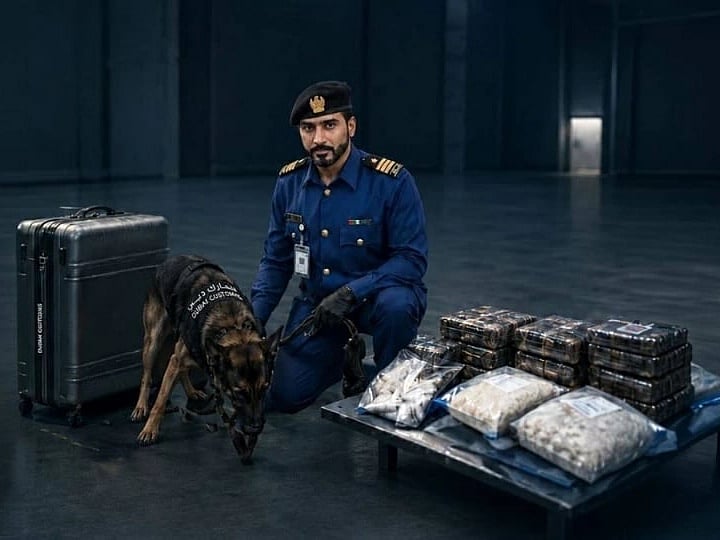
Dubai: Dubai Customs seized 406kg of narcotics and 2.3 million illicit pills in the first five months of 2026, carrying out 502 anti-smuggling operations with the emirate stepping up efforts to combat cross-border drug trafficking through advanced technology, artificial intelligence and risk-based inspections.
Dubai Customs said its role has evolved beyond intercepting narcotics at ports of entry to a proactive system focused on risk monitoring, data analysis, tracking criminal networks and disrupting cross-border smuggling operations.
Get updated faster and for FREE: Download the Gulf News app now - simply click here.
Abdullah Bin Damithan, Chairman of the Ports, Customs and Free Zone Corporation, said the results reflect the UAE leadership's vision of positioning Dubai as a global model for security and a leading destination for legitimate trade and safe investment.
He added maintaining that position requires continuous investment in customs capabilities, national talent and advanced technologies to protect border crossings and address evolving cross-border threats.
Bin Damithan noted that the corporation continues to strengthen coordination among relevant entities and enhance advanced inspection capabilities to protect society, safeguard the national economy and secure supply chains, reinforcing confidence among investors and global trading partners.
The figures showed that customs inspection and targeting teams carried out 107 seizures in January, intercepting 116.3kg of narcotics and more than 1.2 million pills.
In February, officers recorded 89 seizures involving 79.2kg of drugs and 213,000 pills, while March saw 57 seizures resulting in the confiscation of 30.3kg of narcotics and 727,000 pills.
April recorded 115 seizures involving 109.3kg of narcotics and 61,900 pills, followed by 74 seizures in May, when officers seized 71kg of narcotics and more than 115,000 pills.
Dubai Customs said the results demonstrate the effectiveness of its customs security system in responding to evolving smuggling methods while maintaining round-the-clock operations to protect society and the economy.
During 2025, Dubai Customs recorded 1,185 drug and psychotropic substance seizures, underscoring the continuity of its enforcement efforts.
Abdulla Busenad, Director General of Dubai Customs, said every drug shipment intercepted before entering the country represents more than a security achievement, helping protect families, prevent addiction and safeguard economic resources.
He said Dubai Customs would continue investing in innovation, technology, human capital and strategic partnerships, believing that protecting society begins with securing border crossings.
Mohammed Al Ghaffari, Executive Director of the Customs Inspection Division, said strengthening security across customs ports remains a strategic priority as smuggling methods become increasingly sophisticated.
He added that customs inspectors are the first line of defence, supported by continuous training, advanced screening technologies and behavioural analysis techniques to identify high-risk shipments.
Dubai Customs highlighted two major operations carried out in 2025. In Operation Black Tank, officers foiled an attempt to smuggle 147.4kg of narcotics concealed inside a specially modified tank transported by sea from an Asian country.
In Operation Ampoules, customs teams seized 102kg of the narcotic substance nalbuphine arriving by air from another Asian country following a targeted surveillance operation.
Dubai Customs said its success is supported by an advanced risk analysis system that uses artificial intelligence and big data to assess millions of shipment records and identify high-risk consignments before inspection.
It also highlighted its "Siyaj" smart border monitoring system, which integrates AI, advanced detection equipment, electric patrol vehicles, customs K9 units and around-the-clock human monitoring.
It further pointed to the "Shahin" project, which uses smart technologies to improve cargo inspections and shipment management, enhancing customs controls while accelerating clearance procedures for low-risk consignments and strengthening the integrity of electronic cargo seals across supply chains.
Network Links
GN StoreDownload our app
© Al Nisr Publishing LLC 2026. All rights reserved.