FIFA World Cup 2030: Morocco, Spain and Portugal hosts, dates and what to expect
Six countries across three continents will be involved in the tournament
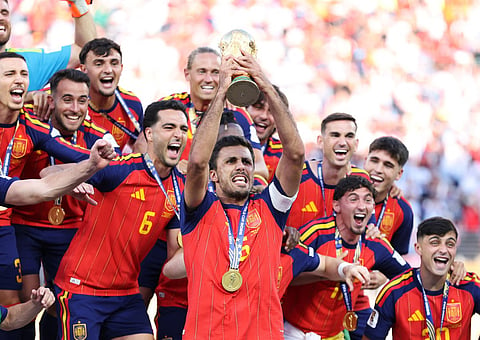
The 2030 FIFA World Cup is set to turn the traditional tournament map upside down.
Instead of being centred in one country or region, the competition will begin with a special anniversary detour through South America before moving to its main hosts in Europe and Africa. Six countries across three continents will be involved in the tournament, a first in men’s World Cup history.
The unusual format is FIFA’s way of marking 100 years since the first World Cup was played in Uruguay in 1930.
When will the 2030 FIFA World Cup take place?
The tournament is scheduled to be held in 2030.
The centenary matches in Uruguay, Argentina and Paraguay are expected to be played on June 8 and 9. The main tournament will then get underway in Morocco, Portugal and Spain, with the opening matches expected on June 13 and 14.
The final is currently expected to take place on July 21, although FIFA has not yet confirmed the complete match calendar.
Which countries will host the 2030 World Cup?
The main hosts will be Spain, Portugal and Morocco.
But the tournament will begin with three special matches in South America. Uruguay, Argentina and Paraguay will each host one opening-round game before the competition moves to the main host nations.
The choice of Uruguay is particularly significant. It hosted and won the first-ever World Cup in 1930. Argentina, which lost that final, will also host a centenary match, while Paraguay was chosen in recognition of its connection to CONMEBOL, the South American football confederation.
The result? The first men’s World Cup to be played across six countries and three continents.
Which teams have already qualified?
The six host nations have already secured their places:
Spain
Portugal
Morocco
Uruguay
Argentina
Paraguay
The remaining 42 spots will be decided through the usual continental qualifying competitions in the years ahead.
Could the 2030 World Cup have 64 teams?
For now, the answer is no — the tournament is planned to feature 48 teams, following the expanded format introduced at the 2026 World Cup.
However, FIFA President Gianni Infantino has said a proposal to increase the tournament to 64 teams could be considered.
Infantino has described the 48-team format as a success, arguing that it has opened the door for more countries to compete at football’s biggest tournament. After the performances of smaller nations at the 2026 World Cup, he said the idea of a 64-team edition would be examined and discussed.
So, while 64 teams are not currently part of the plan, the idea has not been ruled out.
Why is the 2030 World Cup so important?
The tournament will mark a century since the first FIFA World Cup.
The idea for a standalone international football tournament gathered momentum after Uruguay won gold at the 1924 and 1928 Olympic Games. FIFA eventually decided to create its own competition, with Uruguay selected to host the inaugural edition in 1930.
That first World Cup featured just 13 teams. European teams made the long journey across the Atlantic by ship, while Uruguay eventually defeated Argentina 4-2 in the final in Montevideo to become the first world champions.
The tournament has come a long way since then. It expanded to 32 teams in 1998 before growing to 48 teams in 2026.
In 2030, the World Cup will not only celebrate its 100th birthday, it will also break new ground by staging matches across six countries and three continents.


