Why sport is gaining ground as a global tool for peace and stability
Boxing champ says sport can transform lives and build peaceful societies
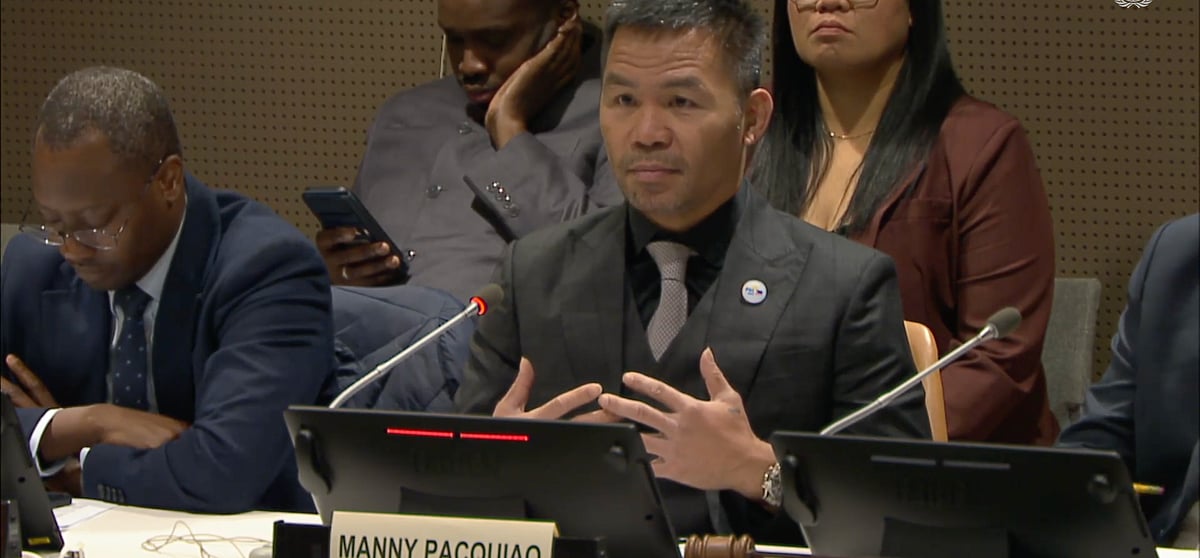
Dubai: Sport is more than just competition, it is a powerful tool to shape character, prevent violence, and inspire young people to pursue a better future, according to Filipino boxing legend Manny Pacquiao.
Speaking at the United Nations’ (UN) “Sports for peace and development: Leveraging sport for youth empowerment and prevention of violent extremism” meeting, Pacquiao has related his own life story to how sport can change the trajectory of vulnerable youth.
Get updated faster and for FREE: Download the Gulf News app now - simply click here.
From poverty to purpose
Pacquiao has shared a personal account of growing up in extreme poverty, recalling moments spent sleeping on the streets and surviving on water to ease hunger.
“Based on my experience, I grew up in a really poor situation. Not only me, but a lot of kids. If there was no sport introduced to us, then we might become part of the group, extremists, or we are there on the streets using illegal drugs,” the former eight-division boxing world champ told delegates.
Instead, boxing has become his lifeline, teaching him discipline, focus, and determination. Those lessons have helped him rise from the lowest point of his life to becoming a “superstar” while supporting his family and community.
Why sport matters for youth
Pacquiao has noted that sport instils values that go beyond physical fitness. Training for competitions requires consistency, self-control, and resilience, qualities that can guide young people away from destructive paths.
“In every trial or situation that you have, you will undergo hardwork, perseverance, determination, and focus. That’s how sport can contribute and can help a lot of young children to keep away from violence and choose the right path into a brighter future,” said the athlete.
Moreover, he has stressed that introducing sport early in life play a crucial role in shaping behaviour, particularly for children growing up in challenging environments.
A tool against extremism
The UN event has highlighted how structured sport programmes can be used as part of broader strategies to prevent violence and extremism.
Across many regions, young people who have been facing poverty, marginalisation, and limited access to education or jobs are more vulnerable to crime and radicalisation. Social exclusion and lack of opportunity often push them towards harmful alternatives. In this context, sport has been increasingly recognised as a practical solution.
“Well-designed sports programs can strengthen community resilience, support youth engagement, and contribute to addressing root causes of instability,” stated UN.
Building unity and understanding
Additionally, Pacquiao has emphasised sport's ability to bring people together, regardless of background.
“Sport is very crucial and vital to all of us, not only in the Philippines but all over the world. I insist, whatever happens, sport is the best tool to ease all those problems and misunderstandings. Sport can help build relationships, communicate to each other, and give inspiration to the young kids.”
For Pacquiao, the message is simple and that is sport can transform lives.
“My life is a testament of perseverance, hardwork, determination, and discipline. Because of sport, I am able to help my parents, siblings, and relatives.”
As global challenges around the youth continue, sport is emerging as a powerful, accessible, and effective pathway to build stronger, safer, and more peaceful communities.
Network Links
GN StoreDownload our app
© Al Nisr Publishing LLC 2026. All rights reserved.