Manny Pacquiao once fought to win $2 to buy food
Boxing legend recalls how crime rate in Philippines dropped to zero during his fights
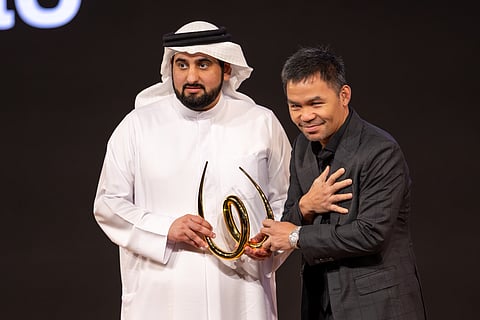
Dubai: There was a time when Manny Pacquiao boxed simply to earn a meal. As a teenager in the Philippines, stepping into the ring wasn’t about glory or championships — it was about survival. Winning a fight meant $2. Losing meant $1. Either way, it could mean food on the table.
That stark reality is hard to imagine today, given Pacquiao’s status as one of the greatest boxers in history. But his rise from homelessness to global superstardom was anything but easy.
Speaking at the World Sports Summit in Dubai, Pacquiao reflected on those early years with honesty and humility. “Hunger changes everything. When you are starving, any food tastes good. Boxing matches were not a career choice but a necessity — an opportunity to earn just enough to get by.”
First love
Pacquiao never even planned to become a boxer. His first love was basketball. Boxing entered his life almost by accident, when a local event offered prize money. He joined simply because there was something to win. What began as a way to survive slowly revealed itself as a calling. “Life was so hard and difficult. I even experienced sleeping in the streets. Sometimes I eat, sometimes not. I’m just drinking water to survive,” the 47 year old said.
Looking back, Pacquiao admits he could never have imagined where that journey would lead. From fighting for a few dollars, he went on to become a world champion in an unprecedented eight different weight classes. “The transformation was not only to discipline and hard work, but also to faith — God’s grace and mercy giving strength beyond my own,” he added.
Even his entry into professional boxing was unexpected. When he signed his first contract, he thought it was for basketball. It turned out to be for boxing. That twist of fate changed his life forever.
Zero crime rate
At the height of his career, Pacquiao’s influence extended far beyond boxing. He once shared that during his biggest fights, crime rates in the Philippines dropped to zero. The entire country paused, united in front of televisions, cheering together.
“I’m so happy because there was a time in our country with zero crime during my fight. Everybody was enjoying together. I wish I could always fight like that so there would be no more crime. That’s my passion, to live in a peaceful country,” he said.
That same desire to serve others eventually drew him into politics. His motivation, he explained, came from anger at the poverty he witnessed and the politicians he believed had failed the people. Entering public service was his way of trying to make a difference — by building homes, creating communities, and helping the least fortunate.
Pacquiao sees that work as his true legacy. Long after the cheers fade and the belts are forgotten, he hopes those efforts will endure for generations.


