Argentina vs Egypt: How VAR became the biggest World Cup talking point
Issue is not about correct use of technology, it’s about lack of consistency in its use
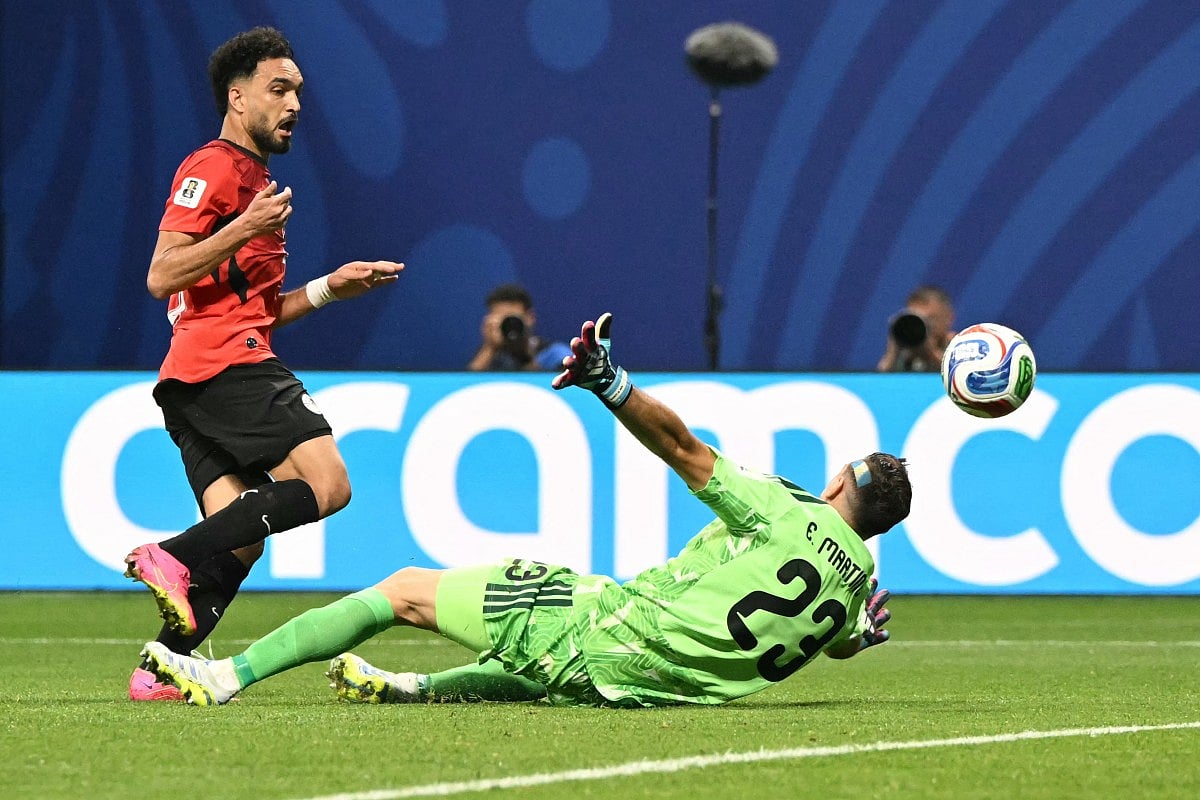
It was breathtaking, it was dramatic and it was controversial. Argentina’s spectacular 3-2 comeback against valiant Egypt continued to be the talk of the town long after the match was over but most of it wasn’t about the quality of football or the brilliant transition play by both teams.
Instead, it was about the use, or non-use of Video Assistant Referee (VAR) to decide what counted as a foul and which team benefitted from it.
Get updated faster and for FREE: Download the Gulf News app now - simply click here.
One of the most significant intervention of technology was for Egypt's disallowed goal, one that could have changed the course of the tie. With Egypt leading Argentina 1-0, Mohamed Salah and co looked to have doubled their lead through an electric counter-attack in the second half. Wild celebrations followed as Argentina seemed to be headed for the exit. Just then, VAR intervened. The ‘technological marvel’ spotted a foul on Lisandro Martinez in the build-up and the goal was cancelled.
Interestingly, the French referee had in another instance called an immediate foul on Salah after he broke away in a counter-attack with a clear path towards goal, instead of letting play go on and reverting to VAR following the conclusion of the move.
Salah also had a penalty shout denied. The appeal gained significance as Argentina went to the other end and scored the winning goal in the same phase of play. In the stoppage time with the game tied at 2-2, Egypt moved forward in attack with Salah carrying the ball into Argentina's box. The former Liverpool man looked to have been tripped by Julian Alvarez before being robbed off the ball. Argentina launched a quick counter-attack and scored. Despite vehement appeals by the Egyptians, VAR didn't intervene, the goal stood and Egypt were sent home.
Now, whether these decisions were correct or not isn’t the question. What football pundits have pointed out is the selective use of technology which somehow seemed to suit one team over the other.
But this is not the first time VAR or external factors have intervened at this World Cup.
Balogun punished, but not Messi
Before the Argentina-Egypt match, the biggest talking point was the USA’s Folarin Balogun being sent off for an unintentional tackle during their match against Bosnia and Herzegovina. The red card drew sharp reactions from fans, with many likening Balogun’s challenge to Lionel Messi’s against Algeria and questioning how Messi escaped without even a yellow card. US President Donald Trump intervened, and the one-match ban was revoked allowing Balogun to play against Belgium.
Germany’s disallowed goal
Based on impact, Germany’s disallowed winner against Paraguay was probably the most far-reaching one. With the score tied at 1-1 deep into extra time, Jonathan Tah headed home what appeared to be the winning goal, only for the referee to overturn it following a VAR review for a foul by Waldemar Anton on Paraguay goalkeeper Orlando Gill. Germany ultimately lost to Paraguay on penalties, bowing out of the tournament.
Hair-raising issue
With Portugal leading 2-1, Croatia defender Joško Gvardiol looked to have bundled home an equalizer deep into stoppage time. However, a check on the "Connected Ball Technology" confirmed that Croatia striker Igor Matanović got a faint touch on the ball, which played Mario Pašalić offside and hence the goal was disallowed, leading to Croatia’s exit in the Round of 32.
Not so negligible
Belgium's Youri Tielmans attacked a cross into the Senegal box and ended up on the ground after a challenge by Senegal's Lamine Camara during their Round of 32 match. The referee did not react in real time and ignored the Belgium penalty appeals before VAR intervened with the decision that the almost-negligible touch amounted to a foul and hence a penalty. That goal helped Belgium overturn a two-goal deficit to win the match in the 125th minute.
One can go on and on about many such episodes at this World Cup which have raised more than a few eyebrows. The use of VAR has definitely taken out of equation incidents like Diego Maradona’s ‘Hand of God’ goal or Frank Lampard’s ghost goal. But this World Cup has shown that the debates surrounding football have not disappeared; they have only become more complex.
While Fifa may employ cameras, sensors and algorithms, the important decisions ultimately rely on interpretation rather than quantifiable data. Technology can inform referees about whether contact was made or if a player was offside by a hair’s breadth, but it is incapable of assessing intent, force, or consistency.
And therein lies the fallacy.
Network Links
GN StoreDownload our app
© Al Nisr Publishing LLC 2026. All rights reserved.