Lewis said recruiters must look beyond qualifications to assess a candidate's motivation, salary expectations, career ambitions and suitability for a company's culture.
UAE employers are hiring, but these jobs are proving the hardest to fill
UAE job market in 2026: The skills employers struggle to find and what jobseekers need
Last updated:
5 MIN READ
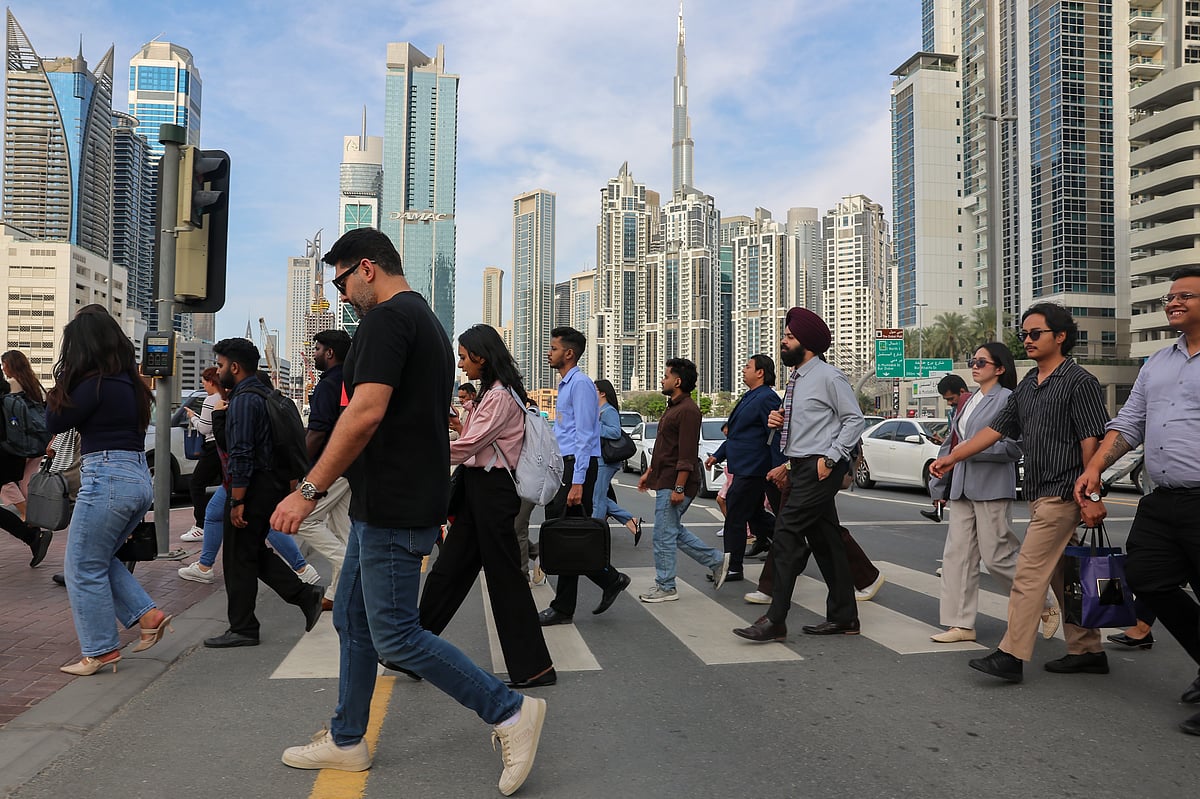
AI, cybersecurity, sales and senior leadership roles pose recruitment challenges.
Staff-Supplied
Dubai: Hundreds of applications, plenty of qualified candidates and job vacancies advertised across the UAE. Yet, for some employers, finding the right person remains surprisingly difficult.
Recruitment experts told Gulf News that the challenge is not necessarily a shortage of jobseekers, but a shortage of candidates with the right combination of experience, specialist skills and commercial understanding.
Recruitment demand and opportunities vary considerably across industries, including technology, construction, and oil and gas, with employers facing different challenges depending on the roles they need to fill.
So, which jobs are proving the hardest to recruit for, and what can jobseekers do to stand out?
Get updated faster and for FREE: Download the Gulf News app now - simply click here.
AI, cybersecurity and senior leadership roles are hard to fill
According to Mollie Powell, managing director of Pink Camel Recruitment, the UAE does not have a shortage of people looking for work. Instead, employers are struggling to find candidates with the experience they need.
“The biggest challenge employers are facing is finding candidates who can hit the ground running. Companies are becoming less willing to hire someone based purely on qualifications and train them from scratch. They want proven experience, strong commercial understanding and someone who can make an impact quickly,” Powell explained.
Among the most difficult vacancies to fill are artificial intelligence (AI) and highly specialised technology positions.
“There simply isn’t always enough of that talent available locally, particularly when clients are looking for very specific technical experience. We quite often have to look overseas for these candidates and then work through the process of bringing that talent into the UAE.”
One of the hardest combinations to find, Powell said, is someone who is both technically strong and commercially minded.
“You can find someone with the right technical qualifications, but finding someone who understands the technology and understands the business behind it is much harder. The same applies across many functions.”
One of the biggest areas we’re struggling to hire for is AI and highly specialist technology roles. There simply isn’t always enough of that talent available locally, particularly when clients are looking for very specific technical experience. We quite often have to look overseas for these candidates and then work through the process of bringing that talent into the UAE.
Mollie Powell Managing Director of Pink Camel Recruitment
Why hundreds of job applications still aren't enough
Nevin Lewis, CEO and principal consultant at Black & Grey HR highlighted another challenge - vacancies attracting hundreds of applications but still taking weeks to fill.
“Now candidates can take a job description, use AI to tailor their CV and apply within minutes. So today, a role can receive hundreds of applications and many of them will look relevant on paper. But the real screening starts when you speak to people.”
Lewis said recruiters must look beyond qualifications to assess a candidate's motivation, salary expectations, career ambitions and suitability for a company's culture.
"These difficulties are particularly apparent in AI, cybersecurity, cloud technology, specialist engineering, project and design director positions, and senior leadership roles such as chief financial officers, chief operating officers and chief executives,"
At senior level, Lewis said, companies increasingly want candidates who have navigated uncertainty, made difficult decisions and demonstrated an ability to protect or grow a business.
We look beyond CVs and check whether someone can technically do the job. We look at context, timing, chemistry and aspiration. These are simple questions, but this is where a lot of apparently perfect CVs stop being perfect. At senior level, having done the job before isn't enough anymore. Companies increasingly want people who have been through change, made difficult decisions and can still grow or protect a business when things don't go according to plan.
Nevin Lewis CEO and Principal Consultant at Black & Grey HR
How long are UAE vacancies staying open?
Standard professional roles - 3–4 weeks
Niche technical and senior roles - 6–8 weeks
Longer searches - Executive appointments
Typical recruitment timelines cited by Lewis, not fixed industry-wide averages.
According to Lewis, hiring delays are increasingly occurring at the final decision-making stage rather than during the initial search for candidates.
With geopolitical and economic uncertainty, employers are reconsidering major recruitment decisions, while candidates are weighing the risks of leaving stable positions. “Because ultimately, nobody wants to be the last one in and the first one out.”
For senior executives, the decision can also involve relocating families or giving up years of tenure, making both sides more cautious about committing.
For candidates navigating the competitive recruitment market, experts advised focusing on demonstrable expertise rather than trying to appeal to every employer.
Why good salespeople are becoming harder to find
While technology dominates discussions about talent shortages, Nicki Wilson, managing director at Genie Recruitment, identified another area where employers face a significant challenge - sales.
“I would genuinely encourage young people entering the workforce to get good at sales. Being able to communicate, influence, build relationships and ultimately sell is such a valuable skill set and I think the shortage of genuinely good salespeople is only going to get worse.”
Wilson explained that as communication increasingly shifts towards social media, messaging and AI, strong face-to-face communication, persuasion and relationship-building skills are becoming less common.
Wilson also warned that candidates applying for creative roles sometimes fail to include portfolios demonstrating their work. “If content is your craft, show people what you can do. Your portfolio should be one of the strongest parts of your application.”
I would genuinely encourage young people entering the workforce to get good at sales. Being able to communicate, influence, build relationships and ultimately sell is such a valuable skill set and I think the shortage of genuinely good salespeople is only going to get worse. Sales is needed in all fields and is a core skill that complements most industries.
Nicki Wilson Managing Director at Genie Recruitment
What can UAE jobseekers do to stand out?
For candidates navigating the competitive recruitment market, Powell advised focusing on demonstrable expertise rather than trying to appeal to every employer.
“Candidates who can demonstrate specialist expertise, commercial awareness and measurable results have a huge advantage. A CV that says ‘responsible for managing sales’ is nowhere near as powerful as one that says ‘grew revenue by 35 per cent.’”
Adaptability, independent decision-making and an understanding of the UAE and wider Middle East business environment can also give candidates an advantage.
Ultimately, Powell said, jobseekers should reconsider how they approach their search.
“The biggest opportunity for jobseekers is therefore not simply asking, ‘What jobs are hiring?’ It’s asking, ‘What problems are employers struggling to solve - and do I have the skills and experience to solve them?’”
Network Links
GN StoreAbout Gulf NewsTerms & ConditionsReach by GNSitemapContact usPrivacy PolicyGN FocusHave your sayWork with usAdvertise with usGulf News epaperPrinting Services
Download our app
© Al Nisr Publishing LLC 2026. All rights reserved.