Dubai gold prices edge lower today as global uncertainty shifts
Dubai gold prices ease by up to 75 fils per gram as global rates soften; India sees gains
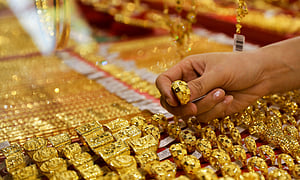
Dubai: Dubai gold prices slipped slightly on Thursday, giving UAE shoppers a small breather after recent volatility in bullion markets. The price of 24K gold dropped to Dh546.75 per gram, down from Dh547.50 yesterday, while 22K fell to Dh506.50 from Dh507.00.
The decline tracks softer international bullion prices, with spot gold at $4,522.08 an ounce, down 0.23 per cent. For UAE buyers, the drop is modest, but even small changes matter in Dubai’s jewellery market, where a few fils per gram can make a difference on larger purchases such as wedding jewellery or investment bars.
Why Dubai gold prices are down today
Gold prices softened as global markets reacted to renewed hopes that tensions between the US and Iran may not escalate further, reducing some of the safe-haven demand that typically supports bullion.
Comments from US President Donald Trump suggesting the conflict may be nearing a diplomatic phase lifted market optimism. If the Strait of Hormuz reopens fully and fears of oil supply disruptions ease, inflation concerns could ease, reducing pressure on central banks to keep interest rates high.
That matters for gold because bullion tends to perform better in lower-interest-rate environments. Gold does not pay interest, so when rates rise, it becomes less attractive compared to yield-bearing assets.
At the same time, the US dollar and Treasury yields softened earlier this week, helping to cushion gold against sharper declines.
Get updated faster and for FREE: Download the Gulf News app now - simply click here.
For UAE consumers, this means a slight price relief, particularly for shoppers waiting to buy jewellery or gold coins.
Analysts say gold remains highly sensitive to geopolitical headlines, so daily price swings are likely to continue.
India gold prices rise
Unlike Dubai, gold prices in India moved higher on Thursday, showing that domestic market factors continue to support prices.
24K gold in India rose to ₹15,993 per gram, or ₹159,930 per 10 grams, compared to ₹15,944 per gram, or ₹159,440 per 10 grams yesterday. At the same time, 22K gold increased to ₹14,660 per gram, or ₹146,600 per 10 grams, up from ₹14,615 per gram, or ₹146,150 per 10 grams yesterday.
The rise suggests that local factors such as rupee movement, import costs and domestic demand are offsetting the softer trend in international bullion.
For Indian consumers, that means gold remains expensive despite the dip seen in global markets.
Gold prices caught between geopolitics, interest rates
Market analysts say gold is still moving between two major forces: geopolitical uncertainty and central bank policy.
Citigroup analysts say that if tensions around the Strait of Hormuz ease, some of the macroeconomic pressure weighing on gold could reduce, helping prices stabilise.
However, investor sentiment remains cautious because rhetoric around the US-Iran conflict has repeatedly shifted between threats and diplomatic optimism.
At the same time, minutes from the US Federal Reserve’s latest meeting showed policymakers remain wary of inflation, keeping alive the possibility of tighter monetary policy if price pressures continue.
That creates a difficult backdrop for bullion, which tends to benefit from lower rates and economic uncertainty.
Gold vs oil: Why investors are changing their safe-haven strategy
Gold’s latest pullback also reflects a broader shift in investor behaviour.
Through 2025, retail investors rushed into gold as a safe-haven asset during periods of uncertainty, helping prices surge 66% last year — the sharpest annual gain since 1979.
But after touching a record high of nearly $5,600 an ounce in January, gold retreated as investors increasingly turned to oil instead.
Brent crude nearly doubled since January, reaching $126 a barrel on May 1, as the Iran conflict disrupted the Strait of Hormuz and pushed energy supply fears to the forefront.
This has created an unusual divergence in markets: instead of buying gold as the default geopolitical hedge, some investors are now choosing direct exposure to energy.
For now, that leaves gold in a tug-of-war between safe-haven demand, oil-driven inflation fears and interest rate expectations — factors that will continue to shape Dubai gold prices in the days ahead.
Sign up for the Daily Briefing
Get the latest news and updates straight to your inbox
Network Links
GN StoreDownload our app
© Al Nisr Publishing LLC 2026. All rights reserved.