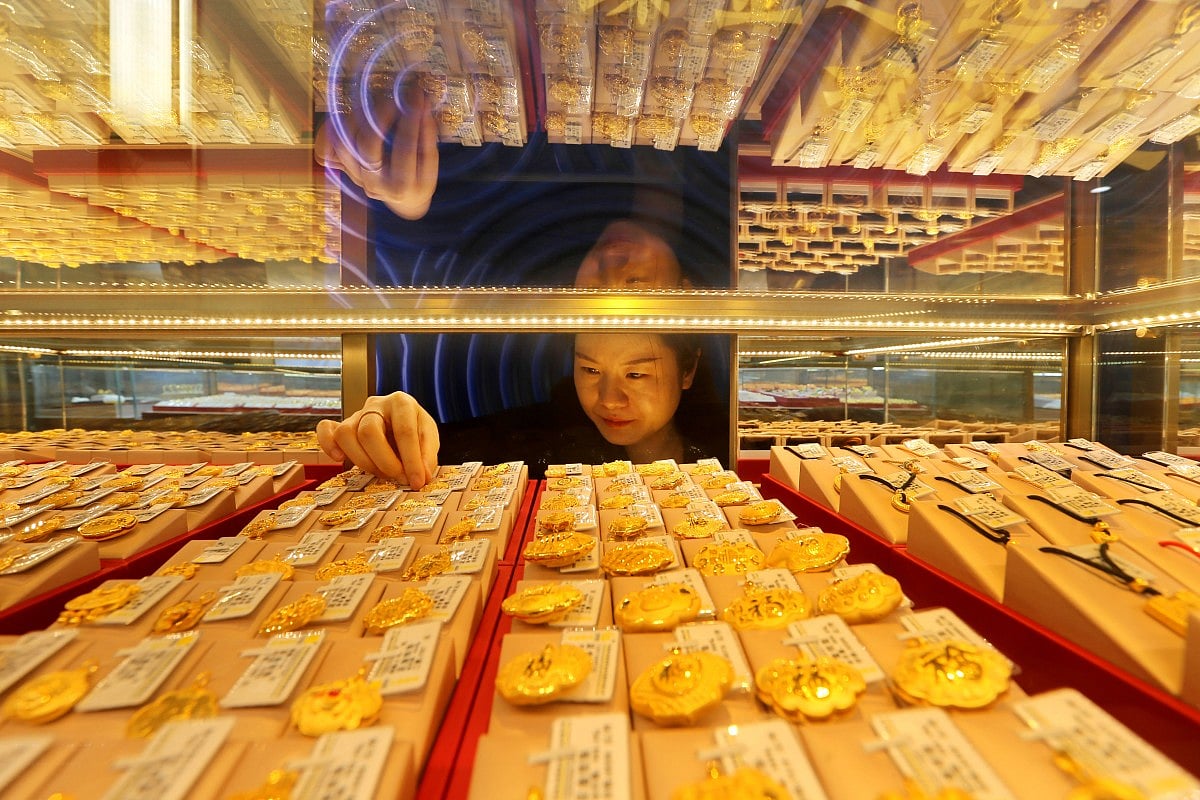
Dubai: Gold prices in Dubai softened on January 1, easing from last week’s record highs as global markets closed out a volatile but historic year for precious metals. As of Thursday morning 9:15 am, 24-karat gold was priced at Dh520.25 per gram, while 22-karat stood at Dh481.75, offering some relief to buyers after a sharp rally that pushed prices to unprecedented levels just days earlier. (Check latest UAE gold prices here, alongside prices in Saudi Arabia, Oman, Qatar, Bahrain, Kuwait, and India.)
The pullback mirrored moves in international markets, where gold and silver slipped amid thin post-holiday trading. Spot gold hovered around $4,320 an ounce, while silver drifted toward $71. Despite the late dip, both metals remain firmly on track for their strongest annual performance since 1979, capping a year that reshaped the precious metals landscape.
A volatile finish to a landmark year
The final week of December was marked by sharp price swings. Gold and silver tumbled on Monday, rebounded on Tuesday, and fell again on Wednesday, highlighting the nervous tone in low-liquidity conditions. The volatility was pronounced enough to prompt CME Group to raise margin requirements twice, forcing traders to post more cash to maintain futures positions and, in some cases, scale back exposure.
Even so, the broader picture for 2025 remains extraordinary. Gold has climbed about 63% over the year, driven by strong demand for safe-haven assets, a series of interest-rate cuts by the US Federal Reserve, and growing concerns over inflation and rising government debt in major economies. In September, the metal surpassed its inflation-adjusted peak from 45 years ago, before smashing through the $4,000 mark in early October.
Investor appetite played a central role. Inflows into bullion-backed exchange-traded funds accelerated, while central banks extended a buying spree that has now lasted several years, reinforcing gold’s role as a store of value during periods of uncertainty.
Silver’s outsized surge
Silver outperformed even gold, surging more than 140% in 2025. While speculative interest was a key driver, industrial demand also underpinned the rally. Silver’s widespread use in electronics, solar panels and electric vehicles added a structural layer of support. In October, prices hit a record after tariff concerns spurred heavy imports into the US, tightening supply in London and triggering a rare market squeeze.
That momentum carried into November as US rate cuts and investor enthusiasm pushed prices above $80 earlier this week, partly reflecting strong buying from China. The rally then reversed sharply, with silver dropping 9% on Monday before swinging over the next two sessions, again highlighting the risks that come with crowded trades.
Wider precious metals remain tight
The strength in gold and silver has spilled into the broader precious metals complex. Platinum broke out of a long-standing range to reach a new high and is heading for a third consecutive annual supply deficit, following production disruptions in South Africa. Palladium also eased on Wednesday, though analysts say tight supply conditions continue to lend underlying support across the sector.
- With inputs from Bloomberg.

Sign up for the Daily Briefing
Get the latest news and updates straight to your inbox
Network Links
GN StoreDownload our app
© Al Nisr Publishing LLC 2026. All rights reserved.