Solar hits 'insane' milestone, quietly overtakes nuclear as a global power source: report
Global energy shift: Solar outpaces nuclear despite shrinking US policy support
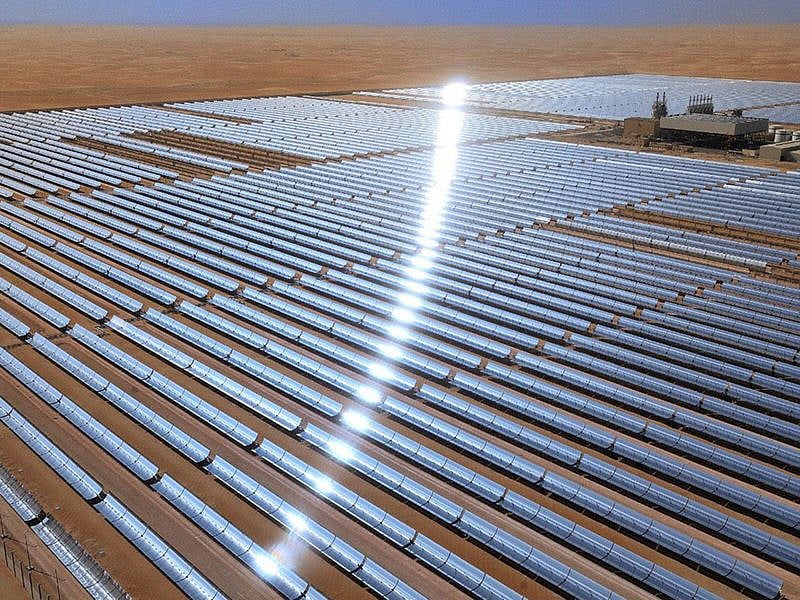
Solar has passed nuclear as a source of the world’s electricity.
In 2025, solar plants produced 2,778 terawatt-hours (TWh), about 13 percent more than the world’s reactors.
A decade earlier the picture was reversed: solar generated just 256 TWh, while nuclear produced roughly ten times that, at 2,576 TWh.
Ember co-founder Dave Jones told the BBC the milestone was “pretty insane.”
Solar output has been doubling about every three years, driven largely by China’s huge manufacturing base, whose inexpensive panels have spread worldwide.
A report prepared by the Abu Dhabi-based International Renewable Energy Agency (Irena) stated the cost of solar PV has fallen by 89% since 2010. That is the levelised cost of electricity (LCOE) from utility-scale solar. The earlier 2024 edition put the fall at 90%, from $0.417/kWh in 2010 to $0.043/kWh in 2024.
Get it: Fast, verified news for FREE ... download the Gulf News app — simply click here
BY THE NUMBERS: Solar out-produced nuclear in 2025, generating 2,778 TWh. Inexpensive panels, falling battery costs and energy-security worries are driving growth, led by emerging markets.
Much of the momentum now sits in poorer and middle-income countries.
Yale Environment 360 reports that about 63 percent of emerging markets in Africa, Asia and Latin America get a larger share of their power from solar than the United States does.
Brazil, Chile, El Salvador, Morocco, Kenya and Namibia are among them, while Pakistan leads the world in households adding rooftop panels and batteries.
Cheaper batteries are a big reason.
Oxford’s Jan Rosenow told the BBC that storage has largely solved the problem of shifting midday sunshine into the evening.
As a result, solar-plus-battery systems often undercut new fossil plants in sunny regions.
Security is another draw.
With the war in Iran rattling energy markets, solar and wind offer supply that foreign powers cannot cut off, as investor David Frykman argued in Fortune.
Economics, it seems, is outpacing politics. The Trump administration has abruptly withdrawn US support for renewables, yet solar keeps getting built.
The University of Maryland’s Alicia Zhao noted that it remains among the cheapest new power sources in the country, regardless of political lines. The trend suggests the shift is now driven by price rather than policy.
Solar is no longer a niche alternative; it is a mainstream power source. Falling prices, not subsidies, now drive adoption, so the global energy transition can still continue even where governments cut support or change direction.
Cheaper solar and batteries can lower electricity bills and shield households from brownouts fuel price shocks.
For consumers, rooftop solar with storage is becoming a realistic way to cut costs and keep power on during outages.
Sign up for the Daily Briefing
Get the latest news and updates straight to your inbox
Network Links
GN StoreDownload our app
© Al Nisr Publishing LLC 2026. All rights reserved.