What's behind Asia's drive to build a $15-trillion energy empire
Asia's $15-trillion energy shift keeps coal at the forefront of power generation
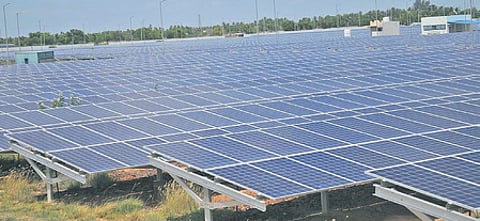
Asia is expected to power global energy demand to the tune of $1 trillion a year in fresh investment, according to a McKinsey & Co analysis published Oct. 22.
This is equivalent to $15 trillion, driven by a ramp in batteries and solar to power data centres, cooling and factories through 2040, the new study shows.
The wider region, however, is still writing its own "transition" rules.
Overall, the global energy transition is turning into an Asian story, and Asia isn’t following the path laid out in Washington or Brussels.
What Asian governments choose for coal, oil, gas, renewables and storage will decide whether the transition actually cuts global fossil fuel use or simply adds renewable power to an energy system that keeps growing.
Asia is expected to account for roughly 70% of global net energy demand growth through 2040. Its demand is now forecast to reach 370 million "terajoules", 15% higher than a year ago, because of data centres, industrial expansion and cooling needs.
Get it: Fast, verified news for FREE ... download the Gulf News app — simply click here
Other estimates
Morgan Stanley estimates about $5.5 trillion of Asian energy infrastructure spending over five years, and says much of the near-term money is likely to flow to coal, gas and refining as governments prioritize reliability and security.
It also says Asia consumes almost half the world’s energy but produces only about a third.
The energy-security push comes from the Middle East crisis. The report notes global biofuel output is projected to rise by nearly 70% by 2030 as countries raise blending mandates in response to the conflict-driven energy crisis.
Wood Mackenzie, for expects Asia-Pacific to account for 85% of global power demand growth in 2026, about 790 TWh.
Its analyst says data centres are single-handedly reversing a decade of declining energy demand in markets like Japan.
Report Highlights
Coal stays dominant for longer than expected. It makes up about 47% of Asia’s primary energy mix, versus 25% for oil and about 12% for gas. In power generation it supplies more than half of Asia’s electricity, and 67% in South Asia, led by India.
Coal demand is up: China’s coal use should slowly decline, but demand in India and Southeast Asia is expected to keep the regional total steady. Asian thermal coal prices are elevated because of lower Chinese output, Indonesian supply quotas and gas-to-coal switching in Japan and South Korea.
Gas slows, then rebounds. Demand growth is expected to slow over the next 5 to 10 years as countries favor cheap coal and fast renewables, then recover, driven mainly by industry shifting away from oil and coal.
Clean power is getting cheaper. About $300 billion a year is needed for wind and solar, mostly in India and Southeast Asia. Utility-scale solar is the lowest-cost power source in most Asian markets.
Renewable costs across Asia-Pacific are reportedly about 13% below coal and could be a third cheaper by 2030. Solar overtook gas as Asia’s third-largest power source in the 12 months to April 2026.
For the first time, China generated less than half its electricity from coal in the first half of 2026.
Battery storage prices have fallen 93% in 15 years, making solar-plus-storage a rival to gas peaking plants.
Biofuels as an import shield. McKinsey sees $90 billion to $100 billion in annual fuel imports replaceable by 2040.
India, which already uses a 20% ethanol blend, moved in May toward E30 specifications.
Indonesia is rolling out B50 palm-oil biodiesel, which it estimates would cut its fuel import bill by about $9.4 billion in 2026 and cut emissions by roughly 44 million tons a year.
Why it matters
Asia now sets the pace for global emissions, fuel prices and technology costs. If cheap solar and batteries grow faster than demand, fossil use can fall.
If demand grows faster, coal and gas keep expanding alongside renewables. The investment is also large enough to influence supply chains, shipping and commodity prices worldwide.
Southeast Asian economies, face the sharpest trade-offs between cheap coal and imported fuel risk.
Why it matters
Grid and storage bottlenecks: Mackenzie says 2026 is about “quality over quantity,” with new tenders increasingly requiring storage and grid flexibility.
Whether coal’s dominance fades as renewables become cheaper than coal in more markets, including India.
Fuel-blend rollouts: India’s move beyond E20 and Indonesia’s B50 execution.
Gas demand’s expected dip and later industrial rebound.


