As of 4.19pm in Beijing on Thursday, May 7, 2026.
Oil slides 2%+ as traders price in de-escalation, heavy crude differentials swing
Crude futures fall in late Asian trading as traders price in easing geopolitical risk
Last updated:
2 MIN READ
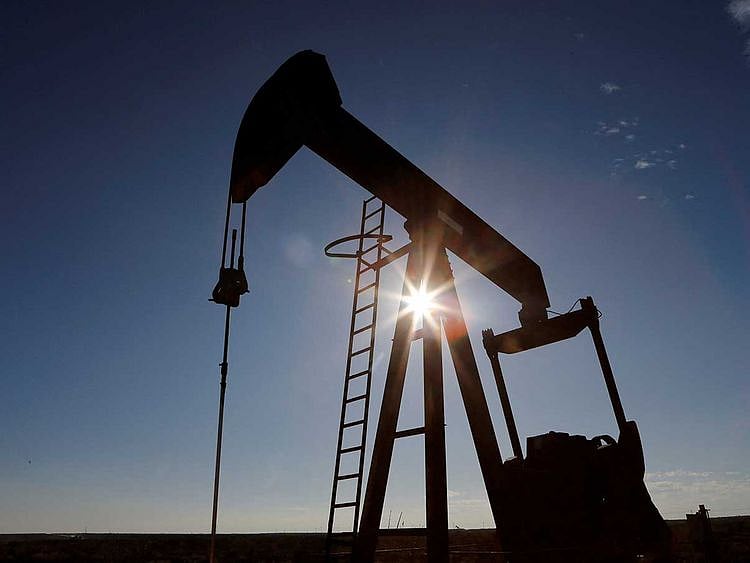
The sun is seen behind a crude oil pump jack in the Permian Basin in Loving County, Texas, US. File photo taken on November 22, 2019.
Reuters
Oil futures fell broadly in late Asian trading Thursday as traders priced in easing geopolitical risk and a possible reopening of key shipping lanes, while physical crude benchmarks showed sharp moves that underscored how uneven the market remains.
As of 4:19 am Beijing time, West Texas Intermediate crude was at $93.03, down 2.16%, and Brent crude was at $99.25, off 1.99%.
Middle East marker Murban crude slipped 2.13% to $96.20. U.S. refined products tracked lower, with gasoline down 1.22% and heating oil off 2.15%. U.S. natural gas eased 0.88%.
The pullback in futures contrasted with choppy moves in physical grades.
The Organisation of the Petroleum Exporting Countries (OPEC) basket rose 1.54% to $118.33, while Russia’s Urals crude gained 1.73% to $112.49.
By comparison, Canada’s heavy Western Canadian Select tumbled 8.00% to $82.73, one of the day’s steepest declines, widening discounts for dense, sulfur-rich barrels.
Other baskets also fell: Mexico’s mix dipped 0.23% and India’s basket slid 5.25%.
Divergence
Oman’s DME contract edged down 0.75%.
Analysts said the divergence reflects how futures are reacting quickly to macro headlines, while physical grades are repricing on refinery demand, freight costs and quality spreads.
Heavy crudes, which require more complex processing, were hit hardest as margins for producing diesel and fuel oil narrowed.
Traders are watching whether diplomatic signals translate into sustained shipping flows through the Gulf and steadier refinery runs in Asia.
For now, benchmarks are retreating from recent highs even as select export blends buck the trend, highlighting a market still recalibrating after weeks of disruption.
Network Links
GN StoreAbout Gulf NewsTerms & ConditionsReach by GNSitemapContact usPrivacy PolicyGN FocusHave your sayWork with usAdvertise with usGulf News epaperPrinting Services
Download our app
© Al Nisr Publishing LLC 2026. All rights reserved.