WGS 2026: Arab economic reform ‘impressive despite tough times,’ IMF chief says
IMF chief outlines growth outlook, reform gains and risks at Arab Fiscal Forum
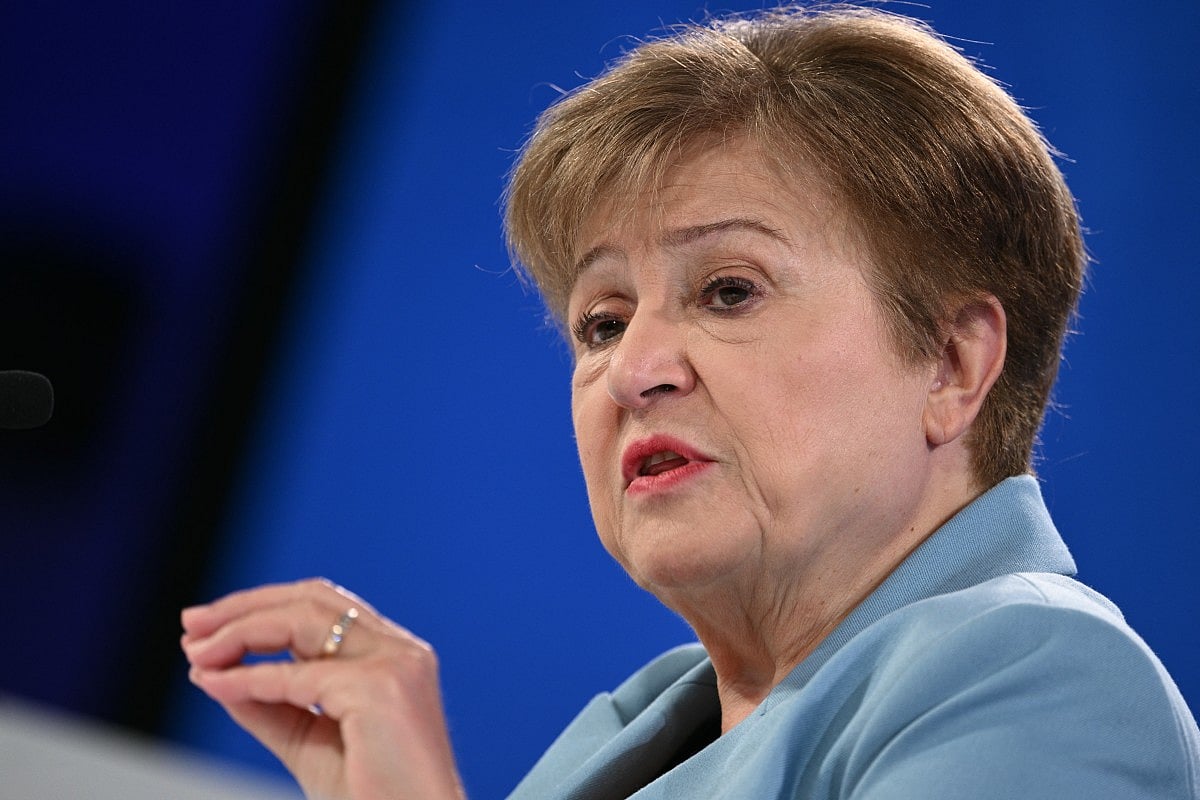
Dubai: Despite ongoing global uncertainty, the Arab region has maintained growth momentum and strengthened its economic foundations, the International Monetary Fund’s managing director said at a regional fiscal forum.
“It is impressive what the Arab region has achieved despite the tough times,” the IMF chief said.
Speaking at the Arab Fiscal Forum during the World Government Summit in Dubai, Kristalina Georgieva stated the region’s recent performance as the outcome of sustained institutional reform rather than short-term support measures.
“We are gathering in a pivotal moment,” she said. “The world is undergoing profound shifts in geopolitics, in trade policy, in technology and in demographics, and these shifts are converging to create enormous uncertainty.”
A decade of reform begins to show results
The forum marked its 10th anniversary, having first convened in Abu Dhabi with a small group of Arab finance ministers. Since then, it has expanded to include central bank governors, a change Georgieva said has strengthened coordination between fiscal and monetary policy.
“Ten years later, the forum has expanded to include not only more countries, but also central bank governors, so the coordination between fiscal policy and monetary policy can be enhanced,” she said.
Looking back to the forum’s early focus on domestic revenue mobilisation and modern tax systems, Georgieva said progress over the past decade has been tangible. “On the topics Christine talked about, strong domestic revenue mobilisation and modern tax systems, the Arab countries have made tremendous progress, and the work does not stop.”
Also Read
IMF sets out key 2026 risks amid rising uncertainty, AI valuations and debt pressuresAI tsunami could disrupt 40% of jobs worldwide, IMF chief warnsIMF sets out key 2026 risks amid rising uncertainty, AI valuations and debt pressuresIMF raises MENA, Pakistan growth outlook as region weathers global shocksRevenue, spending and transparency reforms gain traction
That progress has extended across revenue and expenditure policies. During the pandemic, GCC countries introduced value-added tax and excise taxes alongside the adoption of the global minimum corporate income tax. Egypt, Jordan and Morocco broadened tax bases, strengthened administration and expanded digitalisation.
“It is so impressive what the region has achieved, even in the toughest of times during Covid,” Georgieva said.
On the spending side, Bahrain and Oman have begun scaling back regressive energy subsidies, freeing fiscal space to support vulnerable households. Transparency has also improved, with Kuwait and the UAE strengthening disclosure of spending ceilings and fiscal risks.
“We have seen greater transparency, faster reporting and clearer, more forward-looking budgets,” she said, pointing to improved oversight across several countries.
Global growth steadier, inflation easing
Despite ongoing uncertainty, Georgieva said the global economy is performing better than anticipated. The IMF has upgraded growth forecasts slightly for this year and next, with upgrades spread across major economies.
“What is remarkable is that the upgrades are across the board,” she said. “We upgraded the United States, this part of the world, India, China and the eurozone.”
Inflation trends are also improving. “We expect inflation globally to fall to 3.8% this year and 3.4% by 2027,” Georgieva said, noting that lower energy prices are easing pressures, while posing trade-offs for exporters.
Arab region outlook improves
For the Arab world, the IMF expects growth to rise to 3.7% this year. Oil exporters are benefiting from increased production, while importers are gaining from lower prices. Remittances remain strong, and tourism has rebounded, supporting domestic demand.
“Financial conditions have improved,” Georgieva said. “A couple of countries that had no access to markets have returned to market access.”
She also highlighted the pace of diversification, particularly in the Gulf. “I cannot tell you how impressive it is to see the UAE, with around 80% of growth coming from non-oil performance,” she said, adding that similar trends are emerging across energy-exporting economies.diversification of the economies in the region is progressing with a high speed, and I cannot tell you how impressive it is to see UAE, 80% benefiting from non oil economy performance, and that goes across many of the oil exporting the energy exporting countries.
Artificial intelligence moves into the mainstream
Technology featured prominently in Georgieva’s remarks, with artificial intelligence seen as a major driver of future productivity. She pointed to the UAE’s efforts to integrate AI across sectors rather than confining it to isolated applications.
Fiscal policy, she added, must support that transition by prioritising skills, innovation and human capital.
Risks remain elevated
“Risks remain high,” she said, pointing to geopolitics, oil price volatility and large debt burdens. Conflicts, she added, are the most troubling risk. “From the bottom of my heart, the most troubling of all risks is conflict.”
Oil price volatility also requires close attention, particularly if global demand weakens amid trade tensions and geo-economic fragmentation.
Strong institutions as the first line of defence
Recent crises have reinforced the importance of domestic policy credibility. “When these things are happening, you rely first and foremost on yourself, your sound policies and your strong institutions,” Georgieva said. “This is your best protection.”
She urged governments to strengthen fiscal buffers and provide clear forward guidance on medium-term fiscal paths, especially in higher-debt economies. “What credible fiscal frameworks deliver is anchoring expectations and bolstering confidence,” she said.
Productivity, private sector and trade
Driving productivity requires creating the right conditions for growth, rather than directing it. “If you still have the finger of government where it does not belong, pull it out,” Georgieva said, acknowledging the political difficulty of such reforms.
She also pointed to trade integration as a bright spot. While trade fragmentation has been widely feared, global trade has held up better than expected, with growing attention to plurilateral agreements and regional integration.
“For the Arab world, what you can do to integrate your economies better is absolutely paramount,” she said.
Supporting economies emerging from conflict
Georgieva said one of the key priorities is sustained support for countries emerging from conflict, which must remain at the centre of regional and international attention.
She described the Arab world as a reflection of the global economy, encompassing fast-growing Gulf states, large middle-income countries and nations still dealing with the impact of conflict.
Sign up for the Daily Briefing
Get the latest news and updates straight to your inbox
Network Links
GN StoreDownload our app
© Al Nisr Publishing LLC 2026. All rights reserved.