IMF sets out key 2026 risks amid rising uncertainty, AI valuations and debt pressures
IMF warns that global uncertainty, AI market risks and rising debt will shape 2026 outlook
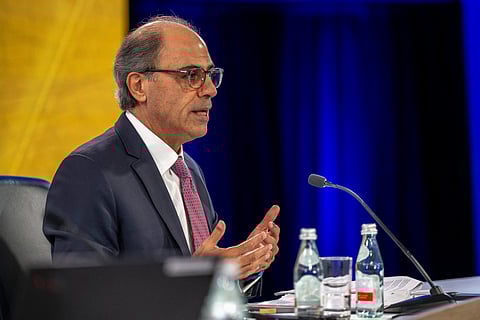
Abu Dhabi: The world enters 2026 with a more complicated economic picture than the year before. Speaking at the Abu Dhabi Finance Week, Jihad Azour, Director of the Middle East and Central Asia Department at the IMF, traced the lessons of 2025 before setting out four areas policymakers must watch closely in the year ahead. His message was grounded in numbers, risk indicators and the clear view that resilience will only hold if vigilance does.
A year of shocks, but also resilience
Azour described 2025 as “a game of two cities,” marked by disruption yet underpinned by surprising strength. The first major shock came through global trade, where higher tariffs did less damage than feared. “The first shock was the trade shock, and the global economy remain resilient after the raising tariffs,” he said. Trade adjusted quickly as firms front-loaded shipments ahead of new tariff packages, and flexibility within trade rules helped cushion the impact.
Inflation pressures, he added, were “relatively muted against all odds.” Supportive investment flows, particularly into AI in the United States, helped offset the drag. The financial sector also showed strong momentum, with the MENA region standing out. “The number of transactions, the size of the issuance and the international capital markets was twice higher than what we saw in 2024,” Azour said. Spreads tightened to levels not seen since the onset of the pandemic.
Uncertainty will not fade quickly
Looking ahead, he warned that uncertainty will remain a defining feature of the 2026 outlook. “We project that global uncertainty will still with us,” he said. Its impact may be delayed, with the potential to weigh on economies for several years. In some cases, he cautioned, uncertainty alone “could drag your economy lower by something that could reach 2% of GDP.” Maintaining vigilance and strengthening credibility, he said, will be essential.
AI valuations carry growing risks
Azour highlighted the buoyant investment climate surrounding AI but warned of an emerging disconnect. “We see that the level of risks in terms of asset is reaching one of the highest over the last three decades,” he said. The gap between valuations in the technology sector and the rest of the S&P is widening, while regulation has not kept pace. He called AI “an area where we see a lot of promises,” but one that requires extreme caution from policymakers and investors.
Advanced-economy debt costs are rising
Debt sustainability is the third major concern. Advanced economies face a sharp rise in financing needs next year, creating spillover risks for emerging markets. “Gross financing needs for advanced economies are ballooning in 2026,” he said. Any adjustment in these economies will have immediate consequences elsewhere, making credible debt management essential.
Fintech growth brings opportunity and risk
Azour also pointed to rapid developments in financial technology, from stablecoins to new payment systems. These advances are deepening markets and accelerating regional integration, but they also introduce new vulnerabilities. “There are certain number of risks that we need to measure, we need to manage and we need to mitigate,” he said.
How the MENA region can navigate 2026
The region, he argued, is well placed to benefit from this environment if it maintains disciplined policy frameworks. Countries should preserve buffers, ensure tight fiscal policy and safeguard credibility in the markets. Trade fragmentation, he added, brings both risk and opportunity. “Accelerating export, increasing trade connection is an opportunity for the region,” but requires improved infrastructure and stronger trade agreements.
He called AI a “game changer” for the GCC, pointing to capital availability, energy advantages and favourable climate conditions that can support the sector’s growth. Financial technology, meanwhile, can widen financial inclusion and deepen markets, positioning the GCC as one of the “key global connectors in trade, logistics, but also in finance.”


