Pakistan court dismisses plea on special aides to prime minister
Court rules prime minister has authority to appoint suitable people as special assistants
Also In This Package
Photos: Russian enthusiast builds his own mini-railway
Haj pilgrims start arriving in Saudi Arabia
You can buy these classic Aston Martins next weekend!
Luck? Italian island spared from COVID-19 outbreak
One-off Rolls-Royce Horology Phantom is in Dubai!
Well-preserved mammoth skeleton found in Siberian lake
Ukraine's snail farmers fear collapse over EU lockdowns
Islamabad: The Islamabad High Court (IHC) has given a clean chit to the Special Assistants to Prime Minister (SAPMs) with dual nationality and ruled there was neither violation of constitution nor any restriction on their appointment as Prime Minister’s Special Assistants.
“The prime minister has the authority to appoint special assistants and to determine their status and functions,” says a judgment authored by the Chief Justice of the IHC Athar Minallah.
Also Read
Photos: Pakistan International Airlines plane from Lahore crashes in KarachiPictures: Pakistan stock exchange in Karachi attacked by gunmen In pictures: Pakistan battles increase in COVID-19 infections Photos: Pakistan resumes polio campaign after coronavirus pauseWhile hearing a petition filed by senior lawyer Mohammad Ikram Chaudhry seeking disqualification of SAPMs for having dual nationality, Chief Justice Athar Minallah asked how the system would work if the prime minister was not even authorised to appoint his special assistants.
The petitioner had argued that only five special assistants could be appointed under Article 93 of the Constitution.
19 non-elected members in Imran Khan’s cabinet
According to him, the Cabinet Division had recently issued the details of assets and dual nationalities of 20 advisers and SAPMs and the list showed that out of 19 non-elected cabinet members, four special assistants held dual nationalities.
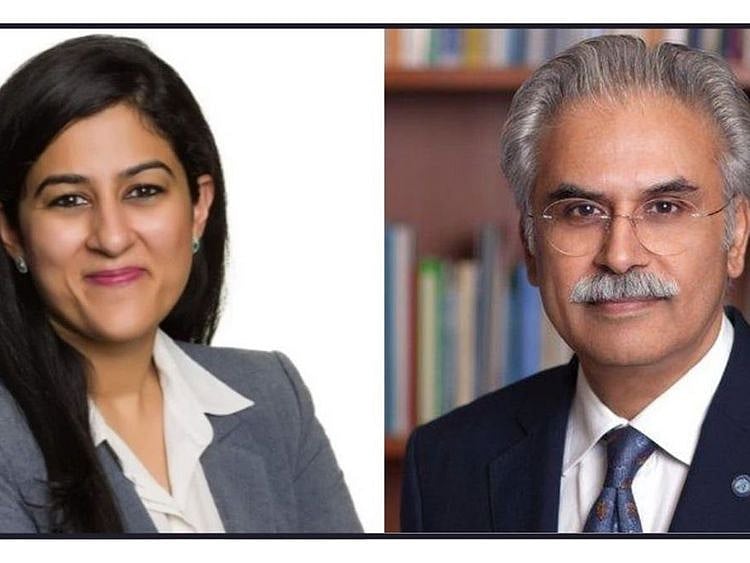
They include Nadeem Babar (US), Syed Zulfiqar Bukhari (United Kingdom), Shahzad Qasim (US), and Tania S Aidrus (Canada). Tania Aidrus, however, has already tendered her resignation citing ‘unnecessary public criticism’ over the fact that she was born in Canada.
The petitioner referred to rule 4(6) of the Rules of 1973 saying it was ultra vires of the Constitution. In the memorandum of the petition, the counsel also took the plea of dual nationality for seeking a declaration regarding disqualification of the respondents.
He said among those holding residency of other counties included Shahbaz Gill (US), Moeed Yousaf (US) and Nadeem Afzal (Canada).
No violation of constitution
Justice Minallah, however, disagreed with his views saying the article he was referring to was related to the appointment of advisers and not special assistants.
“Tell us where the Constitution says that special assistants cannot hold dual nationalities,” he asked the petitioner. Justice Minallah said an elected prime minister carried heavy responsibilities. “What is wrong if the prime minister appoints someone for his help?” he remarked.
Later, the court dismissed the petition observing that the Constitution of Pakistan authorised the prime minister to appoint a special assistant and to determine their status and functions.
“The Prime Minister being an elected person was answerable to the people of Pakistan and Majlis-e-Shoora (Parliament),” the court observed.
The onerous role of the prime minister described under the Constitution cannot be performed by him alone. In order to enable the prime minister to transact business of the executive organ of the state, he ought to have the freedom to appoint officials or other persons for assistance, the order further said.
Sign up for the Daily Briefing
Get the latest news and updates straight to your inbox
Network Links
GN StoreDownload our app
© Al Nisr Publishing LLC 2026. All rights reserved.