Who's in charge? Iran’s leadership shows widening 'fractures' — economic pressure, infighting intensify amid internet blackout
Conflicting stands, corruption rows reveal a regime struggling for cohesion
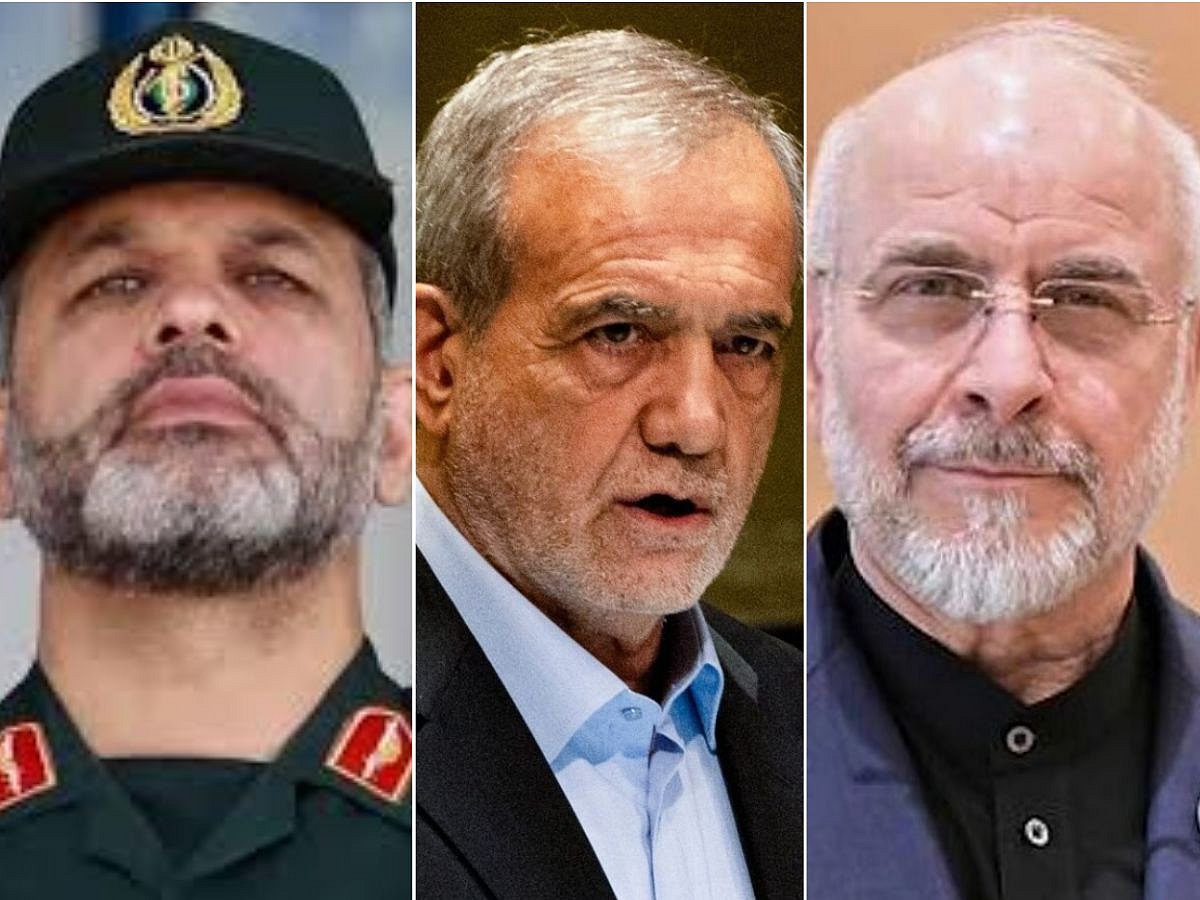
Tehran's latest proposal to end the war, presented on Monday and immediately nixed by US President Donald Trump as "insufficient", offered no concessions.
"It represents an Iranian effort to end the war on Tehran’s terms," the ISW stated.
And it also shows the growing primacy of Major-General Ahmad Vahidi in policy decisions, the think-tank argues.
Here's why:
Factional war in Tehran
Among hardline factions, a power struggle has erupted, revealing a lack of decisive central authority, the institute suggests.
Parliament Speaker Mohammad Bagher Ghalibaf appears to be manoeuvring to stay relevant in negotiations, despite reported "opposition from Vahidi’s inner circle".
This infighting has spilled into public sphere.
It highlights a deepening rift between "pragmatists" and the so-called ultra-hardliners.
The National Council of Resistance of Iran (NCRI), an Iran opposition group, said the messaging coming out of Tehran under Maj-Gen. Vahidi has become increasingly "contradictory", sending out "mixed signals".
Defence analyst Ali Chishti, CEO of The Wire PK, points to “cracks” inside IRGC.
"Iran’s Islamic Revolutionary Guard Corps (IRGC) was once seen as untouchable. But after major setbacks, leadership losses, and ongoing pressures, deep internal fractures are emerging. Infighting, purges, paranoia, and chain-of-command breakdowns are hitting hard."
Paranoia, finger-pointing
ISW cited "sources" inside the IRGC in describe growing suspicion: commanders accusing each other of being "spies", "traitors", or "coup plotters".
“Slowly, it’s sinking in," writes Chishti in apost. "They’re getting extremely paranoid.”
This echoes earlier reports of shock, humiliation, and mutual accusations after strategic failures.
Slowly, it’s sinking in... They’re getting extremely paranoid... The IRGC isn’t in control, it’s in freefall.Defence analyst Ali K Chishti, CEO The Wire PK
Chain of command 'breaking'
Analysts report an active breakdown in IRGC hierarchy. Some field commanders are allegedly threatening defection or going public.
Messages from leadership contradict each other, with locations leaking and confusion at the top.
Chishti said: “The IRGC isn’t in control, it’s in freefall.”
Clashing economic empires: IRGC isn’t monolithic
Hardliners (e.g., around current commanders like Maj-Gen. Vahidi) clash with more pragmatic ex-IRGC figures like Ghalibaf.
IRGC has sidelined civilian negotiators, inserted loyalists, and sparked public spats over talks with the US and regional policy.
And amid key leadership losses — are purges.
It has been widely reported, by IRGC’s own admission, that multiple top commanders had been taken out in strikes (Salami, Pakpour, others), followed by rapid reshuffles.
Now, reports of purges, loyalty tests, and rivalries between IRGC branches (Quds Force, Aerospace, Basij, etc.) over resources and blame for setbacks have also emerged.
Economic empires (i.e. smuggling) are also under internal strain due to the US naval blockade, and the huge cost of breaking it via land borders.
Sharp disputes
Another example: the gap between Iran’s mission to the UN, which said discussions on Tehran’s nuclear program could be “reviewed” if concerns over possible military dimensions were addressed, vs Iran Foreign Minister Abbas Araghchi, who rejected such negotiations outright.
Araghchi simply stated Iran would not talk under “pressure and intimidation.” State media aligned with Araghchi’s stance, saying Iran would not negotiate "under coercion".
But it did not address the contradiction in the UN statement, a key sign of "confusion" inside the system as officials struggle to present a unified position, according to the ISW.
Tensions
NCRI also cited open tensions between Iran's judiciary and parliament.
Judiciary Chief Gholam-Hossein Mohseni-Ejei dismissed calls for negotiations with the US and said Iran must rely on domestic resources to solve its economic problems, even as he acknowledged that some major corruption cases had been concealed for “expediency reasons,” including the Debsh Tea scandal.
In parliament, lawmakers have openly attacked the government over the following issues:
Economic mismanagement,
Ministerial dismissals and
Price spikes.
Hardliner: Maj-Gen. Vahidi's primacy
The US-based ISW reported that Iran’s latest April 26 peace proposal signals a high-stakes gamble by IRGC Commander Maj-Gen. Vahidi.
Despite severe damage to Iran’s infrastructure, Vahidi’s inner circle remains convinced they are "winning", prompting the US to reject the offer for failing to curb Iran’s nuclear ambitions or relinquish Tehran’s asserted "control" over the Strait of Hormuz.
Internal pressure: Signs of 'fragile' regime?
Beyond the negotiation table, Iran is grappling with a collapsing economy.
On Tuesday night, during a state dinner in honour of Britain's King Charles III, US President Donald Trump claimed the Iranian regime is in a "state of collapse".
Trump claimed the destruction of Iran's navy and missile capabilities while demanding the reopening of the Strait of Hormuz.
Iranian officials rejected these claims as "baseless".
Recent aviation data shows reports indicate ongoing military pressures.
As the Middle East war appeared at a standstill, the ISW stated that recent events may force a shift in the Vahidi-led government strategy:
Storage and export bottlenecks: Growing difficulties in storing and exporting oil serve as a critical pressure point that could eventually compel Tehran to reconsider its hardline stance.
The protest threat: Iran’s top security body is bracing for a potential wave of unrest as economic deterioration intensifies.
Internet shutdown fallout: Prolonged blackouts are accelerating unemployment and wreaking havoc on the economy, further destabilising the regime’s control.
Strategic alliances: Tehran is also repotedly doubling down on cooperation with key adversaries, specifically Russia and China.
Mismanagement
MPs have accused officials of incompetence, corruption and even "political betrayal", while some have demanded judicial action against ministers they blame for worsening the crisis.
The broader picture shows one of a government under growing strain. As the blockade bites, public frustration deepens, and Iran’s elite appears increasingly divided over how to respond.
Instead of projecting control, the system is exposing its own fractures.
Whether mounting economic desperation will finally force Vahidi to make concessions remains the critical, unanswered question in this volatile standoff.
And while the extended ceasefire remains on paper, the US military buildup continues, according to aviation trackers. Flight data shows the US is still moving substantial amount of assets into the region — looking less like peace and more like contingency planning.
What Trump wants
Trump insist on Iran’s nuclear program as a central issue in any deal with Iran; Tehran's hardliners insist on relegating the issue to the background.
A volatile waiting game continue.
While a "frozen conflict" is virtually in place, the US military is keeping up the pressure on the Iranian economy through the naval blockade, which the White House has declared is now "global".
Key points
Iran’s officials are sending conflicting signals on nuclear talks.
Judiciary Chief Mohseni-Ejei rejected negotiations, but acknowledged hidden corruption cases.
Parliament is mired in infighting over economic mismanagement and rising prices.
Critics say the contradictions show a regime losing cohesion under increasing pressure.
Sign up for the Daily Briefing
Get the latest news and updates straight to your inbox
Network Links
GN StoreDownload our app
© Al Nisr Publishing LLC 2026. All rights reserved.