Ceasefire on edge: Uncertainty deepens risk of return to war
Hormuz flashpoint and ship seizure cast doubt on talks as both sides harden positions
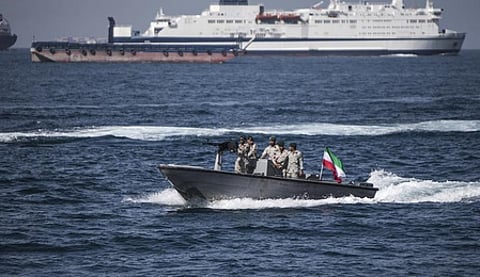
Dubai: The fragile Iran ceasefire is rapidly unravelling, with escalating tensions in the Strait of Hormuz exposing both Washington’s limited control over events and Tehran’s growing leverage over a critical global chokepoint — a dynamic that risks pushing the conflict back toward full-scale war.
What began as a moment of optimism has quickly devolved into uncertainty and confrontation.
At a glance
Ceasefire fragile: Truce that ends on Wednesday “hanging by a thread” as tensions spike in Hormuz
Flashpoint at sea: US seizes Iranian-flagged vessel breaching blockade, raising risk of escalation
Talks uncertain: Iran says no decision yet on Pakistan negotiations, despite US push for fresh round
Trump strategy tested: White House insists “maximum leverage” will force Tehran to concede
Tehran holds ground: Refuses to give up uranium, signals it still controls Hormuz pressure point
Global risk rising: Energy markets, shipping routes and regional stability remain on edge
Just days after US President Donald Trump declared Iran had “agreed to everything,” fuelling hopes of an imminent deal, the situation has sharply reversed. By the weekend, Washington was again threatening to strike Iran’s core infrastructure, while Tehran tightened its grip on Hormuz — underscoring what CNN described as a conflict now “hanging by a thread.”
At the heart of the latest escalation is a direct military flashpoint. The US Navy’s seizure of an Iranian-flagged vessel attempting to breach the blockade has cast fresh doubt over already fragile diplomacy. According to Associated Press, the interception — the first since the blockade began — has intensified fears that talks expected in Pakistan may not materialise at all.
Trump himself framed the incident in stark terms, saying a US destroyer “stopped them right in their tracks by blowing a hole in the engineroom,” with Marines boarding the vessel — a move Tehran has condemned as “piracy” and vowed to respond to.
Strategy or drift?
The whiplash between diplomatic optimism and military escalation has become a defining feature of Trump’s war approach.
CNN notes that the president’s leadership “veers between triumphant predictions of imminent peace and alarming threats of violence,” raising deeper questions about whether Washington is executing a coherent strategy — or reacting to events it can no longer fully control.
Administration officials insist the volatility is deliberate.
“The president is looking for maximum leverage,” US Energy Secretary Chris Wright said, dismissing concerns and arguing that signs of instability within Iran suggest the regime is weakening and that an end to the war is “not too far away.”
Similarly, US Ambassador to the UN Mike Waltz argued that “Iran does not have the cards,” insisting sustained pressure would force Tehran to abandon its nuclear ambitions “the easy way, rather than the hard way.”
Yet such confidence contrasts sharply with realities on the ground.
Tehran pushes back
Iran has publicly rejected key US claims, particularly suggestions it is ready to concede on its nuclear programme or regional influence.
Senior negotiator Mohammad Bagher Ghalibaf acknowledged that “progress has been made,” but stressed that major gaps remain — especially over the Strait of Hormuz and enriched uranium stockpiles, which Tehran has made clear it will not surrender.
More significantly, Iran appears increasingly confident in its own leverage.
Despite heavy losses from sustained US and Israeli strikes, the regime remains intact — and crucially, retains the ability to disrupt global energy flows. As its leadership has signalled, any attempt to restrict Iranian oil exports “comes with a price,” raising the spectre of prolonged economic fallout.
Talks in doubt
Against this backdrop, prospects for diplomacy remain deeply uncertain.
While Washington has indicated that negotiators will head to Islamabad, Tehran has yet to confirm participation. “So far… we have no plans for the next round of negotiations,” Foreign Ministry spokesperson Esmail Baghaei said, according to Associated Press.
At the same time, Pakistan has moved ahead with preparations, tightening security and stepping up diplomatic outreach in a bid to keep talks alive — highlighting the widening gap between diplomatic intent and geopolitical reality.
A narrowing window
For both sides, the incentives to avoid further escalation remain strong.
For Trump, the war is carrying mounting political and economic costs, with approval ratings slipping and fears growing over global energy disruption. For Iran, survival itself would constitute a strategic win, even amid widespread devastation and economic collapse.
Yet the risks of miscalculation are rising.
The seizure at sea, competing claims over negotiations, and hardened rhetoric on both sides point to a dangerous moment where leverage could quickly give way to confrontation.
The coming days — particularly the fate of the proposed Pakistan talks — may determine whether Trump’s strategy of pressure and intimidation can still open a diplomatic off-ramp, or whether the conflict is sliding beyond control into a broader and more costly phase.
-- With AP inputs


