US and Iran trade new strikes, Kuwait intercepts drones and missiles: What we know so far
Kuwait’s air defences on alert amid regional fallout from US-Iran tensions
The United States and Iran have exchanged fresh military strikes despite ongoing negotiations aimed at extending a ceasefire and reopening the Strait of Hormuz, a vital global energy corridor.
The latest escalation saw US forces target Iranian military facilities, while Kuwait reported intercepting incoming drones and missiles. The developments have raised fresh concerns over regional stability and the future of US-Iran talks.
Get updated faster and for FREE: Download the Gulf News app now - simply click here.
Why did the US strike Iran?
The US military said it carried out "self-defence" strikes on Iranian radar and drone command-and-control sites over the weekend.
According to US Central Command (CENTCOM), the attacks targeted facilities in Goruk and on Qeshm Island after Iran allegedly shot down a US MQ-1 drone operating over international waters.
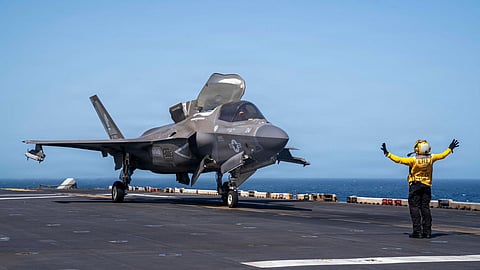
CENTCOM said American fighter jets destroyed Iranian air-defence systems, a drone control station and two attack drones that posed threats to shipping in regional waters.
The US military added that no American service members were injured during the operation.
How did Iran respond?
Iran's Islamic Revolutionary Guard Corps (IRGC) said it launched retaliatory strikes against a US military facility allegedly involved in attacks on Iranian infrastructure.
Iranian state media reported that the target was linked to a previous US strike on a telecommunications tower on Sirri Island in the Gulf.
The IRGC did not publicly identify the location of the targeted base but warned that any future US attacks would face a "completely different" response.
What happened in Kuwait?
Kuwait's military said its air-defence systems intercepted hostile drones and missiles early Monday.
The General Staff of the Kuwaiti Army confirmed that explosions heard across parts of the country were the result of successful mid-air interceptions.
Authorities urged residents to follow official safety instructions.
How are the attacks affecting ceasefire talks?
The latest military exchanges have complicated ongoing negotiations between Washington and Tehran.
At the centre of the discussions is a proposed memorandum of understanding that would extend the current ceasefire, reopen the Strait of Hormuz and pave the way for broader talks on Iran's nuclear programme.
US President Donald Trump reportedly requested amendments to the latest draft agreement after meeting advisers on Friday, extending negotiations by at least another week.
While US officials have described the changes as relatively minor, they reportedly focus on stronger guarantees regarding Iran's nuclear commitments and the reopening of the strategic waterway.
Why is the Strait of Hormuz so important?
The Strait of Hormuz remains one of the world's most critical energy chokepoints, handling a significant share of global oil and natural gas exports.
Iran has maintained pressure on shipping routes through the strait, prompting the US Navy to continue enforcing a blockade on Iranian ports.
CENTCOM said it recently disabled a Gambia-flagged cargo vessel attempting to enter an Iranian port after ignoring multiple warnings.
The US military says more than 100 vessels have been redirected since the blockade began.
The disruption is affecting not only energy markets but also global fertiliser supplies. Gulf countries account for around 30 per cent of globally traded chemical fertilisers, raising concerns about broader economic and food security impacts.
What is delaying a US-Iran agreement?
Although both sides say talks are continuing, significant differences remain.
Trump has publicly insisted that any agreement must address Iran's stockpile of highly enriched uranium and guarantee the reopening of the Strait of Hormuz.
Iran, however, says its nuclear programme is not part of the current negotiations and has also demanded economic relief as part of any final deal.
Iranian Parliament Speaker Mohammad Bagher Ghalibaf said Tehran would not approve any agreement unless the country's rights were fully protected.
"The soldiers of the diplomatic battlefield have no trust in the words and promises of the enemy," he said, according to Iranian media.
What happens next?
Despite the renewed military exchanges, both Washington and Tehran continue to signal interest in reaching an agreement.
Trump has said Iran "really wants to make a deal" and expressed optimism that negotiations will eventually succeed.
However, with military strikes continuing, shipping disruptions persisting and key disagreements unresolved, the path towards a lasting ceasefire and broader peace deal remains uncertain.
With inputs from AFP, AP


