A Jordanian protester carries the national flag during a rally by the Muslim Brotherhood, in Amman, Jordan, July 31, 2015.
What is the Muslim Brotherhood? Ideology, reach and why the US has designated its groups as terrorists
Washington’s move comes amid wider regional escalation
Last updated:
4 MIN READ
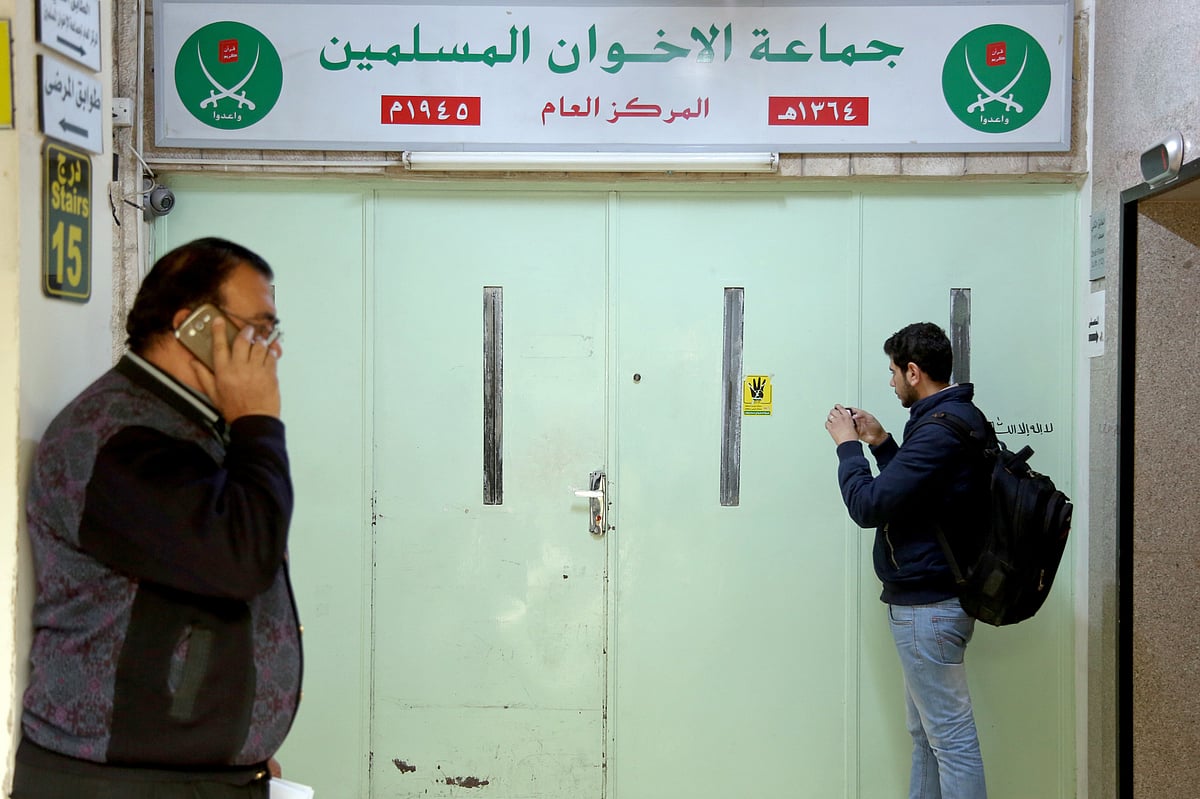
The main entrance of the original Muslim Brotherhood office, that is sealed with official wax after it was raided and shut down by police, in Amman, Jordan, on April 13, 2016.
AP
Dubai: The United States has designated Muslim Brotherhood organisations in Egypt, Jordan and Lebanon as “terrorist” groups, sharply escalating Washington’s campaign against actors it says threaten regional security and Israeli interests.
The move comes amid the Gaza war and wider regional escalation, despite intermittent ceasefires.
The decision follows an executive order by President Donald Trump directing his administration to blacklist specific Brotherhood-linked entities. US officials say the targeted groups publicly present themselves as political or civic organisations while allegedly supporting Hamas and other militant causes behind the scenes.
Which Muslim Brotherhood groups were designated, and how?
The US applied different legal designations:
Egypt: Listed by the Treasury Department as a Specially Designated Global Terrorist (SDGT) entity
Jordan: Listed by the Treasury Department as a Specially Designated Global Terrorist (SDGT) entity
Lebanon (Al Jamaa Al Islamiya): Blacklisted by the State Department as a Foreign Terrorist Organization (FTO) — the most severe category
The FTO label brings additional penalties, including travel bans, asset freezes and criminal liability for providing any form of support.
What does the designation actually do?
Under US law, the designations:
Criminalise material or financial support
Trigger asset freezes and banking restrictions
Expose violators to prosecution
Bar FTO members from entering the US
Because of the reach of the US financial system, the impact often extends well beyond American borders.
How does the Muslim Brotherhood operate?
The Muslim Brotherhood is not a single, centralised organisation. Instead, it functions as a loosely connected transnational network with shared ideology but locally autonomous branches.
Its methods typically include:
Political parties contesting elections
Social and charitable organisations
Religious and educational networks
Grassroots mobilisation through mosques and community groups
This structure allows the Brotherhood to shift between legal politics and covert activism, depending on pressure from the state.
5 things to know
What the US did
Washington designated Muslim Brotherhood groups in Egypt, Jordan and Lebanon as terrorist organisations.
Different labels used
Egypt and Jordan were listed as Specially Designated Global Terrorists; Lebanon’s al-Jamaa al-Islamiya received the harsher Foreign Terrorist Organization label.
Why now
The move comes amid the Gaza war and wider regional escalation involving Israel and its rivals.
What the US says
Officials accuse the groups of backing Hamas while posing publicly as political or civic organisations.
What it changes
The designations trigger sanctions, asset freezes, travel bans and criminal penalties for providing support.
What is the Muslim Brotherhood’s ideology?
Founded in 1928 by Egyptian scholar Hassan Al Banna, the Brotherhood seeks to reorder society according to Islamic principles, blending religion and governance.
Core ideas include:
Islam as a comprehensive political and social system
Rejection of Western secular models
Emphasis on moral reform before political change
Strong opposition to Zionism and Israeli policies
Critics say the ideology creates a pathway from political Islam to militancy. The Brotherhood counters that it advocates gradual, peaceful participation, not armed struggle.
Does the Muslim Brotherhood support violence?
The movement officially denies involvement in terrorism and says it rejects violence.
However, US officials and several Middle Eastern governments argue that:
Brotherhood rhetoric legitimises “resistance” violence
Some branches have backed armed groups, including Hamas
The movement provides ideological cover for militancy even when not directly involved
Washington cited alleged support for Hamas and activities “against Israeli interests” as key reasons for the designation.
Which countries have banned or designated the Muslim Brotherhood?
Countries that have outlawed or designated the Brotherhood as a terrorist organisation — fully or in part — include:
Egypt
Saudi Arabia
United Arab Emirates
Bahrain
Jordan (domestic ban in 2024)
Russia
Other states, particularly in Europe, have stopped short of bans, opting instead for monitoring and legal scrutiny.
Where does the Brotherhood still operate legally?
Despite widespread bans, Brotherhood-inspired groups remain active in parts of the region:
Lebanon: Al Jamaa Al Islamiya has parliamentary representation
Morocco and Kuwait: Islamist parties influenced by Brotherhood thought operate within the system
This divide reflects a long-running debate over whether the Brotherhood is a political movement or a security threat.
How have the groups responded?
Brotherhood-linked organisations have rejected the US decision as political rather than judicial.
Egypt’s Muslim Brotherhood denies any role in terrorism
Lebanon’s Al Jamaa Al Islamiya says the designation has no legal effect inside Lebanon
Leaders accuse the US of acting under pressure from Israel
What does this mean inside the United States?
The move has energised conservative lawmakers who have long sought a broader ban on the Muslim Brotherhood.
Republican governors in Texas and Florida have extended the crackdown to Muslim advocacy groups, including CAIR, which denies any links and has launched legal challenges. Civil rights groups warn the designations risk criminalising political activism and chilling free speech.
Why does this matter now?
The designations come amid the Gaza war, regional escalation involving Hezbollah, and deepening US alignment with Israel.
What comes next?
The designations are likely to trigger legal, political and diplomatic fallout on several fronts.
Financial pressure abroad
Banks, charities and international partners may cut ties to avoid US penalties, potentially shrinking funding channels even outside US jurisdiction.
Wider designations possible
Trump allies in Congress have long pushed for a blanket designation of the Muslim Brotherhood, raising the possibility of further listings.
Domestic impact in the US
State-level crackdowns on Muslim advocacy groups could intensify, fuelling civil liberties battles in US courts.
Regional escalation
The move hardens lines in the Middle East, strengthening Israel’s position while deepening hostility with Islamist movements amid the Gaza war and wider regional escalation.

A Senior Associate Editor with more than 30 years in the media, Stephen N.R. curates, edits and publishes impactful stories for Gulf News — both in print and online — focusing on Middle East politics, student issues and explainers on global topics. Stephen has spent most of his career in journalism, working behind the scenes — shaping headlines, editing copy and putting together newspaper pages with precision. For the past many years, he has brought that same dedication to the Gulf News digital team, where he curates stories, crafts explainers and helps keep both the web and print editions sharp and engaging.
Sign up for the Daily Briefing
Get the latest news and updates straight to your inbox
Network Links
GN StoreAbout Gulf NewsTerms & ConditionsReach by GNSitemapContact usPrivacy PolicyGN FocusHave your sayWork with usAdvertise with usGulf News epaperPrinting Services
Download our app
© Al Nisr Publishing LLC 2026. All rights reserved.