Trump signs Russia-Iran sanctions law; Saudi Arabia on alert amid Houthi threat
Iran claims it struck an oil tanker as tensions rise across the region
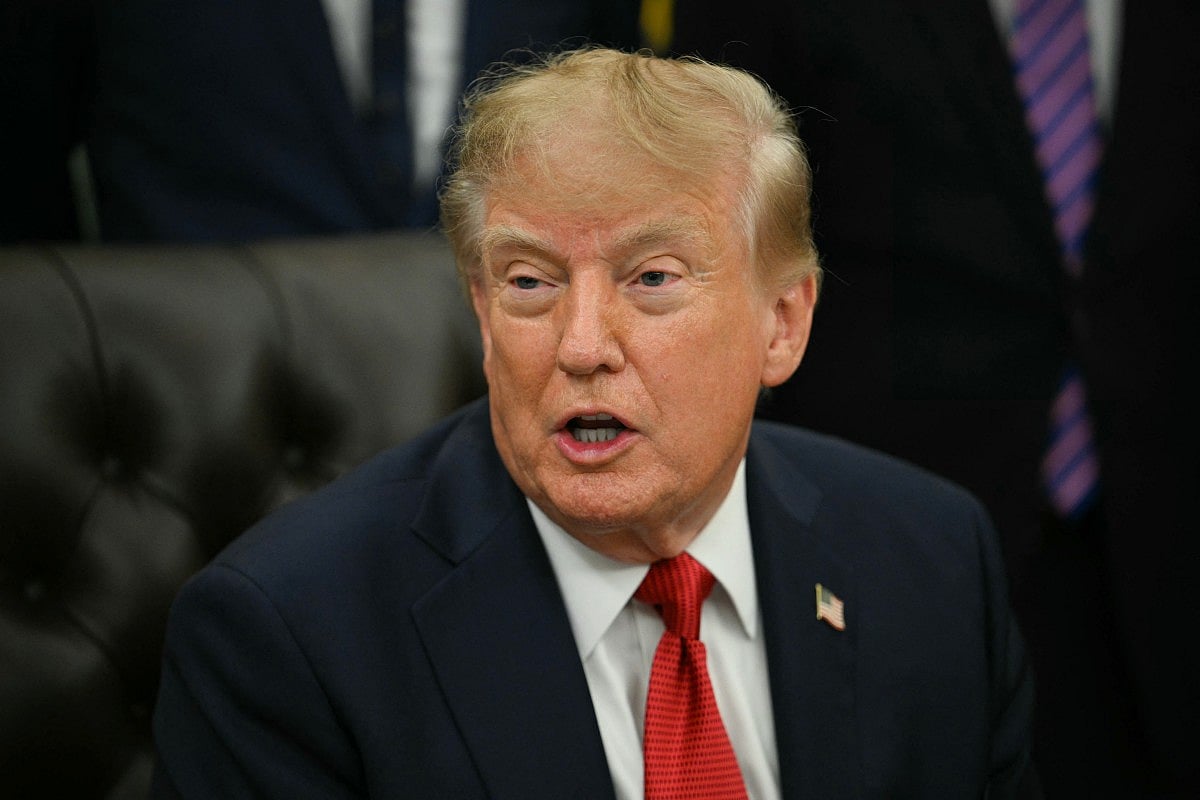
The Iran conflict continues to drive tensions across the Middle East, with US President Donald Trump extending sanctions on Iran and planning to put Tehran’s nuclear ambitions at the centre of his UN diplomacy next week. Saudi Arabia has issued and later lifted danger alerts in Riyadh and Al Kharj, while the Houthis reported 26 Saudi strikes in Yemen over the past 24 hours. Iran also claimed it struck an oil tanker in the Strait of Hormuz, as shipping traffic through the Bab el-Mandeb remains disrupted. Meanwhile, a UN-mandated fact-finding mission said there were reasonable grounds to believe the US may have committed war crimes in two February strikes on Iran. Follow all the latest developments here:
The actual number of American service members killed in the conflict with Iran is higher than what the Pentagon has made public, according to Washington Post reporting relayed by Reuters. The Post's account draws on six US officials with knowledge of the Defense Department's internal records on casualties. Per five of those sources, the true fatality figure stands at 22 or more — four higher than what currently appears in the Pentagon's public tracking database.
Yemen's Houthis said that Saudi Arabia had launched 26 strikes against areas under their control in the past 24 hours, as the pro-Iran group and Yemen's Riyadh-backed government clash in the country's revived civil war.
The group said that the number of Saudi strikes on its positions had reached 300 over the last week, saying they targeted areas across Houthi-held Yemen.
President Donald Trump said that he was banning CNN, MSNOW and Politico from the White House due to what he called unfavorable coverage, and threatened that more such prohibitions of media outlets could follow.
Meanwhile, in-person voting for this year's midterm elections is underway in Virginia, ushering in the final six weeks for Americans to decide which party they trust to lead Congress at a time of a cost-of-living crisis, a prolonged war in Iran and other pressing issues. Voters in Idaho, Minnesota and South Dakota, can cast absentee ballots in person.
And a top official at the U.S. Postal Service has said the agency has stopped work on developing a controversial computer system that was central to Trump's effort to limit mail voting after the Supreme Court rejected his executive order this week.
Get updated faster and for FREE: Download the Gulf News app now - simply click here.
The US military's price tag for the Iran war has grown to $43.6 billion as of Sept. 3, according to a new estimate provided this week to lawmakers.
The figure from US Central Command, which oversees operations in the Middle East, offers the most up-to-date cost for the conflict since it was launched by the United States and Israel on Feb. 28. A Congressional Budget Office report released Tuesday said the war had cost $38 billion through Aug. 1 and will continue to rack up expenses of around $3 billion a month depending on the conflict's intensity.
The new breakdown, seen by The Associated Press and reported earlier by Bloomberg and Punchbowl News, also showed the continued use of expensive munitions by American forces. Weapons costs jumped by more than $6 billion in just over a month, from $21.7 billion listed in the CBO report to $28.1 billion in US Central Command's estimate.
US President Donald Trump signed a bill Friday authorising new sanctions designed to pressure Russia over its war in Ukraine, shortly after it received congressional approval this week.
The legislation takes aim at Russia's energy and defense sectors, alongside President Vladimir Putin and other senior officials.
It also targets Moscow's so-called shadow fleet of tankers used to evade Western sanctions, and allows Trump the authority to impose tariffs of up to 100 percent on major buyers of Russian oil and gas.
This could potentially cover China and India, and furthers efforts to cut off revenue financing Moscow's war.
The Republican-led House of Representatives passed the package by a 262-159 vote on Wednesday.
The bill would also target companies and foreign actors supporting Russia's military, and extend sanctions involving Iran.
Iran said it struck the Togo-flagged oil tanker Trend over what it described as an "illegal attempt" to pass through the Strait of Hormuz on Thursday night, according to the state broadcaster, which cited the Revolutionary Guard Corps.
The Guard's navy warned that vessels attempting to pass through the strait without authorization would face "destruction," the broadcaster said. Tehran has asserted control over much of the waterway since the US and Israel launched the war on Feb. 28.
Separately, the United Kingdom Maritime Trade Operations, which alerts about attacks or military operations, said another tanker was struck Wednesday by an "unknown projectile" while transiting out of the strait, with the crew reported safe. No other details were available.
US President Donald Trump has signed the Lindsey O. Graham Sanctioning Russia and Iran Act of 2026 into law, expanding sanctions on Russia and extending existing US sanctions on Iran, the White House said.
The law gives the president authority to impose tariffs of up to 100% on imports from countries that meet specified criteria linked to purchases of Russian crude oil or natural gas, or efforts to evade sanctions.
India, China face potential tariff exposure
The legislation targets Russian officials, financial institutions, defence networks and the country’s so-called “shadow fleet” of vessels used to transport energy while avoiding Western restrictions.
It also extends the Iran Sanctions Act for five years.
The law does not automatically impose a 100% tariff on any country. Instead, it allows the president to impose targeted duties of up to 100% on the five largest importers of Russian crude oil or natural gas and countries found to be facilitating sanctions evasion.
The measure could have implications for India and China, among the major buyers of Russian crude, by creating a statutory route for potential tariffs on imports from countries that continue specified purchases of Russian energy.
The president can waive certain measures under specified conditions, including by certifying to Congress that a waiver is in the national interest.
The Trump administration says it has secured more than $1 billion in United Nations budget cuts, alongside reductions in headquarters staff and peacekeepers, as President Donald Trump prepares to address the General Assembly next week.
A senior US official told reporters that 3,000 headquarters positions were being trimmed and more than 25 per cent of peacekeepers worldwide were being sent home.
The administration presented the reductions as part of an effort to narrow the UN's work and concentrate its resources on peace and security. The briefing did not provide a breakdown of the savings, affected posts or peacekeeping missions.
"Over a billion dollars has now been cut out of the UN budget," the official said.
The official described the cuts as the first in the organisation's 80-year history and credited Trump and the secretary of state with driving the changes. That historical claim was not accompanied by supporting figures during the briefing.
"We call it having the UN on a diet," the official said.
The administration's argument is that the organisation has taken on too many responsibilities and should concentrate on resolving conflicts.
Get updated faster and for FREE: Download the Gulf News app now - simply click here.
India, whose shipping and nationals have suffered collateral damage in the Strait of Hormuz conflict, has reiterated its call for respecting international law and said commercial maritime traffic "must not become targets of geopolitical tensions".
"Navigational rights must not be subject to coercion, threats, unlawful restrictions or arbitrary interference", India's Permanent Representative P Harish told the Security Council.
"India is a major maritime nation, and we strongly support a free, open, secure and rules-based maritime domain", he said.
Harish spoke at an informal Council meeting convened by Bahrain to discuss the maritime security environment under the Arria-Formula, named for Venezuelan diplomat Diego Arria, who initiated such gatherings while presiding over the body in 1992.
India has also suffered economically from the blocking of the Strait of Hormuz, which disrupted the supply of oil and gas, as well as the steep rise in global petroleum prices.
The disruption in the Gulf and West Asia "has implications across regions of the globe, particularly in terms of energy and food security", Harish said.
Explosions were heard in the Saudi capital Riyadh early Saturday. Local residents received air defence alerts via mobile apps.
The Saudi Directorate of Civil Defence later issued a statement on X saying the danger has passed in Riyadh and Al Kharj and urged residents to continue following its instructions and avoid gathering or filming.
Earlier it had warned: "An alert has been issued by the National Early Warning Platform for Emergency Cases in Al-Kharj Governorate to warn of a danger."
Saudi Arabia’s Civil Defence has said the danger has passed in Riyadh city and Al Kharj Governorate after earlier alerts were issued.
In separate posts, the General Directorate of Saudi Civil Defence urged residents to continue following safety instructions and avoid gathering or filming.
Residents were advised to call 911 in case of an emergency.
Get updated faster and for FREE: Download the Gulf News app now - simply click here.
Rear Admiral Abdullah bin Salem Al-Shehri, commander of the Multinational Maritime Defence Coalition (MMDC), said the 14-nation alliance has achieved its initial operational capability to protect key international waterways.
Speaking after the coalition’s fourth planning meeting in Jeddah on Friday, Al-Shehri said protecting international waterways was an international responsibility and warned that threats to maritime security would be deterred.
Formed in July, the MMDC focuses on keeping waterways around the Arabian Peninsula, including the Gulf of Aden, Bab Al-Mandeb Strait and Red Sea, open to international traffic.
The United Nations Security Council has condemned attacks by the Houthis on Saudi Arabia, including strikes targeting civilian and energy infrastructure.
In a statement, the council demanded that the Houthis “immediately cease their military escalation” and reiterated its condemnation of attacks and threats against shipping in the Red Sea and Bab Al-Mandeb.
The UNSC expressed solidarity with Saudi Arabia and affirmed its inherent right to self-defence under international law. It also reaffirmed its commitment to Yemen’s unity, sovereignty, independence and territorial integrity.
Iran’s Interior Ministry spokesperson Ali Zeynivand has acknowledged growing public concern over record-high inflation and rising prices, saying officials are working to address the issue.
Zeynivand said rebuilding damaged civilian infrastructure is the government’s top priority in its post-war programme. Residential homes and public facilities, including police stations, will be repaired before nonessential government projects, he said at a news briefing, according to semi-official Tasnim news agency.
He said nearly 75,000 residential units, along with infrastructure and connecting bridges in provinces including Hormozgan and Golestan, were damaged in what he described as “enemy attacks”.
Aircraft tracking website FlightRadar24 on Saturday reported major issues at the Saudi capital's Riyadh King Khalid International Airport, including cancellations and delays, after residents saw smoke and flames near the site.
The airport was listed under the site's maximum disruption index of 5.0, meaning the airport was seeing "major problems with long delays and several cancelled flights".
The disruption follows an overnight air raid alert issued by Saudi authorities, the first since fighting in neighbouring Yemen intensified this month.
An Aramco fuel tank near Riyadh's international airport was on fire Saturday, according to an AFP journalist, after people in the city reported hearing explosions.
Firefighters could be seen trying to extinguish the flames of a burnt out fuel tank with the Saudi oil giant Aramco logo appearing on the structure.
11 people at a military site in the eastern province of Deir Ezzor the previous day.
"The defence ministry held a funeral procession for 11 of its martyrs, who were killed in an explosion at one of the Syrian Arab Army sites" in Deir Ezzor province, the official SANA news agency said.
The ministry had reported on Friday an explosion at an army site in Deir Ezzor, saying it was under investigation.
Firefighters and rescuers headed to the scene of the explosion, state media reported at the time, without immediately providing any casualty figures.
Fighting in southern Yemen between Saudi-backed government forces and Iran-backed Houthi fighters has killed 48 people in recent hours, military sources from both sides told AFP on Saturday.
According to government military sources, 17 troops were killed, while the Houthis reported 31 of their fighters killed in the past day.
Ali Zeinivand, Iran's Deputy Interior Minister for Political Affairs and the official spokesperson for the Ministry of Interior, said Saturday that the country has no concerns about the supply of essential goods despite the "enemies' propaganda."
Owing to the high volume of imports of essential goods, the country is currently facing a shortage of storage facilities and has called on the private sector to provide assistance, Zeinivand said at a press conference in Tehran, according to the semi-official Fars news agency.
"Iran's people should not be concerned about the supply of essential goods and impacted by the enemies' false propaganda. We are working optimally in this area," he said.
Zeinivand, however, acknowledged the rise in domestic product prices, noting that the country's officials are adopting measures to resolve the issue, Xinhua News Agency reported.
US media outlets CNN and MS NOW said they were denied access to the White House grounds on Saturday, a day after President Donald Trump announced a ban against them for reporting what he calls "fake news."
The news outlets both denounced the move as a violation of the US constitution and vowed to keep reporting on the US government. Both are expected to take the bans to court to regain access to the presidential mansion.
"The White House belongs to the American people and the decisions made inside are funded with our tax dollars," MS NOW, formerly known as MSNBC, said on X.
In its own statement CNN said, "we have a right under the US Constitution to do our reporting without hindrance or interference from the government and this ban is an illegal assault on this fundamental right."
There was no immediate word from Politico, which was also banned.
US Central Command commander Admiral Brad Cooper has shared an operational assessment detailing security and trade milestones secured by American forces in West Asia.
Cooper delivered these remarks in a video message posted on X, stating that "CENTCOM forces have supported more than one billion barrels of crude oil leaving the Gulf. That's one billion barrels of crude oil out through the Strait of Hormuz in the last couple of months."
Yemen’s Houthis said on Saturday it had launched a large-scale attack on Saudi Arabia using ballistic and cruise missiles as well as drones, claiming that sensitive targets in Riyadh were struck. The group’s military spokesman, Yahya Saree, said the operation was carried out in response to recent Saudi air strikes on Yemen and rejected Saudi accusations that the Houthis had targeted Mecca.
Saudi authorities issued aerial-threat alerts for Riyadh and Al Kharj overnight, while explosions were heard and smoke and flames were later seen near Riyadh’s main airport. Saree said a second operation targeted Saudi Aramco facilities in Yanbu and claimed the attacks caused large fires at the targeted sites.
Iran’s armed forces rejected CENTCOM commander Adm. Brad Cooper’s claim that US forces had helped more than one billion barrels of Arabian Gulf crude pass through the Strait of Hormuz while blocking Iranian oil exports, calling the remarks “false” and “ridiculous.”
Senior armed forces spokesman Abolfazl Shekarchi accused Washington of engaging in a “failed psychological operation” aimed at boosting the morale of what he described as exhausted US forces in the region and justifying the financial and human costs of the war.
He said the US claim could not change what he described as the reality of the American military’s withdrawal from the region.
Israel's President granted a pardon Saturday to a former soldier who gunned down a Palestinian attacker in 2016 after he had already been incapacitated by troops in the West Bank city of Hebron.
Elor Azaria had been freed from prison in May 2018 after serving nine months behind bars, half his original sentence, for the manslaughter of Abdul Fatah al-Sharif.
Israeli President Isaac Herzog said he "decided to grant the request of Elor Azaria to erase the remaining period of his criminal record and continue with his life."
"President Herzog has decided that the circumstances, the length of time passed, and the sorrow Azaria expressed justify enabling him to be allowed to begin a new chapter in his life," a statement from Herzog's office read.
We are closing this live coverage now. For the latest updates, click here.
Sign up for the Daily Briefing
Get the latest news and updates straight to your inbox
Network Links
GN StoreDownload our app
© Al Nisr Publishing LLC 2026. All rights reserved.