Trump faces mounting pressure to find an Iran exit
Wednesday's cabinet meeting comes as ceasefire faces fresh strain, Hormuz tensions persist
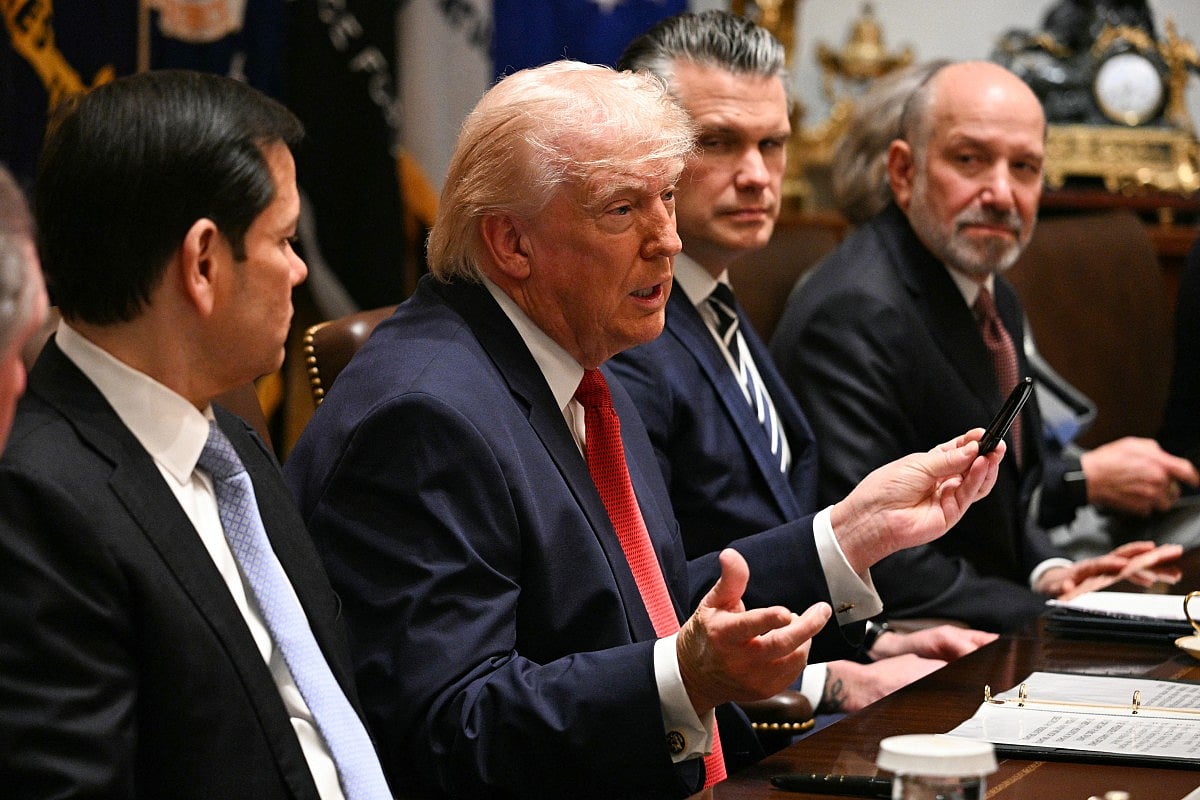
Dubai: President Donald Trump will convene his Cabinet at the White House on Wednesday after postponing a planned trip to Camp David, as pressure mounts on the administration to find a way out of the costly and increasingly unpredictable war with Iran.
The high-level meeting comes as a fragile ceasefire faces renewed strain following threats from Iran’s Islamic Revolutionary Guard Corps over recent US strikes near the Strait of Hormuz, while commercial shipping through the vital waterway remains heavily restricted.
The administration is also confronting growing pressure at home over the financial and military costs of the conflict, with senior Pentagon officials warning Congress that prolonged operations are beginning to affect routine training, readiness and recruitment across the armed forces.
“The clock is ticking for President Donald Trump to get a deal done with Iran,” CNN said in an analysis of the mounting pressures surrounding the conflict.
The war, which erupted on February 28, has already cost the Pentagon tens of billions of dollars.
Why Americans are growing sceptical of the Iran war
Recent polls suggest many Americans are increasingly doubtful that the conflict with Iran will achieve clear results — or end on favourable terms for the United States.
A Fox News poll found that 61% of voters preferred US military operations to last only a limited time rather than continue “as long as it takes”.
A New York Times-Siena College survey showed 52% believed the US should end military operations even if no nuclear deal with Iran is reached.
Confidence in the war’s objectives also appears weak. Only 22% of respondents in the same poll believed the conflict would be “very successful” in eliminating Iran’s nuclear programme.
Other surveys suggested Americans are increasingly unconvinced that any future agreement would permanently stop Tehran from developing nuclear weapons.
CNN polling also found low levels of public confidence in Trump’s handling of Iran, with only 20% saying they had a “great deal” of faith in his decision-making on the issue.
Analysts say the figures reflect growing fatigue with a conflict marked by shifting deadlines, repeated escalation threats and uncertainty over Washington’s long-term strategy.
Acting Pentagon comptroller Jules “Jay” Hurst III told lawmakers earlier this month that the latest official estimate placed the cost of the conflict at roughly $29 billion. But the figure did not include rebuilding damaged facilities and infrastructure, while sources cited by CNN said the full cost could be closer to $40-50 billion.
Senior military officials have also acknowledged that the Pentagon was not financially prepared for a prolonged campaign.
Navy chief Adm. Daryl Caudle told lawmakers that the military’s 2026 budget “didn’t bake in Operation Epic Fury,” referring to the ongoing military campaign against Iran.
Caudle warned that the conflict was already affecting flight training hours, exercises and recruitment pipelines.
Financial squeeze spreading
“My record recruiting is going to be thwarted without additional funding,” he told the House Armed Services Committee.
The financial squeeze is now spreading across the military.
According to an internal document reviewed by CNN, the Army’s III Armored Corps — a major Texas-based command overseeing roughly 70,000 troops and hundreds of tanks — saw nearly $292 million cut from its training budget in late April.
The Pentagon declined to comment on the reported cuts.
The cabinet meeting also comes as uncertainty deepens over whether diplomacy with Tehran is genuinely advancing or merely buying time before another phase of escalation.
Tensions continue to flare
Trump has repeatedly insisted a deal with Iran is close, even as military tensions continue to flare.
On Tuesday, he posted a lengthy message on Truth Social mocking media coverage of the war and declaring Iran would only truly lose if it fully surrendered to the “magnificent U.S.A.” He claimed Iran’s navy was “resting at the bottom of the sea” and said Iranian forces should march out waving white flags.
The remarks came less than 24 hours after Trump again suggested diplomacy with Tehran remained possible.
Meanwhile, the strategic battle over energy routes continues to intensify.
Iran has effectively shut down the Strait of Hormuz to most foreign commercial traffic since the conflict escalated, while the US naval blockade targeting Iranian exports has left both sides under mounting economic pressure.
CNN reported that Iranian oil wells are also increasingly at risk after producers were forced to shut in some fields because exports through Hormuz have slowed sharply.
Industry experts told the network that prolonged shut-ins can damage reservoirs, disrupt underground pressure systems and reduce future production capacity. In rare cases, explosions can occur, though analysts stressed such outcomes remain unlikely in the near term.
The growing military, financial and energy pressures are now raising broader questions about how long the conflict can continue without a clearer political settlement.
Analysts say the White House gathering, originally planned for Camp David, may prove critical in determining whether the Trump administration pushes harder for a diplomatic off-ramp — or prepares for another round of escalation in a war that has repeatedly defied predictions of a quick resolution.

Sign up for the Daily Briefing
Get the latest news and updates straight to your inbox
Network Links
GN StoreDownload our app
© Al Nisr Publishing LLC 2026. All rights reserved.