Defence Minister Amir Nasirzadeh.
IRGC chief, Iran defence minister killed in Israeli strikes: Report
Several senior Iranian regime, military figures were reportedly targeted in the operation
Last updated:
2 MIN READ
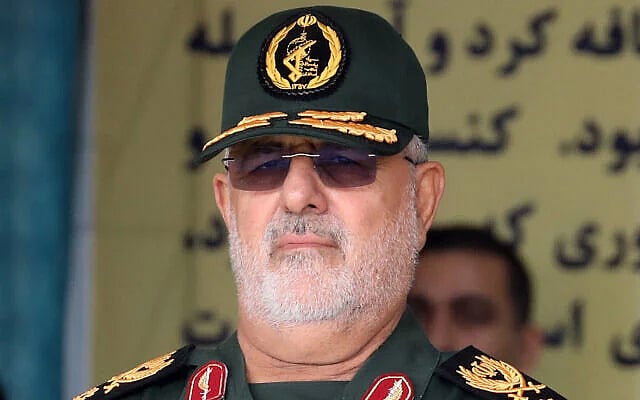
If confirmed, the killing of Pakpour would mark one of the most consequential blows to Iran’s security establishment in decades.
Dubai: The commander of Iran’s Islamic Revolutionary Guard Corps (IRGC), General Mohammad Pakpour, and Iranian Defence Minister Amir Nasirzadeh were killed in Israeli strikes inside Iran on Saturday morning, three sources familiar with the matter told Reuters.
Israeli officials earlier assessed that Pakpour, Nasirzadeh and Iran’s intelligence chief were likely among those killed in the coordinated strikes. The full extent of casualties, however, remains unclear.
Several senior Iranian regime and military figures were reportedly targeted in the operation, including Supreme Leader Ayatollah Ali Khamenei and President Masoud Pezeshkian. There has been no official confirmation regarding their status.
Why Pakpour matters
If confirmed, the killing of Pakpour would mark one of the most consequential blows to Iran’s security establishment in decades.
The Islamic Revolutionary Guard Corps is not just another branch of Iran’s armed forces. Created after the 1979 Islamic Revolution to protect the clerical system, the IRGC answers directly to the Supreme Leader and operates independently of Iran’s regular army.
It oversees:
Iran’s missile and aerospace programs
Elite overseas operations through the Quds Force
Domestic security enforcement via the Basij
Significant economic and intelligence networks
The IRGC is widely regarded as the backbone of the Islamic Republic, combining military, political and economic influence. In times of crisis, decision-making narrows to a small circle that includes the Supreme Leader and senior IRGC commanders.
Pakpour, as commander, would have been central to coordinating both internal security and regional military strategy — especially as Iran retaliates following joint US–Israeli strikes.
Strategic Implications
Targeting the head of the IRGC signals a shift beyond degrading military infrastructure toward directly hitting the core of Iran’s leadership structure.
If multiple senior figures were killed, it could disrupt command chains within the IRGC and the broader security apparatus. However, analysts note that the organisation is structured to maintain continuity even after leadership losses.
Iran has already begun retaliatory actions across the region, and further escalation remains possible.
The situation remains fluid, with official Iranian confirmation still pending.

A Senior Associate Editor with more than 30 years in the media, Stephen N.R. curates, edits and publishes impactful stories for Gulf News — both in print and online — focusing on Middle East politics, student issues and explainers on global topics. Stephen has spent most of his career in journalism, working behind the scenes — shaping headlines, editing copy and putting together newspaper pages with precision. For the past many years, he has brought that same dedication to the Gulf News digital team, where he curates stories, crafts explainers and helps keep both the web and print editions sharp and engaging.
Sign up for the Daily Briefing
Get the latest news and updates straight to your inbox
Network Links
GN StoreAbout Gulf NewsTerms & ConditionsReach by GNSitemapContact usPrivacy PolicyGN FocusHave your sayWork with usAdvertise with usGulf News epaperPrinting Services
Download our app
© Al Nisr Publishing LLC 2026. All rights reserved.