Attacks target Iran’s leadership. Here’s who runs the country and how it works
Behind presidency stands a system where clerical and security chiefs shape war policy
Dubai As Israel and the United States launched coordinated strikes on Iranian targets, explosions were reported across Tehran and other major cities, marking the most serious escalation in years.
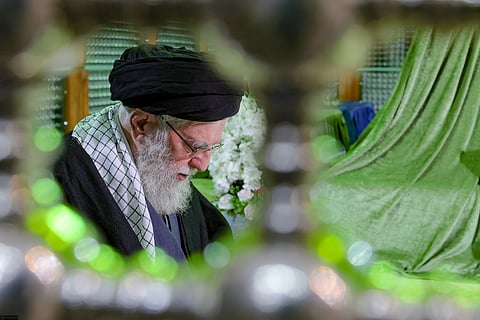
According to Reuters, Iran’s Supreme Leader, Ayatollah Ali Khamenei, was moved to a secure location ahead of the attacks — a sign of the gravity of the moment inside Tehran’s leadership circle.
With Iran responding to the attacks and Washington describing the campaign as “massive and ongoing,” attention now turns to who truly holds power in the Islamic Republic — and who will ultimately decide how Iran responds.
Though Iran has an elected president and parliament, real authority rests with the Supreme Leader and the powerful security institutions that answer directly to him.
In times of crisis, especially war, decision-making narrows to a small inner circle of clerical leadership and military commanders. Understanding how that system works is key to understanding what happens next.
Supreme leader — The ultimate power
At the top of Iran’s political system is the Supreme Leader, currently Ali Khamenei.
The Supreme Leader is Iran’s head of state and holds the highest authority in the country.
He controls the armed forces, foreign policy, major economic and security organs, and can issue decrees that override other branches of government.
All major institutions — legislative, executive, judicial, and security forces — operate under his ultimate authority.
He also appoints or influences the appointment of key positions, including members of powerful councils and senior military or judicial roles.
Even elected officials like the president and members of parliament are vetted through bodies under his influence.
In short: The Supreme Leader is the central figure in Iran’s power hierarchy, and most major state decisions ultimately reflect his will.
Guardian Council — Vetting and oversight power
The Guardian Council is one of the most powerful institutions in Iran because it shapes who can hold office and what laws can pass:
It has 12 members — six Islamic clerics directly appointed by the Supreme Leader, and six jurists nominated by the judiciary (also under the Supreme Leader’s power) and confirmed by parliament.
This council can veto laws passed by the elected parliament and has the authority to approve or disqualify candidates for elections to the presidency, parliament (Majlis), and the Assembly of Experts.
This means the Supreme Leader indirectly controls most election outcomes by shaping who can run.
Elected institutions (but controlled) — president and parliament
Iran does have elected offices, but their independence is limited:
President: The President of Iran is elected every four years by popular vote, but:
Only candidates approved by the Guardian Council can run.
After election, the president’s cabinet ministers often require approval from the Supreme Leader.
The president handles day-to-day governance and domestic policy, but foreign policy and security decisions are generally under the Supreme Leader’s control.
Parliament (Majlis)
Members are elected by popular vote every four years, but:
All candidates must be vetted and approved by the Guardian Council.
Even laws passed by the parliament can be vetoed by the Guardian Council.
Assembly of Experts — theoretically powerful, practically loyal
The Assembly of Experts is a clerical body elected (but vetted) to choose or theoretically dismiss the Supreme Leader.
In practice, though, this assembly has never publicly challenged the Supreme Leader and largely aligns with his decisions.
Members themselves must be vetted by the Guardian Council, whose clerics are chosen by the Supreme Leader.
Expediency council — arbitration authority
When there’s a conflict between the parliament and the Guardian Council, the Expediency Council resolves it.
It is appointed by the Supreme Leader.
It occasionally guides major policy directions, especially in disputes between elected and unelected bodies.
Islamic Revolutionary Guard Corps (IRGC) — Power beyond politics
The IRGC is Iran’s elite military force, separate from the regular army:
It answers directly to the Supreme Leader and holds influence in politics, the economy, security, and foreign operations.
Its overseas arm — the Quds Force — projects Iranian influence through allied militant groups in the Middle East.
The IRGC is widely seen as more influential than the elected government in many areas of national policy.
Supreme National Security Council (SNSC)
This council coordinates Iran’s defense and security policy:
It includes senior political, military, and intelligence figures.
It works closely with the Supreme Leader on strategic decisions and wartime coordination.
How it all works together
Iran’s system blends elements of theocracy and republican governance. On paper, there are elections and representative bodies like the presidency and parliament. In reality:
Ultimate authority rests with the Supreme Leader, who oversees every major institution.
Elected positions are heavily vetted and constrained by unelected bodies like the Guardian Council.
Security and military organs like the IRGC and SNSC play a major role in policy and enforcement.
This combination of religious oversight and state institutions gives Iran a unique structure where theocratic leadership holds the final say.


