US Chairman of the Joint Chiefs of Staff General Dan Caine speaks as a map of the Strait of Hormuz is displayed during a press briefing at the Pentagon in Washington, DC, on April 16, 2026.
Iran’s Mojtaba Khamenei unveils 'new legal frameworks' for Hormuz — makes shock appeal to Gulf states in daring defiance of US
Iran supreme leader vows 'new' Hormuz rules, promises to favour Gulf neighbours
Last updated:
4 MIN READ
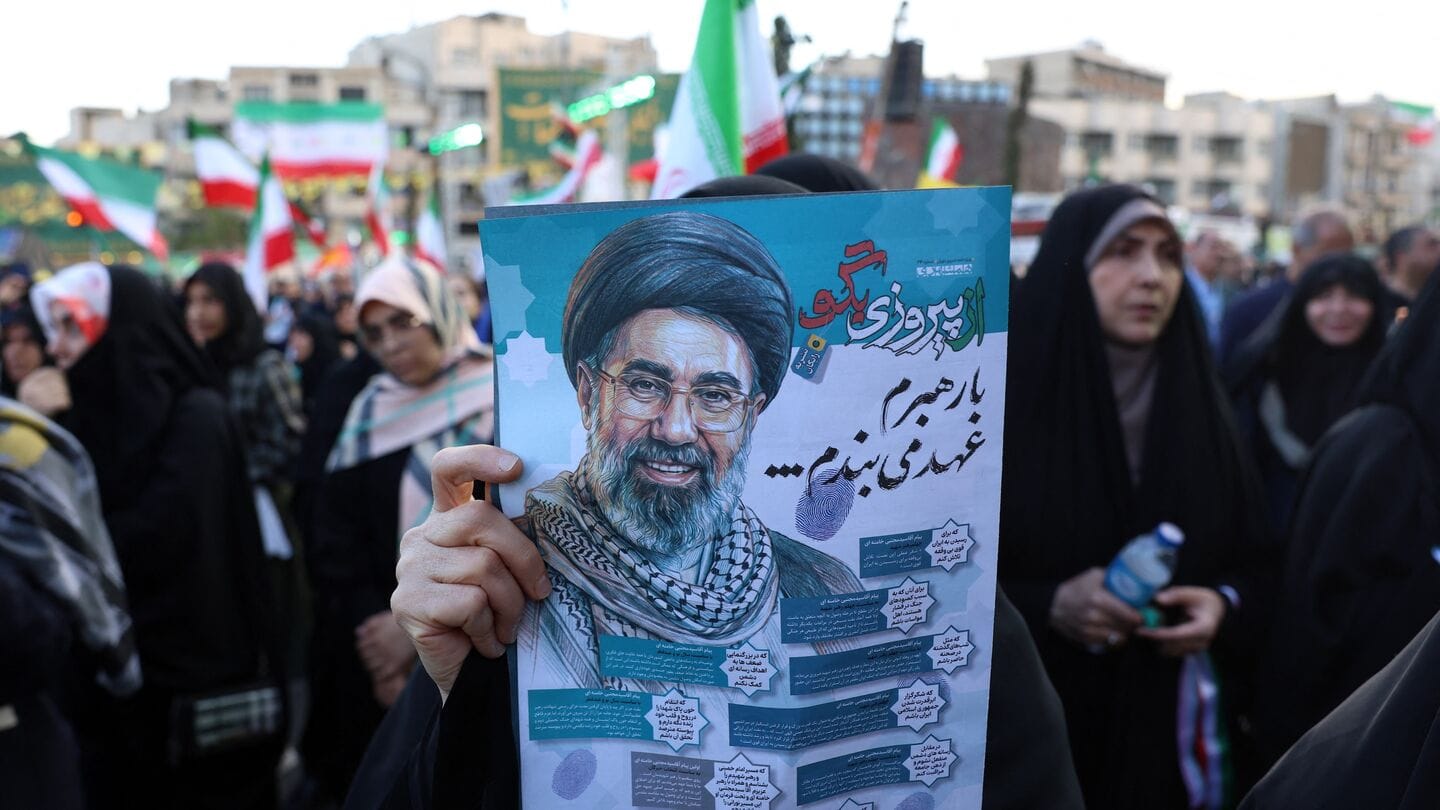
A woman holds a poster of Iranian Supreme Leader Ayatollah Mojataba Khamenei during a rally in Tehran on April 29, 2026.
AFP
In a propaganda message released to the public, Iran’s Supreme Leader Ayatollah Mojtaba Khamenei promised a "new chapter" and "bright future" for the Gulf — "one without the United States".
In his statement, Khamenei signaled a sweeping plan to assert Tehran’s authority over the strategic Strait of Hormuz, one of the world’s most critical maritime chokepoints for global oil shipments.
Iran’s new supreme leader has not been seen in public since US‑Israeli strikes in the early hours of the war reportedly left him with severe facial injuries and a disfigured appearance, according to multiple Western and Iranian‑linked reports.
Western officials describe Mojtaba Khamenei as severely wounded and likely “disfigured.” Reuters and major US media outlets cited anonymous Iranian insiders who say Khamenei remains “mentally alert”, though he has not delivered a public video address since assuming office.
The regime leader said Iran seeks to expel the US, framed as a leader of "greedy outsiders." He also promised a "bright future.... for the Gulf region, one without the United States — dedicated to the progress, comfort and prosperity of its nations.”
He also appealed to Arab states in the region, saying they share a “common destiny” with Iran.
As of late March 2026, Iran has launched over 4,900 missiles and drones at Gulf nations since the conflict began on February 28, 2026. Over 80% of Iran's total strikes have targeted GCC countries, far exceeding the number aimed at Israel.
“We and our neighbours ... share a common destiny,” he said in the statement carried by state media.
“Outsiders who come from thousands of kilometers away with greedy intentions have no place here except in the depths of its waters.”
Khamenei touted "Iran's new management of the Strait of Hormuz" as well as a "corresponding legal framework" that he said would benefit the region.
Hormuz squeeze
Iran began restricting ships from passing through Hormuz "without permission" in early March, leading the US to impose a blockade on Iran.
Only about seven ships a day are passing through as a result, down from around 130 per day before the war.
Iran is reportedly restricting transit to vessels from friendly nations and may be imposing fees on passage, while the United States is enforcing a blockade that prevents ships, especially those involved in the oil trade, from accessing Iranian ports.
Message of defiance
His remarks, issued Thursday amid ongoing conflict with the US and Israel, articulated both a regional strategy and a message of defiance toward Western influence.
Khamenei described the Strait of Hormuz as central to the Gulf’s "identity and economic future", and vowed that Iran would establish “new legal frameworks” and a “new management” of the waterway to benefit neighbouring states and secure the region.
Iranian strikes: Approximately 4,911 projectiles were fired by Iran, consisting of 1,119 missiles and 3,792 drones, according to Al Arabiya. The UAE has been the hardest hit, with reports indicating hundreds of ballistic missiles, cruise missiles, and thousands of drones.
Mojtaba Khamenei's message framed foreign (particularly US) presence in the Gulf as a historic source of instability and foreign “abuses” that Tehran now intends to rectify, the New York Times quoted the new supreme leader as saying.
Assertive tone
While Iran’s rhetoric included promises that this new approach could “bring calm, progress and economic benefits” to Gulf nations, the broader tone was unmistakably assertive: Khamenei explicitly reiterated that the future of the region will be “without US presence” — a stark counter to decades of American military and diplomatic engagement in the Middle East.
The Iranian regime has chanted "death to America, death to Israel" in the last 47 years since 1979.
His comments underscore Tehran’s intent to shape not just security arrangements but legal and normative structures governing the global energy corridor.
Escalation
The backdrop to this declaration is a wider escalation which saw Iran and its allies confront US and Israeli forces, leading to the effective closure of the Strait and driving a surge in global energy prices and geopolitical instability.
Negotiations and ceasefire efforts have been intermittent.
Iran’s latest message signals that even amid diplomatic engagement, hardline positions on sovereignty and regional order remain entrenched.
In asserting control over Hormuz, Khamenei has presented Tehran’s leadership as both a defender of regional rights and a challenger to foreign influence — a posture likely to have profound implications for global oil markets, Gulf security alignments, and ongoing tensions with Washington.
Sign up for the Daily Briefing
Get the latest news and updates straight to your inbox
Network Links
GN StoreAbout Gulf NewsTerms & ConditionsReach by GNSitemapContact usPrivacy PolicyGN FocusHave your sayWork with usAdvertise with usGulf News epaperPrinting Services
Download our app
© Al Nisr Publishing LLC 2026. All rights reserved.