Iran proposes Hormuz plan, Trump reportedly rejects; Saudi intercepts Houthi drones near Riyadh
Saudi Arabia, Pakistan and Turkey reaffirm collective defence under Mecca agreement
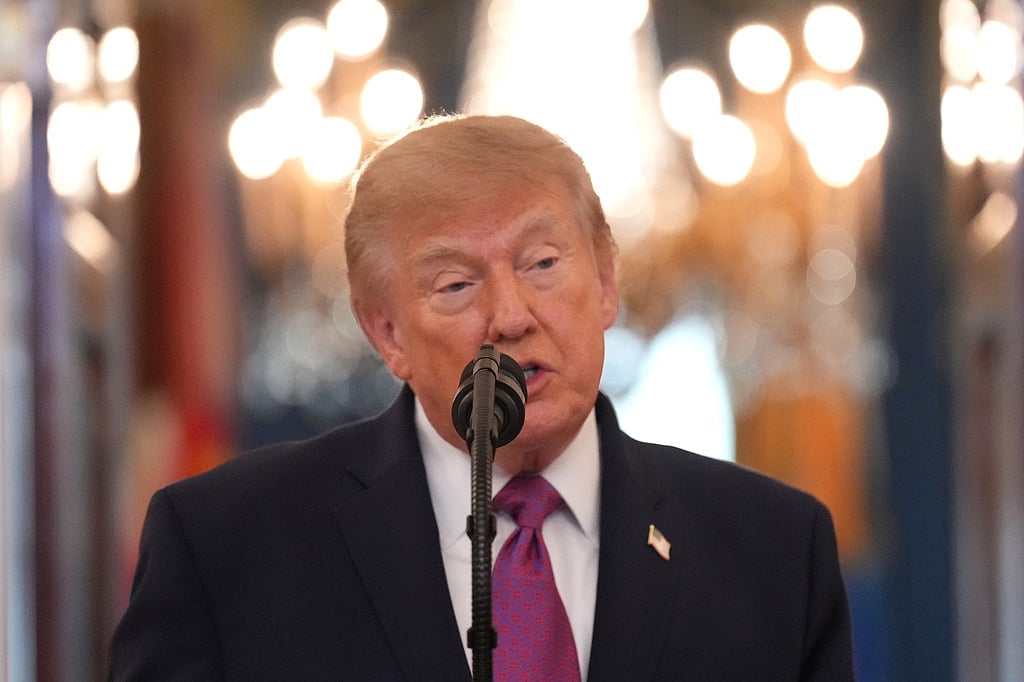
Iran has proposed a seven-day plan to reopen the Strait of Hormuz, but reports say US President Donald Trump rejected the proposal. The plan reportedly includes a ceasefire, the release of frozen Iranian assets, easing oil sanctions and an end to the US naval blockade. Trump also said he discussed the Iran war with Chinese President Xi Jinping, amid allegations of Beijing supporting Tehran. Meanwhile, the Saudi-led coalition said its forces intercepted two drones launched by the Iran-backed Houthi group and headed towards Riyadh. Separately, Saudi Arabia, Pakistan and Turkey reaffirmed their joint defence pact, condemning attacks on the Kingdom and pledging closer military, intelligence and defence cooperation. Follow all the latest developments here:
The head of Yemen's governing body on Friday called for a general mobilisation to counter the Iran-backed Houthis, as the group ramps up attacks on government forces and their Saudi backer.
His call comes weeks after Yemen's fragmented government was dealt a major blow by the Houthis, who seized control of the country's entire Red Sea coast and are still fighting its forces in Yemen and attacking Saudi ships and territory.
"I call upon the sons of our great people to engage in general mobilisation and national mobilisation, to rally around their armed and security forces," Rashad Al Alimi, who heads the Presidential Leadership Council and is also Supreme Commander of the Yemeni Armed Forces, said in a speech.
Anyone defecting from the Houthis to the government side will be pardoned in an upcoming amnesty, he added.
Alimi heads Yemen's Saudi-backed Presidential Leadership Council, whose forces are fighting the Houthis with air support from the kingdom.
Over the week-end, the Houthis attacked Riyadh for the first time in years, marking a major escalation.
Earlier on Friday, the military chiefs of staff of Saudi Arabia, Turkey and Pakistan held talks on how to support Riyadh as Yemen's Houthis ramp up attacks on the world's top crude exporter.
Get updated faster and for FREE: Download the Gulf News app now - simply click here.
Iran has disputed an Axios report that Tehran and Washington are preparing for another round of negotiations, with an Iranian source described by Fars News as “informed” saying the report was false.
The source also rejected an Al Jazeera report that Iran was sending technical experts to New York for negotiations, describing the claim as “untrue”.
According to Fars News, the source characterised Western reports about renewed talks as “manufacturing news” and said they were intended to influence markets and oil prices.
Iran's Foreign Minister Abbas Araghchi said that Tehran had offered Washington a plan that would see the Strait of Hormuz reopened to maritime navigation within seven days once agreed.
Araghchi met for talks on Tuesday with US President Donald Trump's envoy Steve Witkoff, and previously set out conditions for ending the war and reopening the vital energy shipping channel.
"Iran has conveyed to the United States, through Qatar, a concrete seven-day plan. If the necessary conditions are met, the strait can be reopened, and normal maritime passage restored within seven days," Araghchi said at the UN Friday.
"The choice now rests with the United States. Iran does not accept coercion, threats, or intimidation, and Iran will not surrender its sovereign rights under pressure.
"I can tell you if there is seriousness in the US side to come to a deal and reopen the Strait of Hormuz, everything is now prepared."
Earlier media reports suggest the new plan calls for a cessation of all hostilities in the Middle East for seven days, including in Lebanon.
It also reportedly calls for the release of frozen Iranian assets estimated to be worth at least $12 billion, as well as the lifting of sanctions on Iranian oil and an end to the US naval blockade of Iran.
Get updated faster and for FREE: Download the Gulf News app now - simply click here.
Iran offered a plan to reopen the strategic Strait of Hormuz, Tehran said on Friday, but within hours reports indicated that US President Donald Trump had rejected the proposal.
The waterway, which is key to the world's oil supply, is central to the conflict between the United States and Iran, which has remained at a stalemate for nearly seven months.
But new mediation efforts at the UN gathering of world leaders in New York this week have offered some optimism of progress towards a deal.
Saudi Defence Minister Prince Khalid bin Salman met Pakistan’s Chief of Army Staff and Chief of Defence Forces Field Marshal Asim Munir following a meeting of military chiefs under the Makkah Joint Defence Agreement.
Prince Khalid said they reviewed the outcomes of the chiefs of staff meeting and discussed the response to attacks targeting Makkah and Saudi Arabia’s civilian and economic infrastructure.
The Saudi-led coalition battling Yemen's Houthis said on Saturday that its forces intercepted two drones fired by the Iran-backed group, which were headed for the capital Riyadh.
"Air defences intercepted and destroyed two drones launched by the terrorist Houthi militia towards the Riyadh area," the coalition spokesman said on X.
The Houthis have imposed a naval blockade on Saudi Arabia, hitting its tankers, seizing swathes of Yemen's Red Sea coast vital for oil exports and causing energy prices to jump, while also raining missiles on the kingdom.
The coalition spokesman said separately on Saturday that Saudi air defences intercepted and destroyed a Houthi-launched ballistic missile targeting Khamis Mushait, a city in the country's southwest that is home to an air base.
Hezam Alasad, a member of the Houthi Political Bureau, said on Saturday that "Despite the operation's strength, scope, and impact, our armed forces view it as merely a small-scale rehearsal for a full-scale escalation."
Get updated faster and for FREE: Download the Gulf News app now - simply click here.
Iranian President Masoud Pezeshkian said Iran is prepared to allow UN nuclear inspectors to return to the country.
In an interview with CBS News, Pezeshkian confirmed that inspectors from the UN’s International Atomic Energy Agency (IAEA) could be granted access.
He said Iran was ready to negotiate the details of inspections and reach an agreement on access as part of ongoing talks.
Oman’s Foreign Minister Badr Albusaidi and his Iranian counterpart Abbas Araghchi have discussed regional developments and efforts to ensure safe navigation through the Strait of Hormuz.
The talks took place on the sidelines of the United Nations General Assembly (UNGA) in New York, with the two officials discussing diplomatic efforts to ease regional tensions, build trust and address outstanding issues, according to Oman’s Foreign Ministry.
They also discussed ensuring freedom of passage through the strategic waterway to support international trade and energy supplies.
The Iraqi government said it was holding talks with the United States to secure an exemption from then ban on Iranian airlines, which has disrupted travel for patients, students and pilgrims.
All Iraqi airports enforced the ban this week, resulting in major disruption at the airport of the holy city of Najaf, the main destination for Iranian flights to Iraq.
"The Iraqi government is holding direct talks with the American side to exempt certain Iraqi airports from these measures," the prime minister's media office said.
An exemption would allow flights to resume "for humanitarian reasons, including medical treatment, education, religious visits, and for the interest of civilians," it added.
Iranian airlines mainly carry Iraqi pilgrims to Iran's holy cities or Iranians visiting sacred sites in Iraq. The flights also serve Iraqi students studying in Iran and patients seeking medical treatment there.
Several Iraqis said that enforcing the US sanctions has left them scrambling for solutions, with some fearing they would lose access to treatment in Iran or others stranded there with little choice but to take the more than 12-hour journey home by land.
Iraq has joined several countries including the United Arab Emirates in enforcing the US ban, after Treasury Secretary Scott Bessent said Iranian airlines would be "shut down" on Wednesday.
Trump morning posted an image on his Truth Social platform of the Strait of Hormuz labeled "Trump Strait," in the first public indication of his thinking after Iran proposed the new deal and suggested it might help Trump ahead of the midterm elections.
The White House on Friday said only that US officials were having positive and constructive conversations with mediators on the Iran war. Earlier in the week, Iran held hours of indirect talks with the US.
Iran’s military warned that US military deployment centres and interests in the region could be targeted if Washington takes action against Tehran, Mehr reported.
The warning comes as Iran awaits a US response to its seven-day plan to reopen the Strait of Hormuz, amid heightened regional tensions and ongoing mediation efforts.
Iranian President Masoud Pezeshkian said Tehran's new plan to reopen the strategic Strait of Hormuz was coordinated with supreme leader Mojtaba Khamenei, state media reported Saturday, quoting an interview with US media.
Pezeshkian also told broadcaster CBS that the Islamic republic would fulfil its obligations were the United States to agree to the proposal, according to excerpts released by state news agency IRNA.
The strait is crucial for the world's oil supply and central to the conflict between the US and Iran, which remains deadlocked after nearly seven months.
"Coordination with the leader of the revolution (the supreme leader)... has been carried out," Pezeshkian said.
"If the US accepts it and fulfils its obligations, we will do the same, and there will be no issue in this regard," he added.
US President Donald Trump said Saturday that he rejects Iran’s latest proposal to reopen the Strait of Hormuz.
“I reject their proposal,” Trump was quoted as saying by CNN when asked by reporters what he thought about Iran’s plan.
"They want to make a deal where they open the Strait immediately because they're losing so badly," he said. "They want to make a deal and I think that's fine. I like making a deal too."
Russian Foreign Minister Sergei Lavrov said at the UN Saturday that Moscow is ready to help stabilise the situation in the Strait of Hormuz and the wider Gulf region, as the US-Iran conflict drags on.
"We need trust in the relationships between the Gulf states, the Arab states, and Iran. We need stable regional architecture," Lavrov told leaders at the UN General Assembly.
"Russia, together with other responsible states, stands ready to constructively contribute to stabilizing this strategically important region."
Saudi Arabia warned UN members Saturday that attempts to block Middle East waterways are a threat to global energy security and demanded the international community do more to defend freedom of navigation.
"The international community has been absent from assuming its responsibilities in confronting all that threatens international peace and security," Foreign Minister Faisal bin Farhan told the United Nations General Assembly.
Get updated faster and for FREE: Download the Gulf News app now - simply click here.
Very heavy US military posturing is now underway around Iran, with five KC-135 Stratotankers, two KC-46 Pegasus aerial refueling aircraft and an MQ-4C Triton surveillance drone observed operating near the chokepoint, per flight-tracking data.
The activity comes directly after US President Donald Trump rejected Iran’s seven-day ceasefire offer.
Iran says it has also kept its military on high alert as US aerial activity increases around the Strait.
We are closing this live coverage. For the latest updates, click here:
Sign up for the Daily Briefing
Get the latest news and updates straight to your inbox
Network Links
GN StoreDownload our app
© Al Nisr Publishing LLC 2026. All rights reserved.