US-Iran talks in Switzerland called off as Israel and Hezbollah trade attacks in Lebanon
US, Iran work on secret proposals as 60-day deadline to seal deal begins
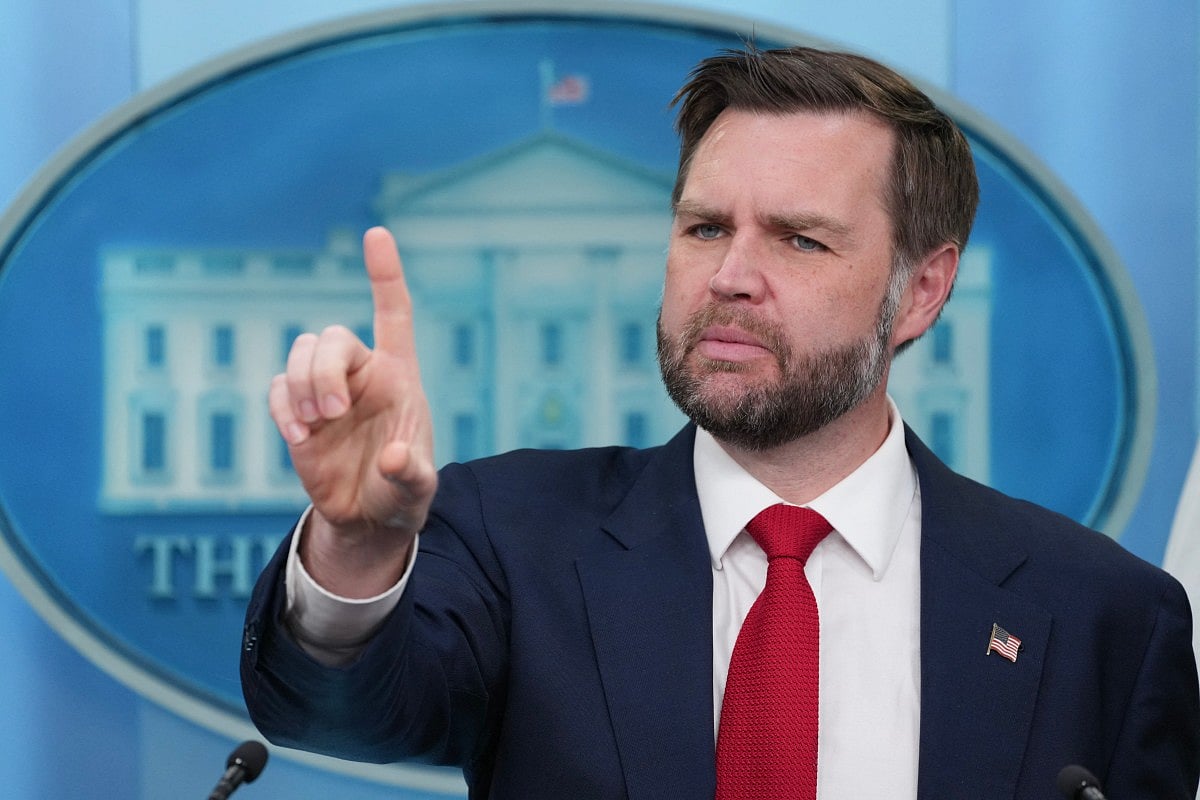
Ahead of a fragile ceasefire, diplomatic efforts and military tensions continue to shape the Middle East. Iran has agreed in principle to allow UN nuclear inspectors back into its nuclear sites as part of its agreement with the US, while fighting persists between Israel and Hezbollah despite a broader deal to end the regional war. Political fallout is also mounting in Washington over civilian casualties in Iran, as regional leaders weigh the next steps in implementing the landmark US-Iran accord. Follow all the latest updates here:
Egypt's foreign minister will host his counterparts from Pakistan, Saudi Arabia and Turkey in the Mediterranean city of Alamein on Sunday, Cairo's foreign ministry said.
Badr Abdelatty "will hold a quadrilateral meeting on Sunday with Saudi Arabia's Foreign Minister Prince Faisal bin Farhan, Turkey's Foreign Minister Hakan Fidan and Pakistan's Foreign Minister Mohammad Ishaq Dar, followed by an expanded session of talks and a joint press conference", the ministry said in a statement late Thursday.
The ministry did not specify the topic of the discussions, but the four countries have been involved in mediation efforts around the Middle East war.
Trump wants to turn his attention to North Korea now that he has an accord with Iran, South Korean President Lee Jae Myung said after meeting his US counterpart in France.
"President Trump said that the time had come to pay attention to the North Korea issue," Lee told reporters in Seoul as he shared details of his meeting with Trump at the G7 summit.
Israel's military said Friday it was striking Hezbollah targets in several areas of southern Lebanon, despite a peace deal in the Middle East war that includes Lebanon.
"During the night, the army struck and continues to strike Hezbollah terrorists and infrastructure in several areas in southern Lebanon," the military said in a statement.
Switzerland announced Friday that planned talks on implementing a US-Iran memorandum of understanding to end the Middle East war had been postponed, hours after US Vice President JD Vance's departure for the Alpine country was cancelled.
"The planned talks between the US, Iran, Qatar and Pakistan have been postponed," the Swiss foreign ministry said in a message to AFP.
"Switzerland remains ready to facilitate these talks. The relevant preparatory work at Burgenstock is continuing," it added, without providing a new date for the talks.
Iran's World Cup team will lodge a complaint with FIFA claiming they are being subjected to travel restrictions during the tournament in North America, the Iranian football federation spokesman said on Thursday.
"Despite having submitted its preparation schedule for the tournament well in advance, Iran's national football team has once again encountered restrictions imposed by the organizers, affecting the implementation of its technical staff's plans," the spokesman said.
The US-Iran memorandum aimed at ending months of conflict across the Middle East has triggered a dramatic shift in global oil markets. Traders have rushed to unwind the geopolitical risk premium that sent crude prices soaring during the crisis, betting that millions of barrels of Middle Eastern oil will soon flow back into world markets. But while the immediate threat of a supply shock has eased, energy analysts warn that investors may be overlooking a more fundamental reality: the agreement is only a framework for future negotiations. Analysts said Brent crude is not going back to $60/barrel anytime soon as global oil inventories are historically depleted, and even a sizeable supply surplus may not be enough to send crude prices back to the levels seen before the war.
Get updated faster and for FREE: Download the Gulf News app now - simply click here.
Iran will invite the U.N.'s nuclear watchdog to inspect its nuclear sites and begin identifying the locations of Tehran's enriched material, President Donald Trump's envoy Steve Witkoff told U.S. lawmakers in a private briefing Thursday, according to two people familiar with the call.
Senators are seeking to block Defense Secretary Pete Hegseth's travel funds until the Pentagon submits several overdue reports to lawmakers, including its investigation into a deadly strike on an elementary school in Iran at the start of the U.S.-Israeli war.
According to an annual defense authorization bill, filed this week, much of the travel funds for the defense secretary's office may not be spent until Hegseth submits "unredacted civilian harm investigations," including for the Feb. 28, 2026, strike on the Minab school. Officials have preliminarily said the U.S. was responsible for the strike, which was blamed on outdated intelligence.
Hezbollah said on Friday its fighters destroyed three Israeli tanks and that clashes were ongoing, hours after Lebanese state media reported that Israeli strikes in the south killed three people.
The fighting came a day after the United States and Iran signed an agreement to end the Middle East war on all fronts, including in Lebanon.
Hezbollah, an Iran-backed militant group, said on Friday that its fighters targeted "three Merkava tanks with guided missiles, which led to their destruction and setting them on fire".
This was after Israeli forces "consisting of an armoured platoon and an infantry platoon (tried) to infiltrate towards the northern side of the Ali al-Taher hills" - a strategic site overlooking the key town of Nabatieh.
"The clashes are still ongoing," Hezbollah said in the statement released in the early hours.
US Vice President JD Vance has postponed a trip to Switzerland for talks that were originally slated for Friday to discuss next steps on the US-Iran agreement on ending the war in the Middle East, according to the White House.
"The logistics of these negotiations have never been simple or predictable. As of now the Vice President is not departing tonight," a White House spokesperson said late Thursday. "We look forward to beginning technical talks as soon as possible."
Iran’s Supreme Leader Mojtaba Khamenei has issued his first public response to the US-Iran Memorandum of Understanding (MoU).
He said he allowed the agreement to proceed after receiving assurances from President Masoud Pezeshkian that he would “protect the rights of the Iranian nation”.
The remarks are Khamenei’s first known reaction to the agreement, and come amid questions about his political standing following a period of relative absence from public view since taking office in March.
It also marks an acknowledgement internal divisions but confirming he had approved it despite having a “different view”.
Khamenei also accused US President Donald Trump of applying maximum pressure tactics, saying Trump had “out of desperation, used all kinds of leverage” to bring the deal about.
While noting that future engagement could include “in-person negotiations in the future” between Tehran and Washington, he stressed this “will not mean acceptance of the enemy’s position”, the BBC reported.
His rise followed the killing of his father and predecessor, Ayatollah Ali Khamenei, in the 28 February US-Israeli strikes on Iran that escalated into a wider regional war.
President Trump did not directly address Khamenei’s comments but posted on Truth Social that he expects a ceasefire to take effect “on all fronts”, including between Israel and Iran-backed Hezbollah in Lebanon.
The US has lifted its naval blockade on Iran following the signing of a landmark agreement aimed at ending months of conflict in the Middle East, marking one of the most significant de-escalations since fighting erupted.
US Central Command confirmed the move on X, saying it was carried out “in accordance with the President’s direction” and adding that while the blockade has ended, some US vessels will remain “in the general area”, signaling continued monitoring of maritime routes and regional stability.
Trump also urged regional governments to “maintain their commitment to allowing our negotiations” to proceed, framing the deal as part of a broader stabilization effort across the Middle East.
The developments point to a fragile but fast-moving diplomatic shift: a formal de-escalation on maritime confrontation paired with cautious, conditional political engagement between long-time adversaries whose broader regional tensions remain unresolved.
Three Saudi-flagged very large crude carriers (VLCCs), previously “dark” for more than two months, have reappeared on automatic identification system (AIS) tracking, signaling a cautious return of vessel visibility in the Strait of Hormuz.
Data from MarineTraffic shows the VLCCs Jaham, Shaden, and Awtad resumed AIS transmissions on 18 June. Shaden is currently bound for Kiire, Japan, while Awtad is en route to Ulsan, South Korea. The destination of Jaham has not yet been disclosed.
The three tankers are collectively carrying an estimated 6 million barrels of crude oil, as per Kpler.
Even as Washington hailed the 14-point memorandum of understanding (MOU) with Tehran, much of the real negotiation is now taking place behind closed doors. According to CNN, the United States and Iran are quietly working on a series of confidential proposals that would spell out how the agreement will actually be implemented.
The discussions include sensitive details on the future of Iran's nuclear programme, CNN quoted US officials "familiar with the talks". The proposals are intended to transform the broad commitments outlined in the MOU into concrete steps, including verification measures and implementation timelines.
However, officials cautioned that the follow-up documents remain preliminary and have not yet been finalised.
Speaking to CNN on Thursday, Vice President JD Vance acknowledged that at least some of the additional understandings — described by administration officials as "gentleman's agreements" that go beyond the signed memorandum — have been put into writing.
Still, the arrangements remain politically fragile. The latest developments illustrate the difficult path ahead.
Following the breakthrough that led to the signing of the accord by the the US and Iran aimed at ending the war and launching a 60-day window to negotiate a comprehensive peace deal, US Vice President JD Vance said both sides have so far honoured their commitments but acknowledged that the most difficult issues will be resolved during the next phase of talks.
US Vice President JD Vance on Thursday issued an extraordinary rebuke to Israeli critics of the Iran deal, warning them not to alienate their "only powerful ally" left in the world.
Vance told members of Israeli Prime Minister Benjamin Netanyahu's cabinet to "wake up and smell the reality," amid growing tensions between Netanyahu and US President Donald Trump.
"Donald J. Trump is the only head of state in the entire world who is sympathetic to the nation of Israel at this moment in time, and he happens to be the head of state of the world superpower," Vance told reporters in a briefing at the White House.
"If I was in the cabinet of the Israeli government, I might not be attacking the only powerful ally that I have anywhere left in the entire world."
The Federal Authority for Identity, Citizenship, Customs and Port Security (ICP) has granted a 30-day grace period for individuals affected by exceptional regional circumstances to adjust their status in the country or depart without facing penalties.
The grace period runs from June 10 to July 9, 2026, and applies to all those who had previously been exempted from overstay fines after being unable to leave the UAE because of disruptions linked to exceptional conditions in the region.
Iran's supreme leader Ayatollah Mojtaba Khamenei said on Thursday that he had approved a deal with the United States to end the Middle East war despite having a "different view", without elaborating.
President Donald Trump on Thursday said the deal with Iran to end the war was a "victory" for the United States, rejecting mounting criticism including from some in his own Republican party.
"There is no 300 Billion Dollar payment to Iran by the U.S. That’s Fake News! All there is for the U.S. is Success, Lower Oil Prices, and Victory. Check out the Stock Market. Dumocrat propaganda at play!!!" Trump said in a post on his Truth Social network.
American forces on Thursday lifted their naval blockade of Iranian ports after more than two months of preventing ships from sailing from or to the Islamic republic, the US military said.
"Today, US forces lifted the blockade on all maritime traffic entering and exiting Iranian ports and coastal areas," US Central Command said in a post on X, adding that American warships "will remain in the general area to make sure that all aspects of the agreement are adhered to."
The Israeli military said on Thursday it will continue operating in southern Lebanon and "remove threats" beyond its so-called security zone, after the US and Iran signed an agreement to end the Middle East war, including in Lebanon.
The military published a map of its declared "security zone" -- which runs some 10 kilometres (six miles) inside Lebanese territory.
It said troops would continue to be deployed there "to remove threats and strengthen the defence of Israel's northern residents".
Sign up for the Daily Briefing
Get the latest news and updates straight to your inbox
Network Links
GN StoreDownload our app
© Al Nisr Publishing LLC 2026. All rights reserved.